


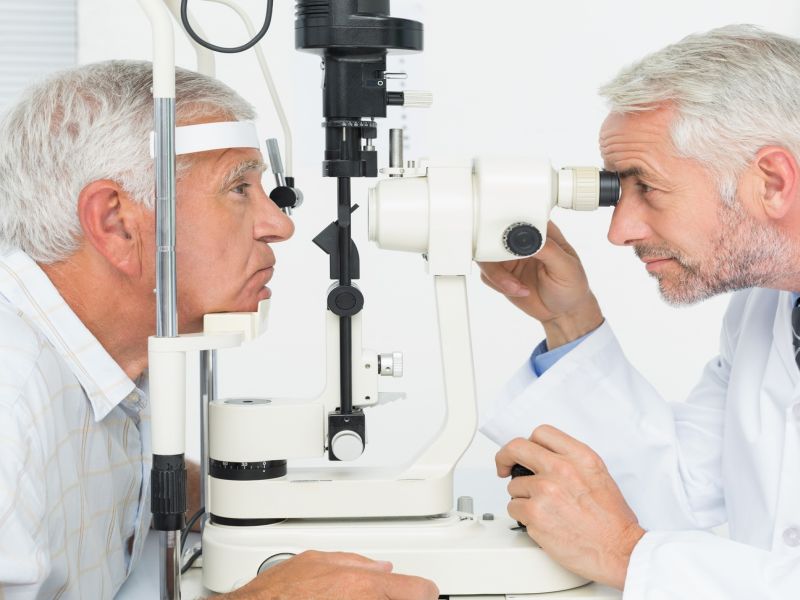
 Device sensitivity/specificity 100/97.8 percent for vision-threatening diabetic retinopathy
WEDNESDAY, Feb. 20, 2019 (HealthDay News) — A deep learning-enhanced device can accurately detect diabetic retinopathy (DR), according to a study published online Feb. 14 in Diabetes Care.
For people with type 2 diabetes visiting a primary care screening program, Frank D. Verbraak, from the VU Medical Center in Amsterdam, and colleagues graded retinal images via a hybrid deep learning-enhanced device. Its classification of retinopathy was compared to a reference standard, which consisted of grading according to the International Clinical Classification of DR. A total of 1,616 people with type 2 diabetes underwent imaging.
The researchers found that compared with the reference standard, the hybrid deep learning-enhanced device’s sensitivity/specificity was 100/97.8 percent for vision-threatening DR and 79.4/93.8 percent for more than mild DR.
“Applying the device into the health care system at primary care sites, where patients with diabetes are regularly seen, could improve the percentage of patients screened when indicated,” the authors write. “In addition, such a device would lead to improved accuracy compared with present standard of care and will lead to a higher number of patients with images with sufficient quality owing to the direct feedback of the device regarding the image quality.”
All but one author disclosed financial ties to IDx LLC, which funded the study. One author is listed as an inventor on patents and patent applications related to the study subject.
Abstract/Full Text (subscription or payment may be required)
 AAP Urges Regular Eye Checks for Children With JIA, Hydroxychloroquine Users
 One-Hour Cognitive Test Provides Meaningful Information Beyond Traditional Memory Screening
 Type 2 Diabetes Linked to Increased Risk for Alzheimer Disease
 Broad Genomic Sequencing Improves Survival in First-Line Setting in Advanced NSCLC
 ESMO: Combination Treatment Improves Survival in Muscle-Invasive Bladder Cancer
 Reference Intervals Developed for Children, Adults With Duffy Null Status
 Morphea Linked to Higher Risk for Cancer
 1975 to 2017 Saw Increases in Survival for Children With Cancer
.jpeg)




