


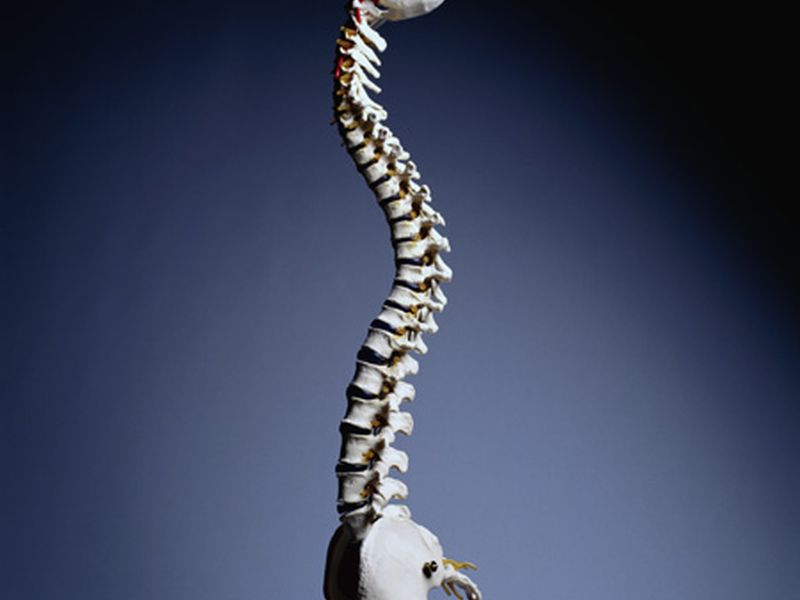
 Spinal manipulative therapy plus exercise more effective than exercise alone over one-year period
WEDNESDAY, Aug. 22, 2018 (HealthDay News) — Twelve weeks of spinal manipulative therapy (SMT) combined with exercise therapy (ET) is more effective than ET alone over a one-year period for adolescents with chronic low back pain (LBP), according to a study published in the July issue of PAIN.
Roni Evans, Ph.D., from the University of Minnesota in Minneapolis, and colleagues compared 12 weeks of SMT combined with ET to ET alone among 185 adolescents aged 12 to 18 years with chronic LBP. LBP severity was assessed at 12, 26, and 52 weeks; 179 adolescents provided data at 12 weeks and 174 at 26 and 52 weeks.
The researchers observed a larger reduction in LBP severity over the course of one year with adding SMT to ET (P = 0.007). At the end of treatment, the group difference in LBP severity was small (mean difference, 0.5; P = 0.08), but increased at weeks 26 (mean difference, 1.1; P = 0.001) and 52 (mean difference, 0.8; P = 0.009). SMT with ET performed better than ET alone for disability and improvement (P = 0.04 and 0.02, respectively) at 26 weeks. At all time points, the SMT with ET group reported significantly greater satisfaction with care (P ≥ 0.02). No serious treatment-related adverse events were reported.
“For adolescents with chronic LBP, spinal manipulation combined with exercise was more effective than exercise alone over a one-year period, with the largest differences occurring at six months,” the authors write. “These findings warrant replication and evaluation of cost effectiveness.”
 High Intake of Salty Snacks in Adolescence Linked to Risk for IBD
 Iron Supplementation Likely to Reduce Iron-Deficiency Anemia in Children
 EHR-Enabled QI Intervention Improves Chlamydia, Gonorrhea Screening in Teens
.jpg) Considerable Gaps Reported in Care for Youth With Opioid Use Disorder
.jpg) Rates of Drug Use-Associated Infective Endocarditis Declined From 2020 to 2022
 Nonpharmacologic Therapy Cuts Opioid Use Disorder Risk With Low Back Pain
.jpg) Most Specialty Oral Anticancer Meds for Blood Cancers Are Initially Rejected by Insurers
 Withdrawal From Medetomidine Increasingly Seen in ICUs





