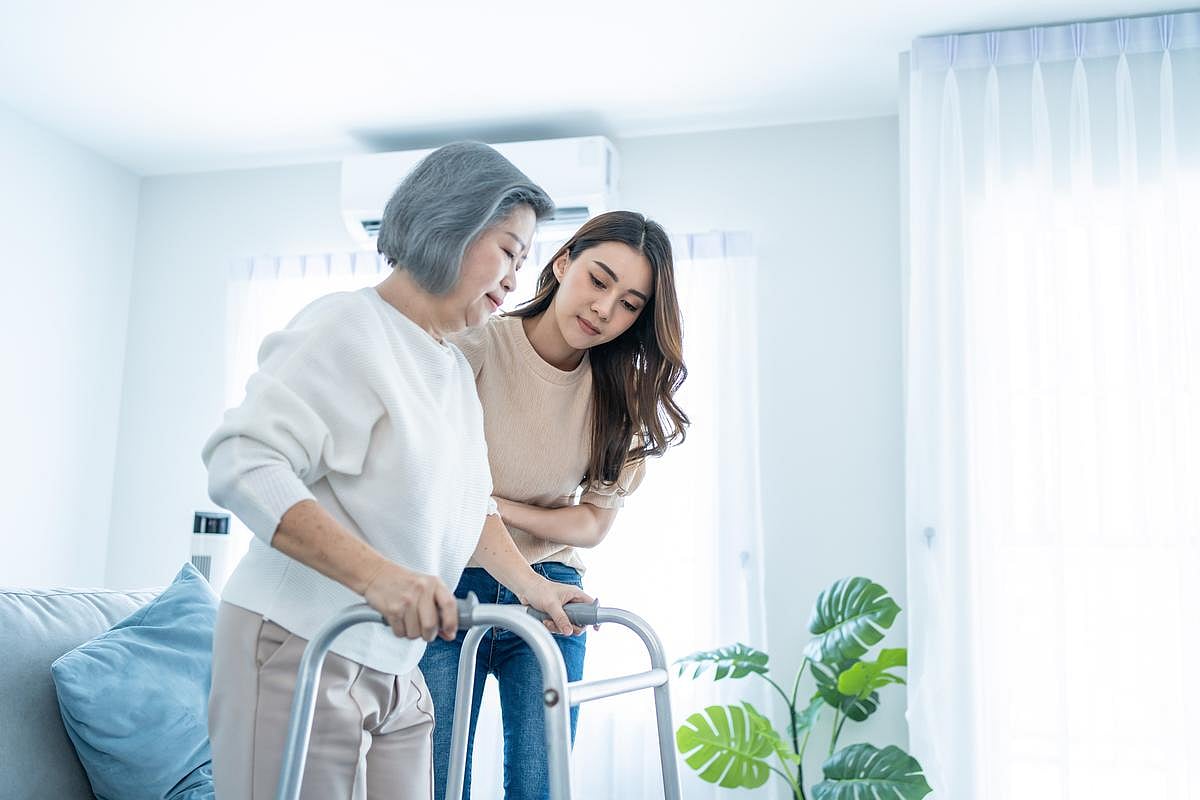
Remote monitoring reduced time spent at home among those aged 65 years or older compared with usual care
THURSDAY, June 18, 2026 (HealthDay News) — Remote monitoring does not increase time spent at home for adult patients discharged after hospitalization for serious infection, according to a study published online June 11 in JAMA Network Open to coincide with the annual Critical Care Reviews Meeting, held from June 10 to 12 in Belfast, Northern Ireland.
Sachin Yende, M.D., from the University of Pittsburgh, and colleagues examined the effectiveness of remote monitoring for reducing readmissions among postdischarge adult patients with sepsis or lower respiratory tract infection across 19 hospitals. Four remote monitoring strategies combining question set intensity (low versus high) and clinical response teams (standard versus enhanced) were compared to usual care (399 patients were randomly assigned to usual care; 204 to remote patient monitoring [RPM] with low standard response; 129 to RPM-high standard response; 383 to RPM-low enhanced response; 171 to RPM-high enhanced response).
The researchers found that the median days at home after discharge were similar across all study arms (90 for all groups); for all comparisons, the superiority probability was less than 55 percent. At least one readmission occurred in 37.8 percent of patients in the usual care arm compared with 39.7, 44.2, 37.3, and 36.3 percent in the RPM-low standard response arm, RPM-high standard response arm, RPM-low enhanced response arm, and RPM-high enhanced response arm, respectively. Standard and enhanced response arms had fewer home days compared with usual care among patients aged 65 years and older (cumulative odds ratios, 0.56 and 0.67).
“While the trial didn”t tell us that one remote monitoring approach was superior, it did yield valuable information to better use our resources and make future programs and technology more responsive to patient preferences,” coauthor Kristin Mayes, also from the University of Pittsburgh, said in a statement.
Several authors disclosed ties to Berry Consultants, a consulting firm specializing in Bayesian adaptive clinical trials.
 ESMO: Combination Treatment Improves Survival in Muscle-Invasive Bladder Cancer
 Broad Genomic Sequencing Improves Survival in First-Line Setting in Advanced NSCLC
 1975 to 2017 Saw Increases in Survival for Children With Cancer
 Chemo May Accelerate Biological Aging in Breast Cancer Survivors
 Low Diagnostic Yield Seen for Postmastectomy Imaging in Patients With DCIS
 Morphea Linked to Higher Risk for Cancer
 PFOA and PFOS Linked to Increased Risk for ER-Negative Breast Cancer
 Response to Autologous HSCT Durable for Patients With Systemic Sclerosis
.jpg)
.jpg)