


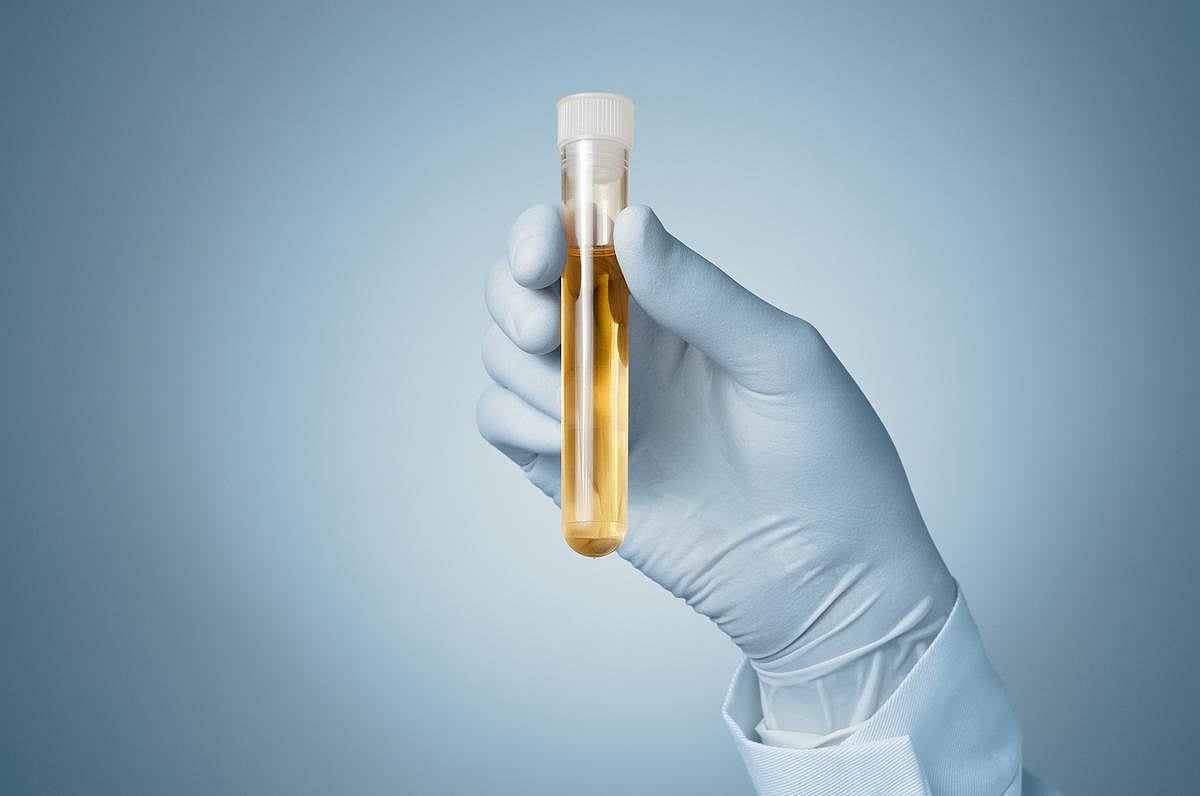
cfRNA can also guide which patients will respond to Bacillus Calmette-Guérin treatment
WEDNESDAY, Oct. 7, 2026 (HealthDay News) — Urine cell-free (cf)RNA analysis could represent a promising biomarker for bladder cancer, according to a study published online Oct. 2 in Nature Medicine.
Kevin J. Liu, Ph.D., from Stanford University in California, and colleagues applied urine random priming and affinity capture of cfRNA fragments for enrichment analysis by sequencing (uRARE-seq), a liquid biopsy method for urine cfRNA profiling, to 683 urine samples from patients with cancer and controls. Urine cfRNA contained transcripts from genitourinary tissues and from tumor-derived transcripts in patients with prostate, kidney, or bladder cancer.
The researchers found that at 90 percent specificity for detecting localized bladder cancer, uRARE-seq demonstrated 95 percent sensitivity. The method outperformed urine tumor DNA analysis and was not affected by the presence of field-effect mutations. Minimal residual disease was also sensitively detected by urine cfRNA analyses, which also distinguished complete molecular responses after surgery from those after intravesical Bacillus Calmette-Guérin (BCG). T cell and other immune signatures were enriched in pretreatment urine from complete responders to BCG, suggesting a preexisting antitumor immune response; higher expression of proliferation-related genes was seen in nonresponders. This biological difference allowed development of a biomarker predicting likelihood of response to BCG versus chemotherapy in pretreatment urine for 114 patients (area under the curve, 0.93), which was strongly associated with recurrence risk.
“Urine cfRNA analysis using uRARE-seq enables sensitive detection and molecular characterization of bladder cancer, potentially enabling applications such as screening, minimal residual disease detection, and adjuvant therapy response prediction,” the authors write.
Several authors disclosed ties to the biopharmaceutical industry; one author reported patent filings related to urine cfRNA.
 Age-, Joint-Specific Ultrasound Reference Values Set for Healthy Joints
  Pre-Prostate Biopsy MRI Use Increased From 2017 to 2026
  ASTRO Issues Guidance for Use of Radiation Therapy in Bladder Cancer
  Retinal Imaging Can ID Atrial Fibrillation Years Before Diagnosis
  U.S. Adults May Not Understand Their Risk for Vascular Disease
  NOACs Linked to Slower Cognitive Decline in Patients With A-Fib, Alzheimer Disease
  Machine Learning Model IDs Heart Failure With Reduced Ejection Fraction Using Routine Lab Indicators
  Addition of CAC to PREVENT-ASCVD Equations May Improve Predictive Utility in Certain Patients
.jpg)

.jpg)

