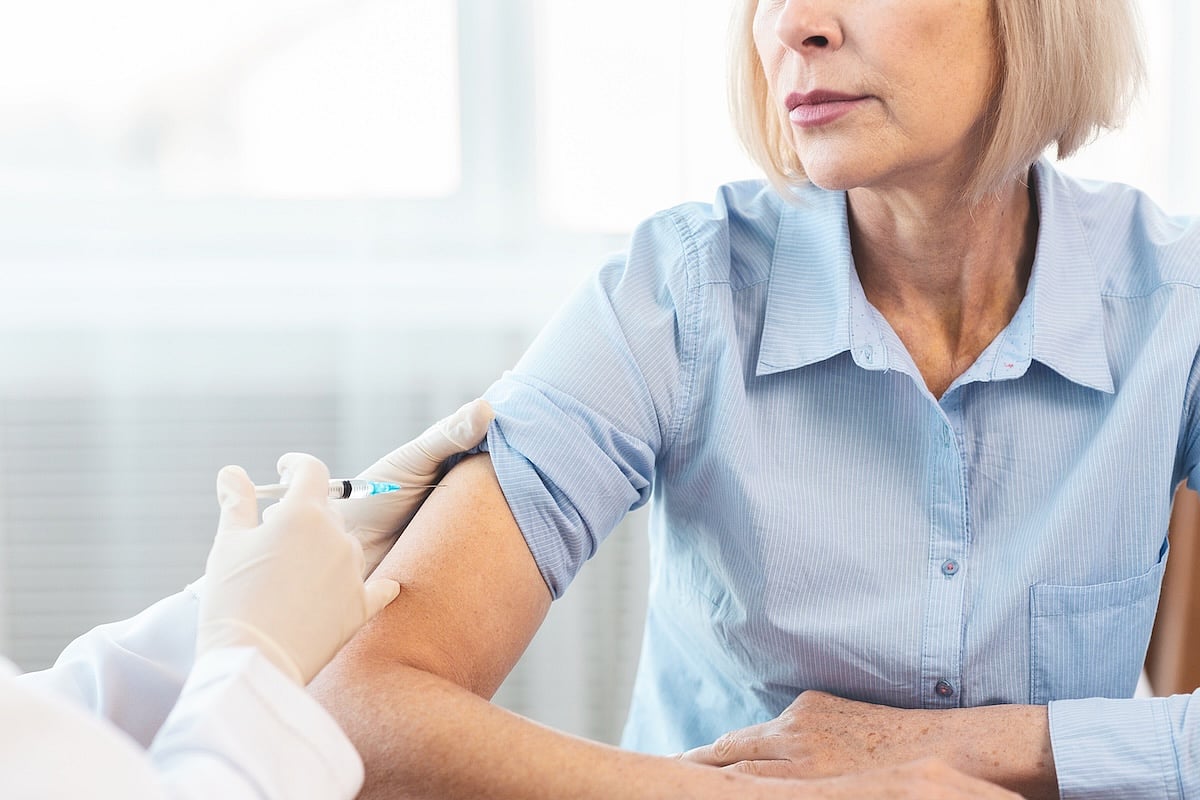
Experts say most people are already protected, but some adults and babies as young as 6 months may benefit from an extra dose
FRIDAY, Nov. 20, 2026 (HealthDay News) — Measles is officially back in the United States, but most people don’t need another shot to stay protected, experts say.
This week, the United States, Mexico and Bolivia all lost their measles elimination status, The Associated Press reported. The decision means the virus has circulated nonstop in the three countries for at least 12 months.
So far this year, more than 5,400 measles cases have been reported nationwide, CIDRAP News reports. Cases have turned up in 45 states, and 10 people have died, as of Nov. 17.
Two doses of the measles, mumps and rubella (MMR) vaccine usually protect for life, and so does having had measles. People born before 1957 are generally considered immune, since nearly all kids caught the virus back then.
“Most people are protected without getting a booster shot,” Dr. Richard Martinello of Yale School of Medicine in New Haven, Connecticut, told AP News.
Still, some adults may want another dose. That includes healthcare workers born before 1957 who can’t prove they’re immune.
Adults vaccinated from 1963 through 1967 may also want one. Some got an older, less effective shot made with killed virus. Anyone who did, or isn’t sure, should get at least one dose of today’s vaccine, doctors told AP News.
One dose prevents measles 93% of the time. Two doses push that to 97%.
An extra dose may make sense for students, healthcare workers, international travelers and people who live with someone who has a weakened immune system.
Not sure of your history? Check with your parents, your doctor, past schools or employers, or your state health department.
If you’re still unsure about your vaccination status, you can talk with your doctor about an MMR immunity blood test that can show whether you have antibodies against measles. But Martinello said this isn’t an ideal measure of how safe you are from the virus. Though the test is accurate, he said, scientists don’t know how to link the result perfectly with the level of protection someone might have.
Another dose of vaccine is safe for most people, though it isn’t given during pregnancy.
Babies are especially vulnerable, because the antibodies they get from their mothers fade during the first months of life, CIDRAP News reports.
Routine MMR shots start at 12 to 15 months. But experts have long advised an early “zero dose” for babies 6 to 11 months old who are traveling abroad or near an outbreak.
A new review from the University of Minnesota’s Center for Infectious Disease Research and Policy, which publishes CIDRAP News, found the early shot is safe and effective. It was 58% effective before 9 months and 83% effective from 9 to 11 months.
Babies who get a zero dose still need the usual two doses later, since protection from an early shot may not last as long.
Michael Osterholm, the center’s director, said the risk of measles exposure in the United States “has changed dramatically.” With holiday travel ahead, more families with babies may end up where measles is spreading, he added.
The vaccine can cause fever, which has been tied to febrile seizures in some children. But that risk is “very low,” said review coauthor Dr. Heidi Moline, a clinical advisor at CIDRAP. Her team found no evidence it’s higher in younger babies.
“As we travel and gather for the holidays, parents of infants are encouraged to talk to their child’s health provider to see if a zero dose makes sense,” Moline said.
More information
Visit the U.S. Centers for Disease Control and Prevention for more information about the MMR vaccine.
SOURCES: The Associated Press, Nov. 18, 2026; CIDRAP News, Nov. 17, 2026
 Nearly 3 in 4 Older Adults Express Interest in Vaccine to Prevent Dementia
 People With Autism Have Shorter Life Expectancy
 Updated COVID-19 Shot Beneficial for Those With Autoimmune Rheumatic Disease
 Trends Reported in Vaccination Coverage for Adolescents for 2025
 Iron Supplementation Likely to Reduce Iron-Deficiency Anemia in Children
 EHR-Enabled QI Intervention Improves Chlamydia, Gonorrhea Screening in Teens
.jpg) Considerable Gaps Reported in Care for Youth With Opioid Use Disorder
 Nutritional Deficiencies Seen in Youth Taking GLP-1 Receptor Agonists