


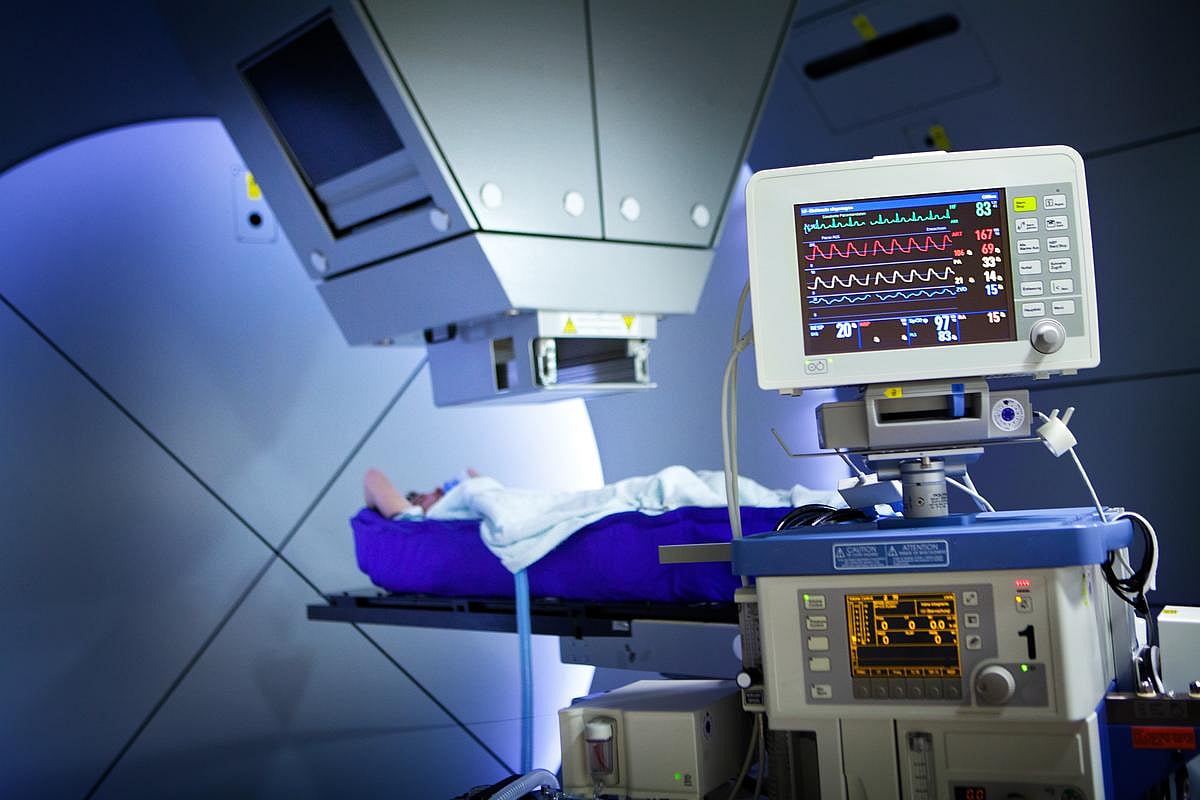
No-access counties have higher poverty and uninsurance rates, lower incomes, fewer primary care physicians
WEDNESDAY, July 15, 2026 (HealthDay News) — In 2025, 68.5 percent of U.S. counties lacked a radiation oncology (RO) practice site, according to a study published online July 9 in the International Journal of Radiation Oncology Biology Physics.
Catherine Yu, M.D., from the Icahn School of Medicine at Mount Sinai in New York City, and colleagues identified predictors of RO practice-site disappearance in the United States between 2018 and 2025.
The researchers found that national RO site counts seemed stable, masking considerable turnover. Freestanding sites had higher odds of disappearance than hospital-affiliated sites in a multivariable analysis (odds ratio, 1.56), as did sites located in rural versus urban counties (odds ratio, 1.44). In 13.6 percent of counties, there was county-level net loss of sites. In loss counties, an average of 3.66 sites were retained in urban areas by 2025 compared with 0.43 and 0.28 in rural-adjacent and rural-nonadjacent counties, respectively. In 2025, 68.5 percent of counties, home to 50.8 million people, lacked an RO practice site. On average, compared with counties with RO access, these no-access counties had higher poverty and uninsurance rates, lower incomes, and fewer primary care physicians.
“The burden of radiation oncology site loss falls especially hard on rural communities,” senior author Kunal K. Sindu, M.D., also from the Icahn School of Medicine, said in a statement. “When a rural community loses a single radiation oncology practice, patients may lose local access entirely. For someone already coping with a cancer diagnosis, that can mean added strain at a time when care should be as accessible as possible.”
 Guidelines Updated for Short-Course Radiation for Localized Prostate Cancer
 Few Meet Major Clinical Response Criteria After Treatment Escalation for Lupus
 Early Survivorship Care Linked to Improved Outcomes in Head, Neck Cancer
 Pre-Prostate Biopsy MRI Use Increased From 2017 to 2026
 Guidelines Updated for Prostate Cancer Screening
 AI Better Assesses Heart Function From MRI Than Clinicians
 Urine Cell-Free RNA Shows Promise as Biomarker for Bladder Cancer
 PET/MRI Offers Diagnostic, Prognostic Value in Pediatric Epilepsy





