


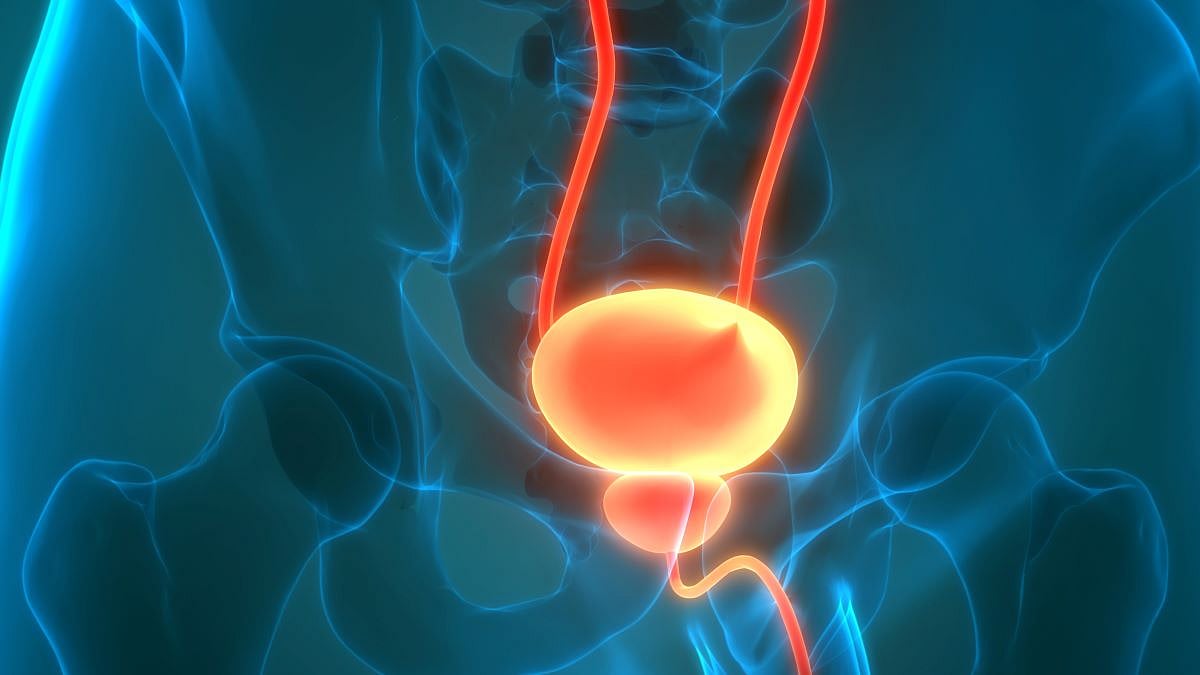
Surgery linked to more urinary and sexual side effects, while radiation associated with other urinary complications and higher all-cause mortality
WEDNESDAY, Oct. 7, 2026 (HealthDay News) — Radiation therapy (RT) and radical prostatectomy (RP) have distinct morbidity profiles that support individualized treatment decisions, according to a study presented at the annual meeting of the American College of Surgeons, held from Sept. 26 to 29 in Washington, D.C.
Juliana Viola, from the SUNY Downstate Health Sciences University College of Medicine in Brooklyn, New York, and colleagues used data from the TriNetX Research Network to identify men with prostate cancer treated with definitive RT or RP. The analysis included 10,205 propensity-matched patients in each group.
The researchers found that at a median follow-up of 1,880 days for RT and 2,133 days for RP, RT was associated with higher all-cause mortality (hazard ratio [HR], 1.45), cystitis (HR, 1.36), hematuria (HR, 1.18), and prostatitis (HR, 3.09). RP was associated with a higher risk for urinary incontinence (HR, 5.23), erectile dysfunction (HR, 2.93), urinary tract infection (HR, 1.50), and hydronephrosis/obstructive uropathy (HR, 1.29).
“The treatment choice matters in prostate cancer. Patients should understand how the main options differ before they decide,” senior author Jeffrey P. Weiss, M.D., Ph.D., also from SUNY Downstate Health Sciences University, said in a statement. “Clinicians need to recognize that these treatments differ in significant ways. The specific risks, benefits, and side effects should be discussed carefully with each patient.”
 Local Recurrence Rate Low After R0 Resection of Soft Tissue Sarcoma Tumors
 Postoperative Complications Elevated for Patients With Systemic Lupus Erythematosus
 Early Survivorship Care Linked to Improved Outcomes in Head, Neck Cancer
 Implant, Patient Survival Do Not Differ for Robotic and Conventional Total Joint Replacement
 Physical Therapist-Supervised Exercise Improves Outcomes After ACL Reconstruction
 Early Complications Common in Older Kidney Transplant Recipients
 PET/MRI Offers Diagnostic, Prognostic Value in Pediatric Epilepsy
 Less Intraoperative Crystalloid Fluid Not Tied to Worse Surgical Outcomes





