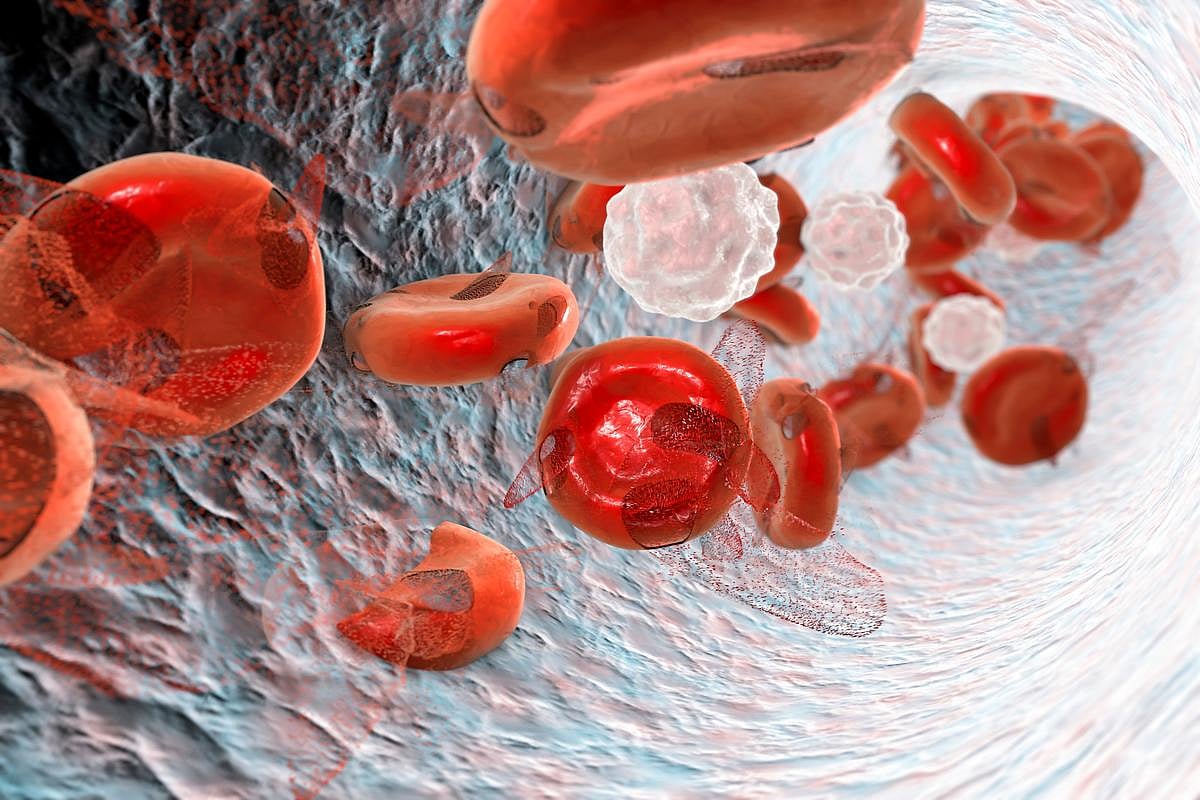
Estimated four-year event-free survival significantly higher in patients receiving blinatumomab versus traditional chemotherapy
TUESDAY, Sept. 22, 2026 (HealthDay News) — Blinatumomab is associated with significantly higher event-free survival among children with newly diagnosed high-risk B-cell acute lymphoblastic leukemia (ALL), according to a study published in the Sept. 17 issue of the New England Journal of Medicine.
Martin Schrappe, M.D., from the Christian Albrechts University Kiel in Germany, and colleagues randomly assigned children with newly diagnosed high-risk B-cell ALL to receive two cycles of blinatumomab (blinatumomab group) or two cycles of chemotherapy (control group) after consolidation (358 and 351 children, respectively).
The researchers found the estimated four-year event-free survival was 83.0 and 70.3 percent in the blinatumomab and control groups, respectively, at a planned interim analysis with a median follow-up of 2.9 years. For a primary end-point event, the estimated hazard ratio was 0.51 for blinatumomab versus control. Overall, 23.9 and 69.4 percent of patients in the blinatumomab and control groups, respectively, had infection related to the trial treatment. Life-threatening adverse events occurred in 0.5 and 4.7 percent of patients in the blinatumomab group and in the control group, respectively, including one (in 0.3 percent) that was fatal in the blinatumomab group.
“The excellent outcomes observed in the current trial beg the question of whether integration of blinatumomab obviates the need for transplantation in some or all these high-risk patients,” Regina M. Myers, M.D., and Stephen P. Hunger, M.D., from the Children”s Hospital of Philadelphia, write in an accompanying editorial.
Several authors disclosed ties to the biopharmaceutical industry.
Abstract/Full Text (subscription or payment may be required)
 ESMO: Combination Treatment Improves Survival in Muscle-Invasive Bladder Cancer
 Broad Genomic Sequencing Improves Survival in First-Line Setting in Advanced NSCLC
 Chemo May Accelerate Biological Aging in Breast Cancer Survivors
 Low Diagnostic Yield Seen for Postmastectomy Imaging in Patients With DCIS
 Morphea Linked to Higher Risk for Cancer
 PFOA and PFOS Linked to Increased Risk for ER-Negative Breast Cancer
 Response to Autologous HSCT Durable for Patients With Systemic Sclerosis