



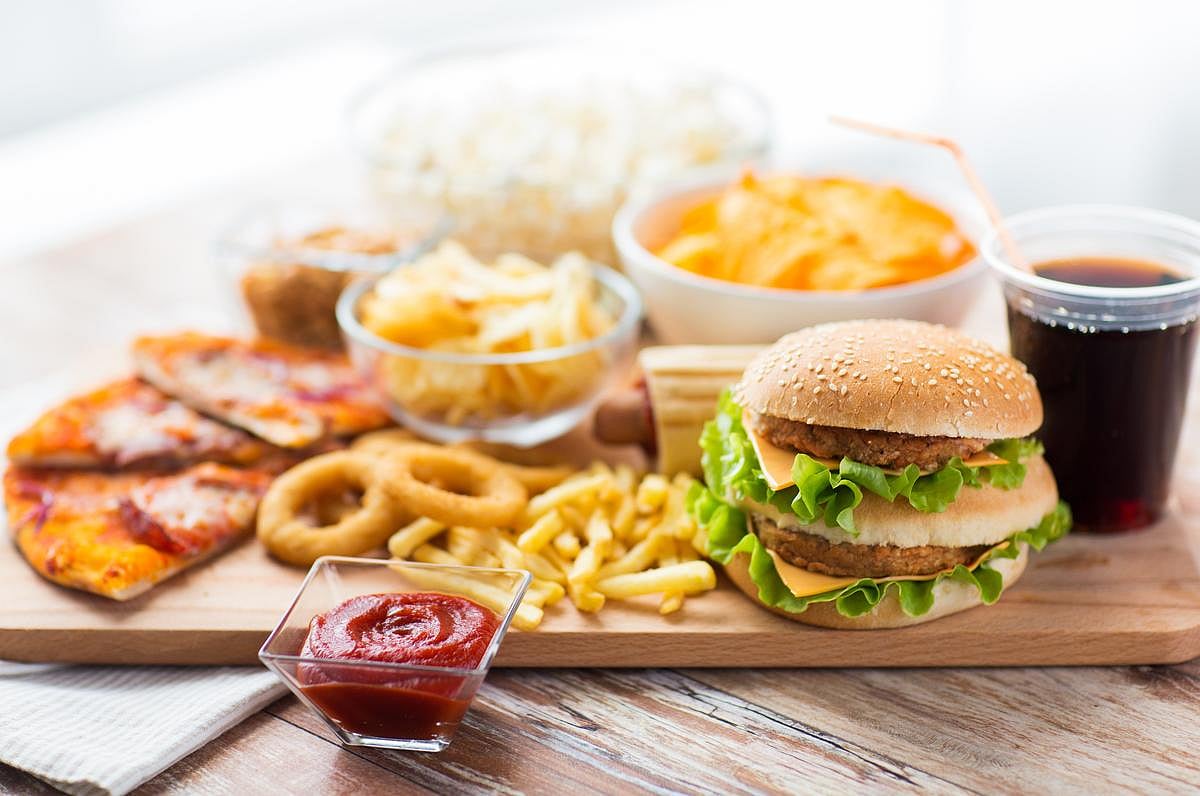
Findings show that from 1999 to 2018, ultraprocessed food made up the majority of youths’ total energy intake
TUESDAY, Aug. 10, 2021 (HealthDay News) — From 1999 to 2018, the proportion of calories coming from ultraprocessed foods increased among U.S. youths and comprised the majority of their total caloric intake, according to a study in the Aug. 10 issue of the Journal of the American Medical Association.
Lu Wang, Ph.D., from the Friedman School of Nutrition Science and Policy at Tufts University in Boston, and colleagues assessed trends in the consumption of ultraprocessed foods among 33,795 U.S. youths using data from 10 cycles of the National Health and Nutrition Examination Survey (1999-2000 to 2017-2018).
The researchers found that from 1999 to 2018, the estimated percentage of total energy from consumption of ultraprocessed foods increased by 5.6 percent, while the percentage of total energy from consumption of unprocessed or minimally processed foods decreased by 5.3 percent. The estimated percentage of energy from consumption of ready-to-heat and ready-to-eat mixed dishes and sweet snacks and sweets increased, while the estimated percentage of energy decreased for sugar-sweetened beverages and for processed fats and oils, condiments, and sauces. Compared with White youths, there was a significantly larger increase in the estimated percentage of energy from consumption of ultraprocessed foods among non-Hispanic Black youths and Mexican American youths.
“The lack of disparities by parental education level and family income to poverty ratio suggests that ultraprocessed foods are pervasive in the diet of U.S. youths and supports the need to reduce consumption of ultraprocessed foods among all population subgroups,” the authors write.
 Eating More Ultraprocessed Foods Heightens Risk for Chronic Diseases
  Nutritional Deficiencies Seen in Youth Taking GLP-1 Receptor Agonists
  2009 to 2023 Saw Surge in Probiotic Supplement Use
  Sugar-Sweetened Beverage, Fruit Juice Intake Linked to Hypertension Risk
  Isometric Exercise Training Three Times a Week Preserves Cardiovascular Benefits
  Sugar Exposure in Early Life Linked to Anxiety in Adulthood
  Eating More Whole Grains Daily Linked to Cardiometabolic Benefits
  Intensive BP Lowering Reduces Recurrent Stroke After Intracerebral Hemorrhage



.jpg)
