



Areas under curve were 0.79, 0.78, and 0.86 for hypertension, ischemic heart disease, and cerebrovascular accident, respectively
TUESDAY, Sept. 8, 2026 (HealthDay News) — A deep learning-based algorithm can identify hypertension (HTN), ischemic heart disease (IHD), and cerebrovascular accident (CVA) from routine mammography, according to a study presented at the annual meeting of the European Society of Cardiology, held from Aug. 28 to 31 in Munich.
Liron Ben-Ari, from Tel Aviv University in Israel, and colleagues developed a deep learning-based algorithm for detecting established cardiovascular diseases from routine mammography images and examining the diagnostic performance for HTN, IHD, and CVA. The presence of HTN, IHD, and CVA was predicted directly from mammographic images using a convolutional neural network. The retrospective cohort study included 29,921 women who underwent at least one mammography examination between 2011 and 2025. Data were included from 97,364 mammography examinations; 5,458 patients had breast cancer.
Patients were followed for a median of 7.3 years. The researchers found that disease prevalence was 16, 2.5, and 2.5 percent for HTN, IHD, and CVA, respectively, throughout the cohort. The algorithm evaluation yielded an area under the curve (AUC) of 0.79, 0.78, and 0.86 for HTN, IHD, and CVA, respectively. Consistent results were seen in sensitivity analyses, with improved performance for mediolateral oblique views (AUC, 0.80, 0.80, and 0.88 for HTN, IHD, and CVA, respectively).
“Because mammography is already widely used, analyzing the same images for cardiovascular information could potentially offer a scalable approach without requiring an additional imaging examination,” coauthor Viana Copeland, M.B.B.S., also from Tel Aviv University, said in a statement. “Mammography also reaches many women in midlife, an important period for recognizing and addressing cardiovascular risk.”
 Urine Cell-Free RNA Shows Promise as Biomarker for Bladder Cancer
  Age-, Joint-Specific Ultrasound Reference Values Set for Healthy Joints
  Dense Breast Notification Linked to Increase in Use of Supplemental Ultrasound
 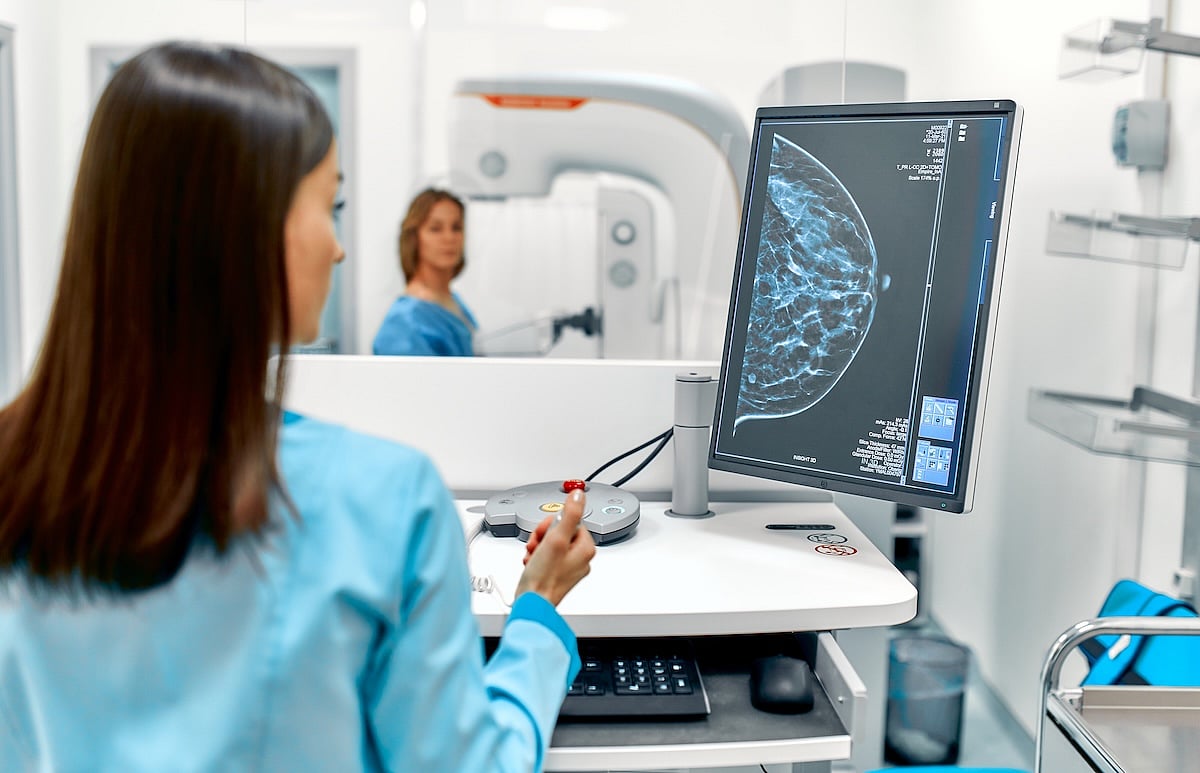 Mammography Trials Yield Excess-Incidence Patterns Consistent With Low Overdiagnosis
  Gap Found Between Awareness of Breast Cancer Risk and Risk-Reducing Behavior
  Exercise Intervention Linked to Improved Attention, Memory in Breast Cancer
  Lower Breast, Cervical Cancer Screening Seen for Adults With Disabilities
  Alcohol-Attributable Cancer Mortality Has Increased Significantly in the U.S.




.jpg)