


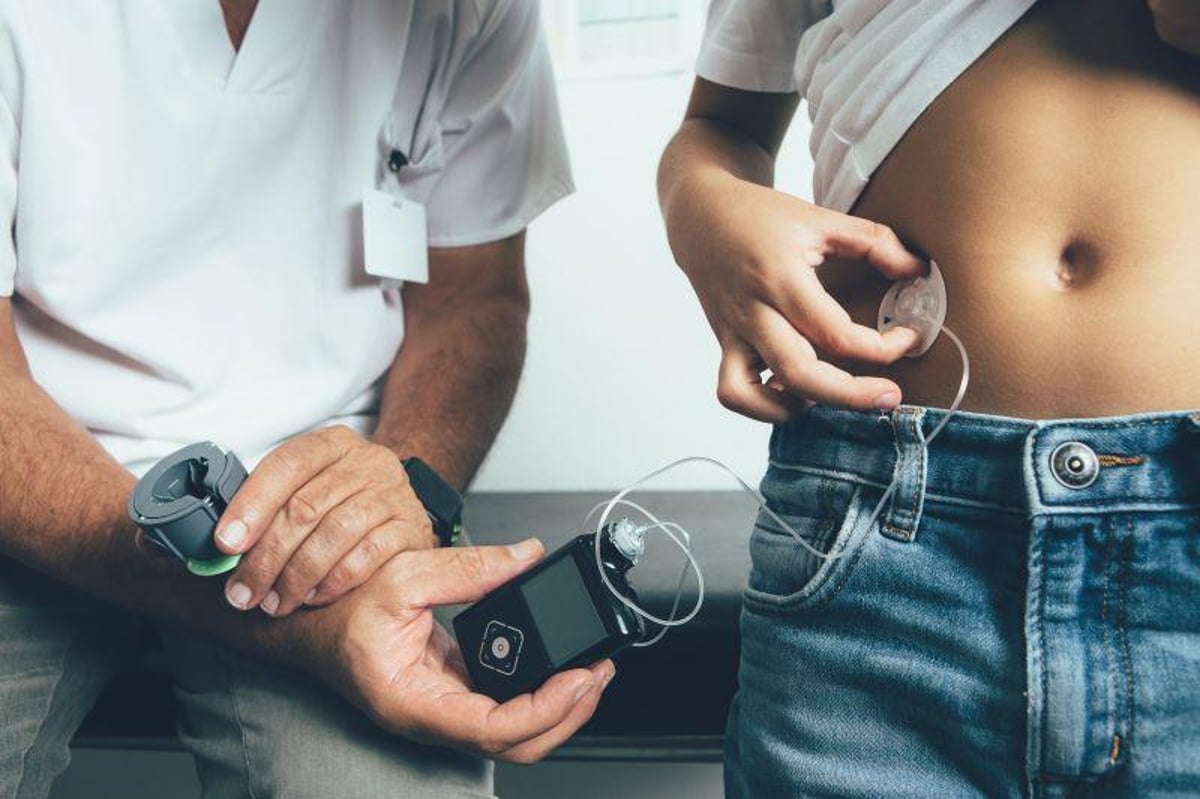
Improved glucose control seen with no increase in hypoglycemia compared with standard insulin therapy
FRIDAY, Jan. 27, 2023 (HealthDay News) — For adults with type 2 diabetes, a fully closed-loop insulin delivery system improves glucose control without increasing hypoglycemia compared with standard insulin therapy, according to a study published online Jan. 11 in Nature Medicine.
Aideen B. Daly, M.B.B.S., from the Wellcome-MRC Institute of Metabolic Science at Addenbrooke’s Hospital in Cambridge, England, and colleagues conducted a randomized crossover study to compare eight weeks of the CamAPS HX fully closed-loop app with standard insulin therapy and a masked glucose sensor (control). A two- to four-week washout period separated the treatments. Twenty-eight participants were randomly assigned to two groups (14 each to closed-loop therapy first and control therapy first).
The researchers found that the proportion of time in the target glucose range (3.9 to 10.0 mmol l-1) was 66.3 ± 14.9 percent and 32.3 ± 24.7 percent with closed-loop therapy and control therapy, respectively. Time >10.0 mmol l-1 was 33.2 ± 14.8 and 67.0 ± 25.2 percent with closed-loop therapy and control therapy, respectively. Compared with the control period, mean glucose was lower during the closed-loop therapy period (9.2 ± 1.2 mmol l-1 versus 12.6 ± 3.0 mmol l‑1). In addition, hemoglobin A1c was lower following closed-loop versus control therapy (57 ± 9 mmol mol-1 versus 72 ± 13 mmol mol-1). The groups had a similar time <3.9 mmol l-1. Severe hypoglycemia events did not occur in either period.
“This study suggests that fully closed-loop insulin delivery is a safe and efficacious approach to manage type 2 diabetes in adults,” the authors write.
Dexcom supplied discounted continuous glucose monitoring devices and sensors for the study.
.jpg) Pregnancy Complications Linked to Subsequent Risk for Cardiometabolic-Renal Conditions
 GLP-1 Receptor Agonists, SGLT-2is Slow Renal Function Decline in T2D With Albuminuria
 Genetics, Diabetes Tied to MASLD-Associated Cirrhosis Before Age 50
 Study IDs Risk Factors for Ketoacidosis in Adults With T2D Receiving SGLT2 Inhibitors
 Treatment Satisfaction Higher for Patients With RA Choosing Their Own Treatment
.jpg) Most Specialty Oral Anticancer Meds for Blood Cancers Are Initially Rejected by Insurers
 Drug Interactions Reducing Contraceptive Effectiveness Common in Epilepsy
 1 in 3 With Lupus Take Supplements, Medications With Potential for Interactions




.jpg)