Seeds sold online nationwide came from a supplier lot tied to 32 illnesses in six states
FRIDAY, Oct. 9, 2026 (HealthDay News) — Three companies are recalling broccoli seeds sold online nationwide after a contaminated supplier lot was linked to a multistate Salmonella outbreak.
All three products trace back to a single bulk seed lot, No. W4105, according to the companies and the U.S. Food and Drug Administration (FDA).
People got sick after eating broccoli sprouts and microgreens grown from seeds in that lot. When the FDA tested a seed sample, it found Salmonella that genetically matched the outbreak strain, the agency said.
As of Oct. 7, the outbreak had sickened 32 people. Three were hospitalized. No deaths have been reported.
Cases have been reported in Idaho, Minnesota, Montana, Oregon, Utah and Washington. Nearly all patients interviewed by health officials (96%) said they had eaten sprouts or microgreens before getting sick.
The recalled products are:
-
Eden Brothers calabrese broccoli seeds in packets and in 1-ounce and 1-pound bags, lot numbers 1022067 and 1022068. The lot number is printed on the packet or bag. The seeds were sold through EdenBrothers.com and Amazon.com between July 8 and Sept. 28.
-
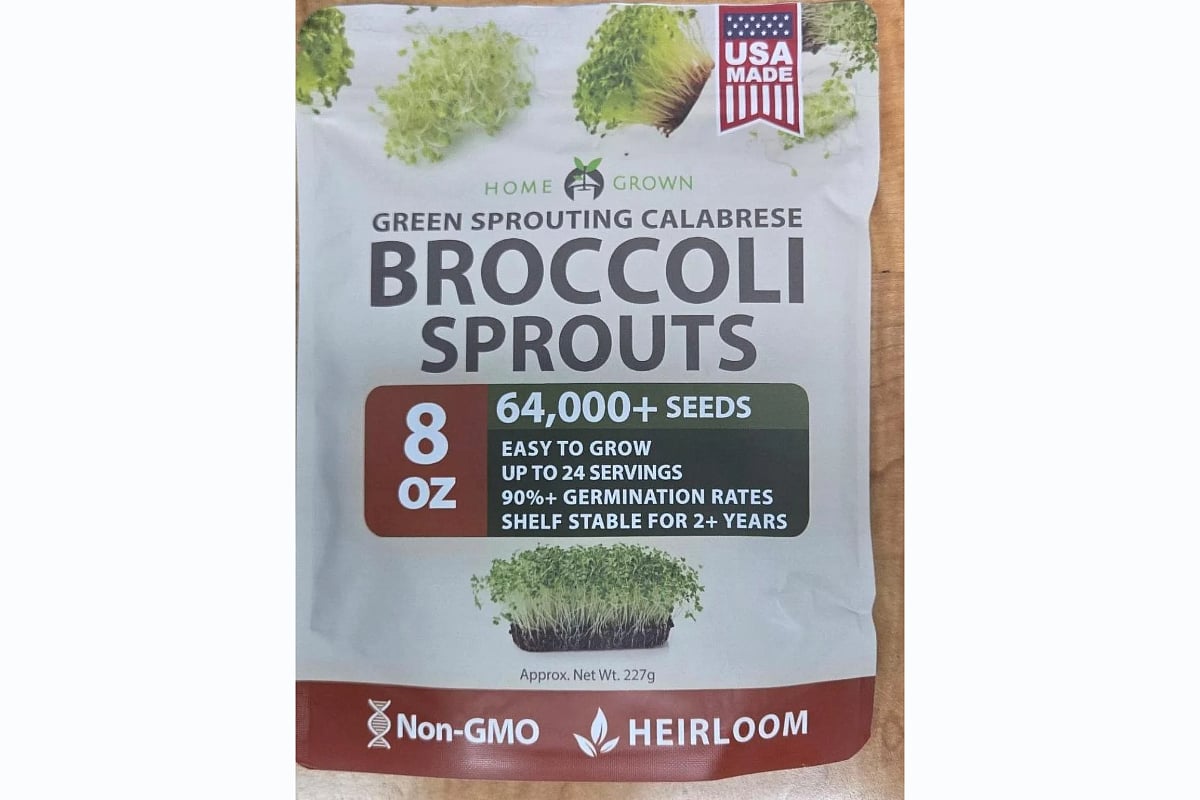
Home Grown Green Sprouting Calabrese Broccoli Seeds, 8-ounce heirloom, in a cream-colored pouch with UPC 850056627443 and the lot code AUG172026 stamped into the top seal. The seeds were sold on Amazon.com between Aug. 20 and Sept. 18.
-
Gardeners Basics Waltham 29 Broccoli Sprouting Seeds in a 1-pound white and green resealable pouch with UPC 848137042889, marked “Packed for 2027.” The company sold the seeds through Amazon, GardenersBasics.com, TikTok Shop, Walmart, eBay and Etsy.
None of the three companies had received reports of illness linked to their own product, their announcements said.
Anyone who has the recalled seeds should stop using them. That means no planting, sprouting or eating them, no growing microgreens with them and no passing them along to others, Eden Brothers advised.
People should seal the seeds in a bag and put them in the household trash rather than a compost pile. Hands, containers and surfaces that touched the seeds should be washed, the FDA and the companies said.
Anyone who shared the seeds should tell the people who received them about the recall.
Salmonella illness usually begins 12 to 72 hours after eating contaminated food. Symptoms include diarrhea, fever and stomach cramps, and they typically last four to seven days, the FDA said.
Children younger than 5, older adults and people with weakened immune systems are more likely to become seriously ill. Anyone with symptoms after eating recalled sprouts or handling the seeds should contact a healthcare provider.
The FDA is investigating this outbreak separately from another one tied to alfalfa sprouts, which involves Salmonella and a toxin-producing strain of E. coli.
More information
Visit the U.S. Food and Drug Administration for more information about Salmonella.
SOURCES: U.S. Food and Drug Administration, Oct. 2, 2026; Oct. 7, 2026; Oct. 8, 2026
 Nearly 3 in 4 Older Adults Express Interest in Vaccine to Prevent Dementia
  People With Autism Have Shorter Life Expectancy
  Acute Myeloid Leukemia Increasingly Impacting Older Adults Globally
  Adults Hold Outdated Beliefs About Antibiotics
  Healthy Lifestyle in Early Childhood Linked to Lower Risk for IBD
  Non-U.S.-Born Physicians Make Up Nearly Half of Internal Medicine Workforce
  NEWS2 Scores Can ID Patients With Suspected Sepsis Needing Timely Treatment
  CHEST Issues Guidelines for Management of Adult Bronchiectasis