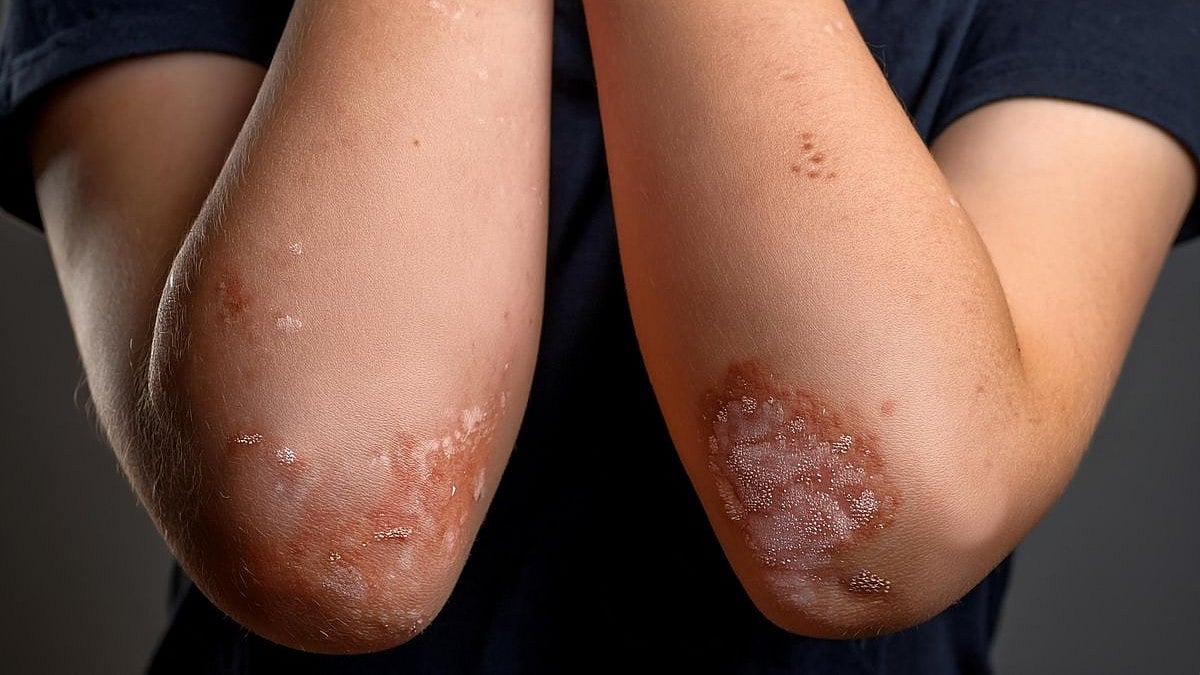
Moderate QoL impact reported, with higher burden of QoL reported by Hispanic/Latino and Black/African Americans
MONDAY, July 20, 2026 (HealthDay News) — Individuals across races and ethnicities report psoriasis as a considerable burden, with reports of transportation barriers, difficulties accessing medications, and delayed care, according to a study published online July 15 in Dermatology & Therapy.
Victoria Barbosa, M.D., M.P.H., from the University of Chicago Medicine, and colleagues conducted an online, cross-sectional survey among U.S. adults with psoriasis. Descriptive data were obtained, including patient-reported outcome measures and questions on disease knowledge, health care access and utilization, quality of life (QoL), and social impact.
Overall, 68.1, 19.3, and 20.4 percent of the 285 participants identified as White, Black/African American (BAA), and Hispanic/Latino (H/L), respectively. The researchers found that psoriasis severity was reported as moderate and severe, respectively, by 36.8 percent (37.6, 25.5, 50.0, and 27.6 percent for White, BAA, Asian, and H/L, respectively) and by 10.2 percent (8.2, 10.9, 20.0, and 6.9 percent, respectively). Moderate QoL impact was reported (Dermatology Life Quality Index mean, 10.3), with the H/L and BAA groups reporting high burden (16.6 and 15.1, respectively). Overall, 58.6 percent used prescription medications during flares, with similar rates seen across races and ethnicities. A total of 21.4 percent reported transportation barriers, with these reports occurring more often among H/L and BAA individuals (44.8 and 34.5 percent, respectively). Difficulty accessing medicine/health care was reported by 26.3 percent, especially among Whites (29.4 percent). Delayed care due to cultural/linguistic differences was reported by 29.1 percent, most often by the BAA and H/L groups.
“The observed variations in social barriers and patient-reported challenges in health care access and utilization demonstrate the need for culturally competent and enhanced interdisciplinary care,” the authors write.
Several authors disclosed ties to biopharmaceutical and dermatology companies, including Eli Lilly, which funded the study.
 Drug Interactions Reducing Contraceptive Effectiveness Common in Epilepsy
 .jpg) Most Specialty Oral Anticancer Meds for Blood Cancers Are Initially Rejected by Insurers
Most Specialty Oral Anticancer Meds for Blood Cancers Are Initially Rejected by Insurers  Pre-Prostate Biopsy MRI Use Increased From 2017 to 2026
  1 in 3 With Lupus Take Supplements, Medications With Potential for Interactions
  Holding DMARDs at Time of COVID-19 Vaccine Not Warranted in Those With Inflammatory Arthritis
  2013 to 2024 Saw Decrease in Benzodiazepine Prescribing
  GLP-1 Receptor Agonists, SGLT-2is Slow Renal Function Decline in T2D With Albuminuria
  Polypharmacy of Prescription Medications Increased for U.S. Older Adults