


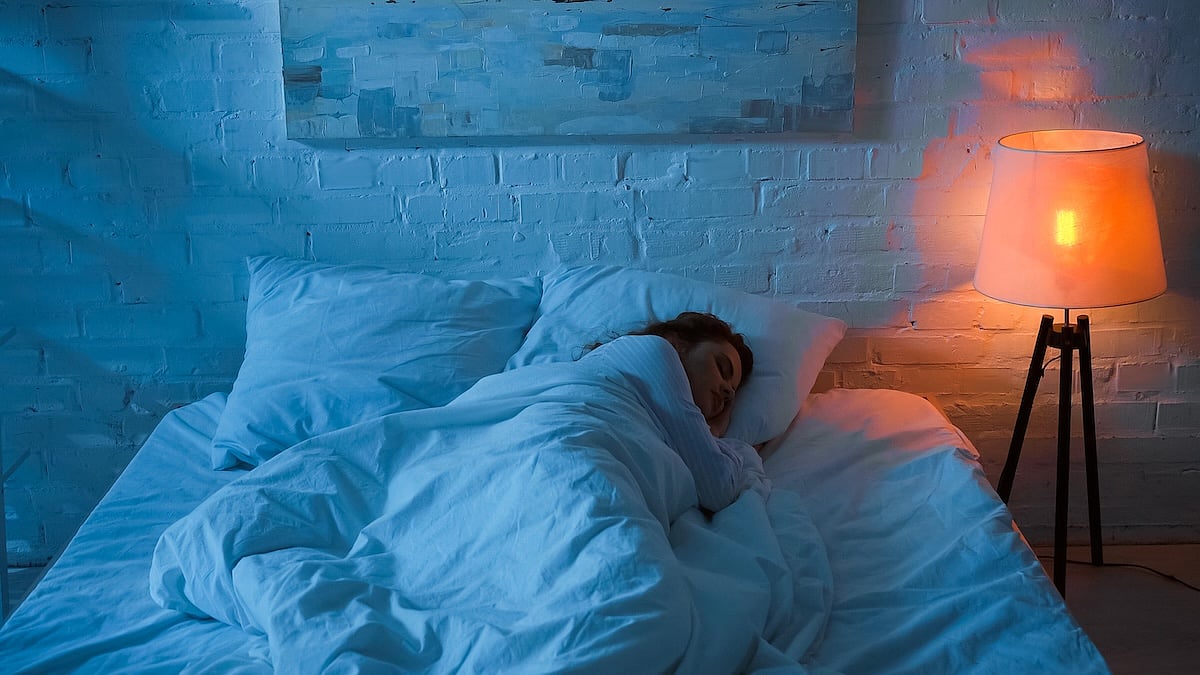
Participants in highest quartile of nighttime illuminance had 10 percent lower sleep efficiency, 55.6 minutes lower total sleep time
MONDAY, Sept. 21, 2026 (HealthDay News) — For patients with schizophrenia, nighttime light exposure is significantly associated with objective sleep parameters, according to a study published in the October issue of Psychiatry Research.
Ryota Miyake, from the Fujita Health University School of Medicine in Aichi, Japan, and colleagues conducted a cross-sectional study involving 225 outpatients with schizophrenia whose sleep was measured using the Pittsburgh Sleep Quality Index and a wrist-worn actigraphy. Nighttime light exposure was measured using an actigraphy and a portable photometer placed at the bedside.
The median nighttime illuminance was 1.4 and 4.1 lux measured using the actigraphy and photometer, respectively. The researchers found that compared with the lowest quartile, the highest quartile of nighttime illuminance measured using actigraphy was significantly associated with 10.0 percent lower sleep efficiency, 55.6 minutes lower total sleep time, 0.2 log minutes longer sleep onset time, and 31.0 minutes longer wake after sleep onset. An association was also seen between nighttime illuminance measured using the photometer and each sleep parameter. No significant association was seen for subjective sleep parameters with nighttime light exposure.
“Optimizing the nighttime light environment could become an important part of sleep hygiene if future longitudinal and intervention studies confirm these findings,” Miyake said in a statement.
Several authors disclosed ties to the biopharmaceutical and health care industries.
Abstract/Full Text (subscription or payment may be required)
 Psychiatrists Only Agree 55 Percent of the Time on Diagnoses
  Brain Abnormalities Identified in Children at Risk for Schizophrenia
  Systemic Physical Multimorbidity Higher With Schizophrenia-Spectrum, Bipolar Disorder
  Ketogenic Diet Beneficial in Schizophrenia, Bipolar-1 Disorders
  Brain Lithium Concentrations Mirror Serum Concentrations in Bipolar Disorder
 .jpg) Lower Dementia Risk Seen With SGLT2is in Seniors 65+ With Mood, Psychotic Disorders
Lower Dementia Risk Seen With SGLT2is in Seniors 65+ With Mood, Psychotic Disorders  Social Determinants of Health Tied to Neurobiological Abnormalities in Schizophrenia
  Risk for Mania, Bipolar Disease Increased After Hospital-Based Care for Hallucinogens



.jpg)
