


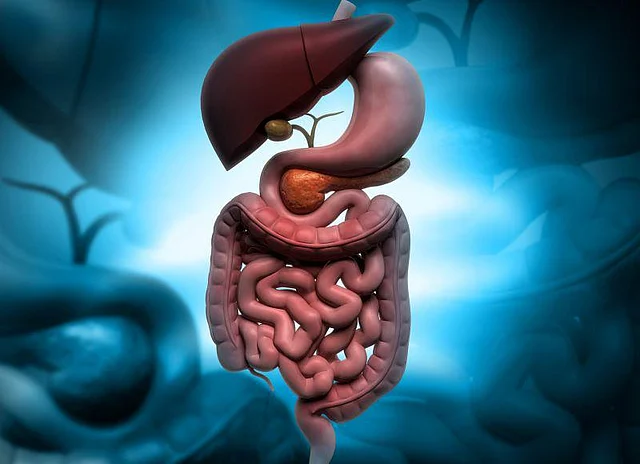
Prediction accuracy of the nomogram higher than that of Ann Arbor Stage for primary intestinal non-Hodgkin lymphoma patients
THURSDAY, Jan. 20, 2022 (HealthDay News) — A nomogram can assist clinicians in predicting cancer-specific survival in patients with primary intestinal non-Hodgkin lymphoma (PINHL), according to a study published online Dec. 20 in Cancer Management and Research.
Cuifen Zhang, from the Guangzhou University of Chinese Medicine, and colleagues developed and verified a novel nomogram to predict long-term cancer-specific survival in patients with PINHL. Data for a training cohort of 2,372 PINHL patients obtained from the Surveillance, Epidemiology, and End Results (SEER) database were analyzed. The nomogram was validated internally and externally in a SEER cohort with 1,014 patients and a First Affiliated Hospital of Guangzhou University of Chinese Medicine cohort with 37 patients.
The researchers identified five independent predictors: age, marital status, Ann Arbor Stage, B symptoms, and histologic type. Good performance was seen in discrimination and calibration; in the training, internal validation, and external validation cohorts, the C-indices were 0.772, 0.763, and 0.851, respectively. The nomogram was indicated to be accurate based on the calibration curve; a decision curve analysis showed high clinical application value for the nomogram. Using area under the receiver operating characteristic curve values, the prediction accuracy of the nomogram was higher than that of Ann Arbor Stage (0.804 versus 0.630, 0.800 versus 0.637, and 0.811 versus 0.598 for the training, internal validation, and external validation cohorts, respectively).
“Compared with the Ann Arbor Stage, the proposed nomogram showed superior performance in identification, calibration, and clinical guidance,” the authors write.
 Early Survivorship Care Linked to Improved Outcomes in Head, Neck Cancer
 Response to Autologous HSCT Durable for Patients With Systemic Sclerosis
 Exercise Intervention Linked to Improved Attention, Memory in Breast Cancer
.jpg) Cancer Survivors Have Lower Levels of Physical Activity
.jpg) Most Specialty Oral Anticancer Meds for Blood Cancers Are Initially Rejected by Insurers
 Personalized Support Boosts Families" Genetic Testing for Hereditary Cancers
 Childhood Cancer Survivors Often Have Mental Distress in Adulthood
 Pharmacist-Led Med Review Improves Medication Quality in Older Patients With Cancer





