


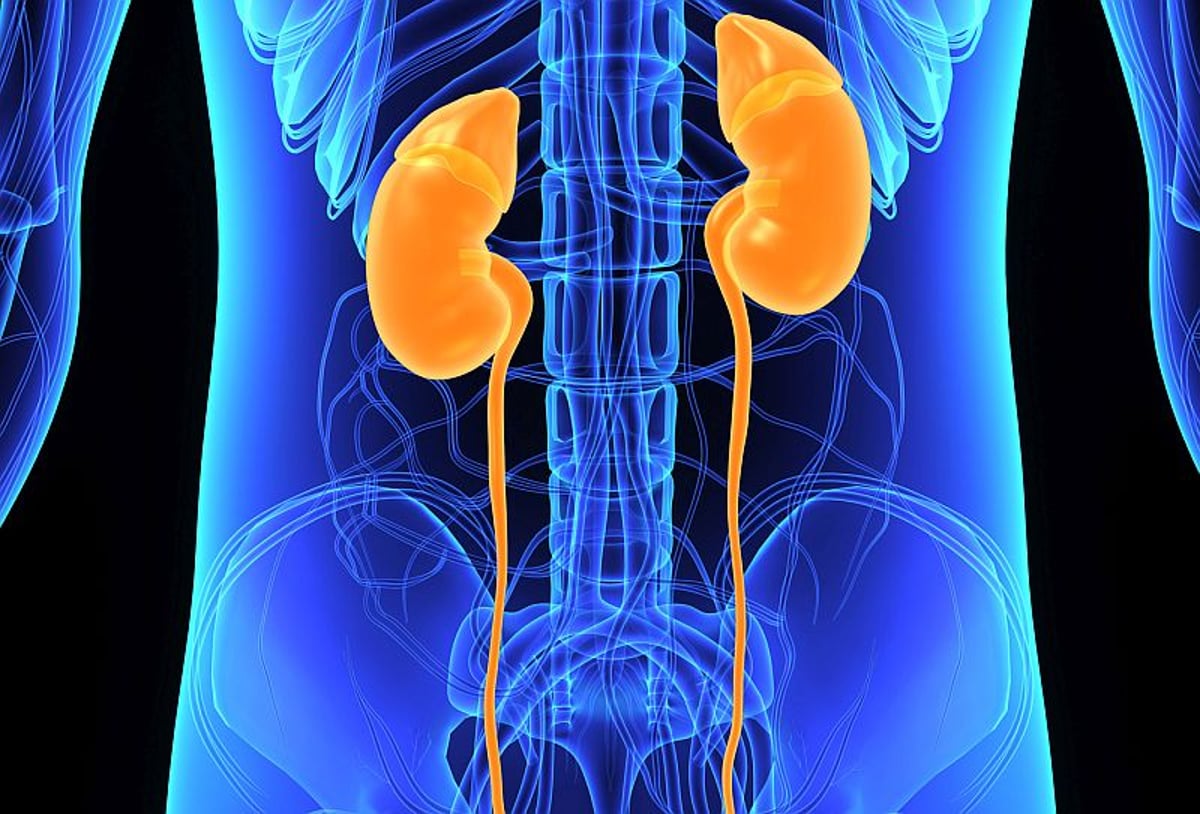
 Fifty-nine percent of patients had complete response at four to six weeks after initial therapy
THURSDAY, May 7, 2020 (HealthDay News) — For patients with low-grade upper tract urothelial cancer, primary chemoablation with intracavitary UGN-101, a mitomycin-containing reverse thermal gel, results in clinically significant disease eradication, according to a study published online April 29 in The Lancet Oncology.
Nir Kleinmann, M.D., from Sheba Medical Center in Ramat Gan, Israel, and colleagues conducted an open-label, single-arm, phase 3 trial involving participants from 24 academic sites in the United States and Israel. Participants with primary or recurrent biopsy-proven, low-grade upper tract urothelial cancer were registered to receive six instillations of once-weekly UGN-101 via retrograde catheter to the renal pelvis and calyces. Four to six weeks after completion of initial therapy, all patients had a planned primary disease evaluation.
Seventy-one of 74 enrolled patients received at least one dose of UGN-101 between April 6, 2017, and Nov. 26, 2018. The researchers found that at the primary disease evaluation visit, 42 patients (59 percent) had a complete response. For patients with a complete response, the median follow-up was 11.0 months. The most frequently reported adverse events were ureteric stenosis, urinary tract infection, hematuria, flank pain, and nausea (44, 32, 31, 30, and 24 percent, respectively). Twenty-seven percent of patients had study drug-related or procedure-related serious adverse events.
“This novel kidney-sparing approach might offer an important alternative for patients with low-grade upper tract urothelial cancer and expand the treatment options for patients with tumors that are difficult to treat endoscopically,” the authors write.
Several authors disclosed financial ties to biopharmaceutical companies, including UroGen Pharma, which funded the study.
Abstract/Full Text (subscription or payment may be required)
Editorial (subscription or payment may be required)
 Low Diagnostic Yield Seen for Postmastectomy Imaging in Patients With DCIS
 Morphea Linked to Higher Risk for Cancer
 Chemo May Accelerate Biological Aging in Breast Cancer Survivors
 Nonmedical Expense Reimbursement May Make Cancer Trials More Accessible
 Mivocabtagene Autoleucel Shows Promise in Stiff Person Syndrome
.jpg) Most Specialty Oral Anticancer Meds for Blood Cancers Are Initially Rejected by Insurers
 Personalized Support Boosts Families" Genetic Testing for Hereditary Cancers
.jpg) Cancer Survivors Have Lower Levels of Physical Activity


.jpeg)


