


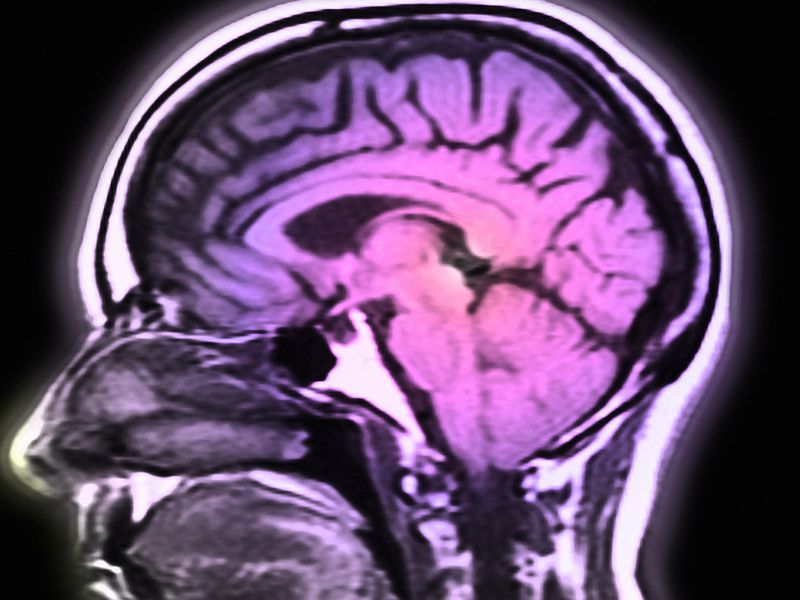
 Estimated 0.049 elevation seen in the entorhinal cortex tau standardized uptake value ratio
MONDAY, March 4, 2019 (HealthDay News) — Older adults who are witnessed to have sleep apnea have increased accumulations of tau in the entorhinal cortex (ERC), according to a study scheduled for presentation at the upcoming annual meeting of the American Academy of Neurology, to be held from May 4 to 10 in Philadelphia.
Diego Carvalho, M.D., from the Mayo Clinic in Rochester, Minnesota, and colleagues identified 288 participants aged ≥65 years who did not have cognitive impairment and performed tau-positron emission tomography (PET) scans and amyloid PET scans. Participants’ bed partners completed a questionnaire assessing whether they had witnessed apneas during sleep. The authors examined the association between ERC tau and witness apneas while controlling for potentially confounding variables.
The researchers found that 43 participants (15 percent) had witnessed apneas during sleep. There was a significant association for witnessed apneas with tau in the ERC. After controlling for multiple confounders, the model estimated a 0.049 elevation in the ERC tau standardized uptake value ratio.
“Our research results raise the possibility that sleep apnea affects tau accumulation,” Carvalho said in a statement. “But it’s also possible that higher levels of tau in other regions may predispose a person to sleep apnea, so longer studies are now needed to solve this chicken and egg problem.”
 Early Postpartum Brain Loss Prominent but Reversible in MS
 One-Hour Cognitive Test Provides Meaningful Information Beyond Traditional Memory Screening
 Seniors With Hypertension Benefit From Pausing ACE Inhibitors, ARBs on Morning of Surgery
 Healthy Sleep May Protect Brain Health From Cardiometabolic Disease Risk Factors
 More Extensive Deposits of Tau Seen in Early-Onset Alzheimer Disease
 CTE Pathology Found in Nearly 75 Percent of Deceased Former NFL Players
 Lower Vertebral Bone Mineral Density Linked to Cognitive Decline
 Cortical Atrophy in Early-Onset Alzheimer Disease Signature Can Predict Progression to Dementia
.jpeg)




