


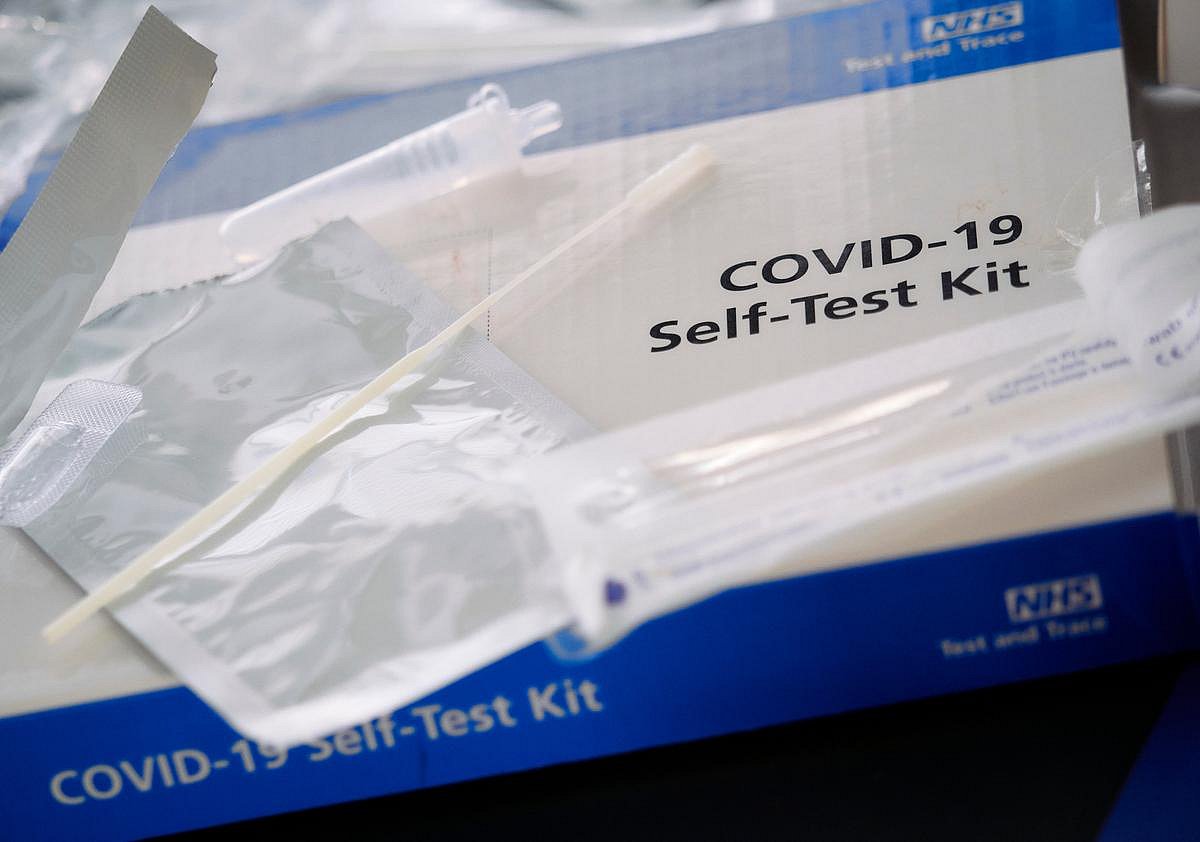
Lower risk observed 31 to 180 days after infection but not in other time windows across four-year observation period
WEDNESDAY, Sept. 16, 2026 (HealthDay News) — COVID-19 infection is associated with a lower risk for developing type 1 diabetes (T1D) in individuals younger than 30 years, according to a study presented at the annual meeting of the European Association for the Study of Diabetes, being held from Sept. 28 to Oct. 2 in Milan.
Carl Villaro Nolsøe, from Copenhagen University Hospital in Denmark, and colleagues examined whether infection with severe acute respiratory syndrome coronavirus 2 (SARS-CoV-2) was associated with later onset of T1D. The analysis included 2,115 individuals diagnosed with T1D before age 30 years (2020 to 2023) and 10,575 diabetes-free, matched controls.
The researchers found that SARS-CoV-2 infection was associated with a reduced risk for subsequent T1D (hazard ratio [HR], 0.84; 95 percent confidence interval [CI], 0.71 to 0.98; P = 0.031), with no differences across individual viral variants. This lower risk was only seen 31 to 180 days after infection (HR, 0.58; 95 percent CI, 0.40 to 0.84; P = 0.004). Lower T1D risk was limited to unvaccinated individuals with infection (HR, 0.76; 95 percent CI, 0.59 to 0.98; P = 0.031). Additionally, the association was seen in females (HR, 0.74; 95 percent CI, 0.57 to 0.96; P = 0.024) but not males (HR, 0.91; 95 percent CI, 0.74 to 1.11; P = 0.350). There were no significant differences in risk across age groups.
“Most previous studies have found no association between SARS-CoV-2 and development of T1D,” the authors write. “Our new study used Danish high-quality registries with a very high rate of test coverage by polymerase chain reaction and we had complete information on vaccination status. The study is observational in nature, which means we cannot definitely say for sure that the reduced risk of type 1 diabetes was caused by SARS-CoV-2 infection.”
.jpg) Time-Restricted Eating May Help Patients With Type 1 Diabetes
Time-Restricted Eating May Help Patients With Type 1 Diabetes  Maternal Diabetes Linked to Increased Risk for Epilepsy in Offspring
  Preexisting Medical Conditions Linked to Range of Botox Injection Complications
  Diabetes Linked to Increased Risk for Sudden Cardiac Death
  Combo of Step Count and Step Pace Tied to Lower Risk for Early Death
  Very Low-Carb Diet Shows Greater Cardiometabolic Benefits Than Other Diets
  Aircrew Face Higher Odds of Radiation-Related Cancer Deaths
  Long-Term Medication Adherence Tied to Lower Cardiovascular Event Rate in Type 2 Diabetes



.jpg)