Extracorporeal shockwave therapy likely reduces pain, may improve function at short-term follow-up
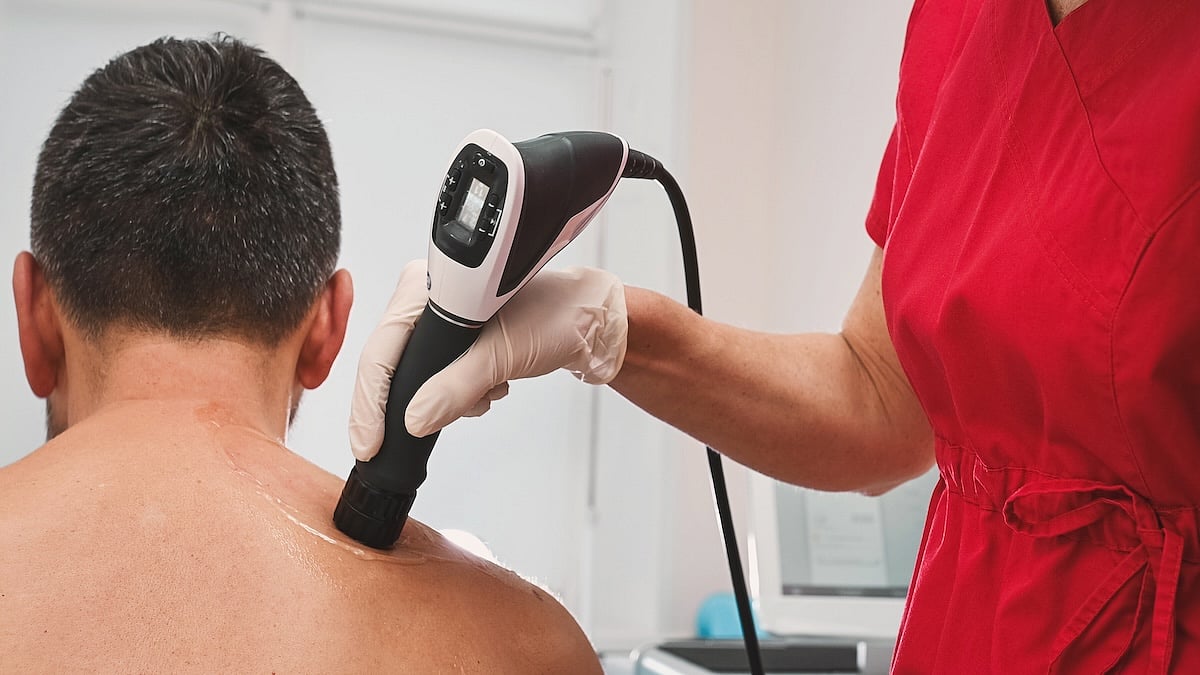
MONDAY, Nov. 23, 2026 (HealthDay News) — In adhesive capsulitis, extracorporeal shockwave therapy may yield a reduction in short-term pain and manipulation under anesthesia may improve short-term flexion, according to a study published online Nov. 4 in The BMJ.
Jiahao Meng, from Xiangya Hospital in Changsha, China, and colleagues conducted a systematic review and network meta-analysis of randomized controlled trials to compare the benefits and harms of therapeutic interventions for adhesive capsulitis. The review included 189 randomized controlled trials, with 12,988 participants and 59 interventions.
Most of the trials contributing to principal outcomes had a high risk for bias. The researchers found that based on moderate-certainty evidence, extracorporeal shockwave therapy probably reduced pain compared with usual care at short-term follow-up (mean difference, −1.97 on a 0-to-10 scale). Extracorporeal shockwave therapy may improve function based on low-certainty evidence (mean difference, −11.42 on a 0-to-100 scale), though important incoherence limited direct and indirect estimates. Moderate-certainty evidence suggested that manipulation under anesthesia combined with intra-articular steroid injections probably improved flexion for short-term range of motion (mean difference, 33.29 degrees), as did manipulation under anesthesia alone (26.16 degrees). Extracorporeal shockwave therapy may improve flexion and abduction based on low-certainty evidence (22.42 and 18.62 degrees, respectively), but important incoherence limited both comparisons. Adverse events were incompletely and inconsistently reported, and consequently, comparative safety remained highly uncertain.
“These findings primarily inform treatment decisions within the first 6 months and do not establish longer-term comparative effectiveness or overall benefit-harm profiles,” the authors write.
Abstract/Full Text (subscription or payment may be required)
 Mivocabtagene Autoleucel Shows Promise in Stiff Person Syndrome
 Seniors With Hypertension Benefit From Pausing ACE Inhibitors, ARBs on Morning of Surgery
 Research Challenges Fusion for Lumbar Degenerative Spondylolisthesis
 Ultrasound-Guided Hydrodissection Yields Improvements in Carpal Tunnel
 Physical Therapist-Supervised Exercise Improves Outcomes After ACL Reconstruction
 2013 to 2024 Saw Decrease in Benzodiazepine Prescribing
 2016 to 2024 Saw Increase in Patients Using Medical Cannabis
 Mindfulness, Tai Chi May Benefit Cancer Survivors