


 Non-inferior rate of clinical success for algorithm defining treatment duration versus usual care
WEDNESDAY, Oct. 24, 2018 (HealthDay News) — For patients with staphylococcal bacteremia, an algorithm that defines treatment duration results in a non-inferior rate of clinical success compared with usual care, according to a study published in the Sept. 25 issue of the Journal of the American Medical Association.
Thomas L. Holland, M.D., from the Duke University Medical Center in Durham, N.C., and colleagues conducted a randomized trial involving adults with staphylococcal bacteremia at 16 medical centers. Follow-up was for 42 days beyond end of therapy for those with Staphylococcus aureus and 28 days for those with coagulase-negative staphylococcal bacteremia. Participants were randomized to algorithm-based therapy (255 patients) or usual practice (254 patients). For the algorithm group, diagnostic evaluation, antibiotic selection, and therapy duration were predefined.
The researchers found that clinical success was documented in 82.0 and 81.5 percent of patients assigned to algorithm-based therapy and usual practice, respectively (difference, 0.5 percent; one-sided 97.5 percent confidence interval, −6.2 to ∞). Serious adverse events were reported in 32.5 and 28.3 percent of algorithm-based therapy and usual practice patients, respectively (difference, 4.2 percent; 95 percent confidence interval, −3.8 to 12.2 percent). The mean duration of therapy was 4.4 days for algorithm-based therapy versus 6.2 days for usual practice among per-protocol patients with simple or uncomplicated bacteremia (difference, −1.8 days; 95 percent confidence interval, −3.1 to −0.6).
“The use of an algorithm to guide testing and treatment compared with usual care resulted in a non-inferior rate of clinical success; although there was not a significant difference in serious adverse events, interpretation is limited by wide confidence intervals,” the authors write.
Several authors disclosed financial ties to the biopharmaceutical industry.
Abstract/Full Text (subscription or payment may be required)
Editorial (subscription or payment may be required)
 H. Pylori Exposure May Contribute to Global Burden of Colorectal Cancer
  Distinct Skin Microbiome Features Emerge Before Atopic Disease Onset in Infants
  About 1 in 20 Hospitalized U.S. Adults With Firearm Injuries Develop Bacterial Infections
  Freshwater Swimming Tied to Stomach Bugs, Skin Conditions
 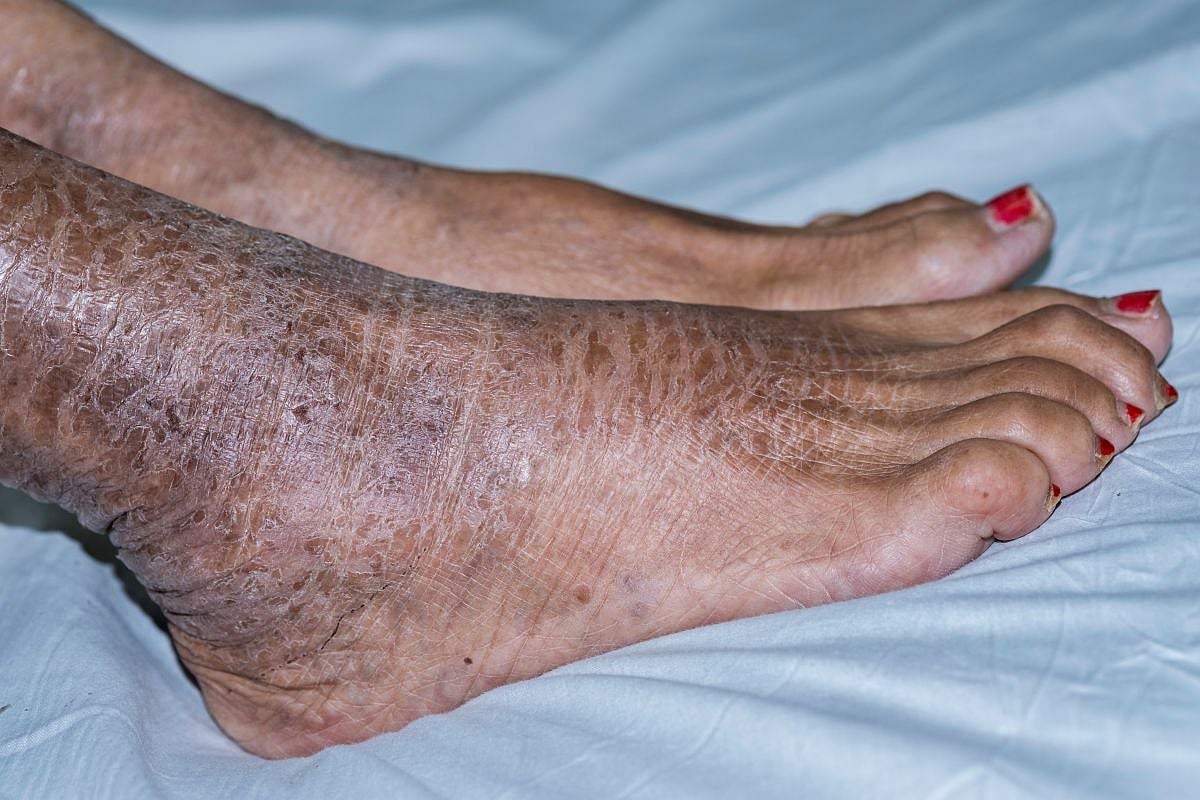 Congenital Ichthyosis Linked to Allergic Disorders
  Considerable Global Disparities Found in Access to Dermatological Care
  Extreme Heat Linked to 33 Clinically Reportable Diagnoses
  Early-Life PFAS Exposure Tied to Intestinal Inflammation in Childhood
 .jpg)




