


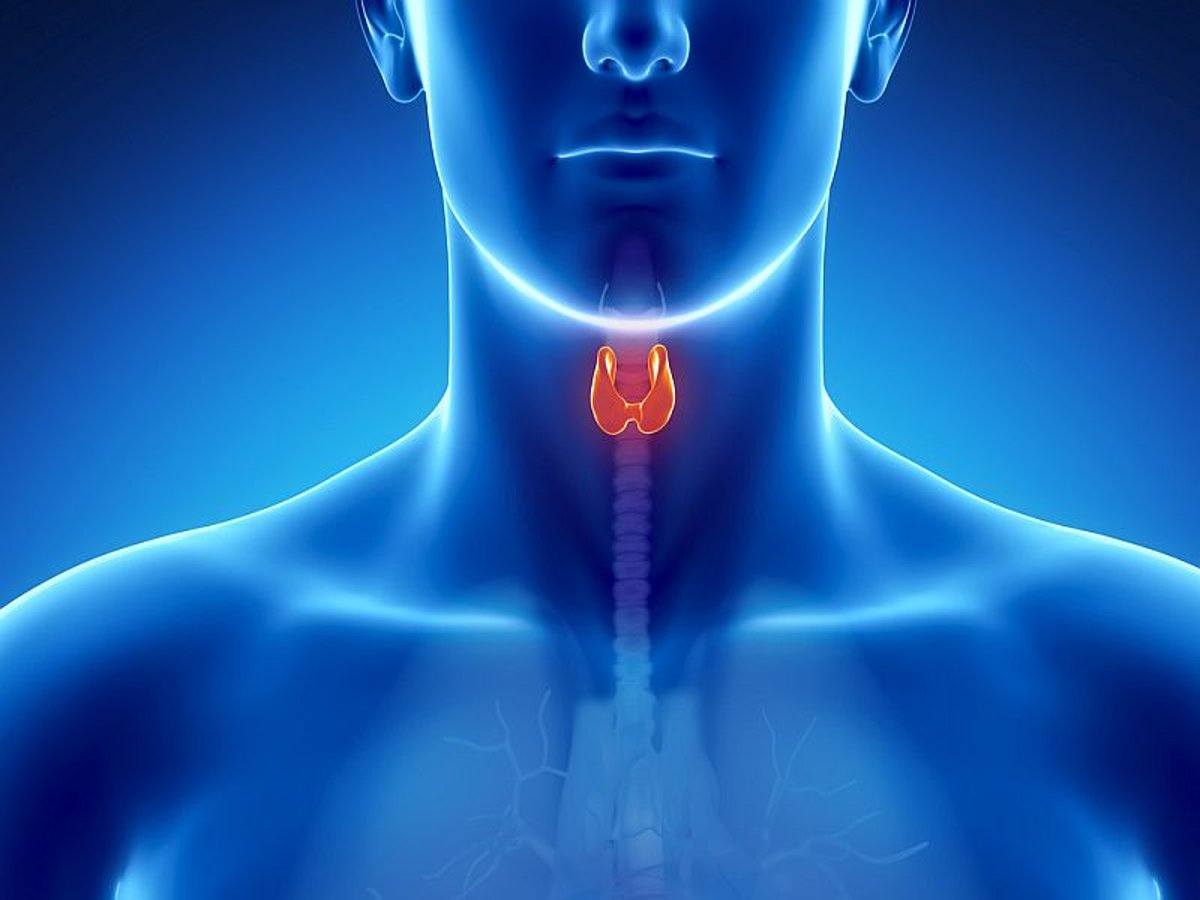
Maternal benign thyroid conditions strongly associated with increased thyroid cancer risk in offspring
WEDNESDAY, Jan. 20, 2021 (HealthDay News) — Maternal health and in utero exposures are associated with an increased risk for subsequent thyroid cancer in offspring, according to a study published online Dec. 18 in The Lancet Diabetes & Endocrinology.
Cari M. Kitahara, Ph.D., from the National Cancer Institute in Rockville, Maryland, and colleagues used registry data from four Nordic countries to assess thyroid cancer risk in offspring in relation to maternal medical history, pregnancy complications, and birth characteristics. The analysis included 2,437 cases of first primary thyroid cancer diagnosed from 1973 to 2013 in Denmark, 1987 to 2014 in Finland, 1967 to 2015 in Norway, or 1973 to 2014 in Sweden.
The researchers found that 81.4 percent of patients had papillary carcinomas, 77.1 percent were women, and 56.7 percent were diagnosed before age 30 years. An increased risk for thyroid cancer in offspring was seen with higher birth weight (odds ratio [OR] per kg, 1.14; 95 percent confidence interval [CI], 1.05 to 1.23), congenital hypothyroidism (OR, 4.55; 95 percent CI, 1.58 to 13.08), maternal diabetes before pregnancy (OR, 1.69; 95 percent CI, 0.98 to 2.93), and postpartum hemorrhage (OR, 1.28; 95 percent CI, 1.06 to 1.55). An increased risk for thyroid cancer in offspring was also seen for the following maternal factors: hypothyroidism (OR, 18.12; 95 percent CI, 10.52 to 31.20), hyperthyroidism (OR, 11.91; 95 percent CI, 6.77 to 20.94), goiter (OR, 67.36; 95 percent CI, 39.89 to 113.76), and benign thyroid neoplasms (OR, 22.50; 95 percent CI, 6.93 to 73.06).
“In-utero exposures, particularly those related to maternal thyroid disorders, might have a long-term influence on thyroid cancer risk in offspring,” the authors write.
Abstract/Full Text (subscription or payment may be required)
 Low Levels of Placental Growth Factor in Pregnancy Linked to Subsequent ADHD in Offspring
  Recommendations Issued for Use of Incretin-Based Meds in Pregnancy
  IBD Not Linked to Risk for Hypertensive Disorders of Pregnancy Overall
  Maternal Vitamin D Status Linked to Preterm Delivery
  Serum 25(OH)D May Serve as Biomarker of Disease Activity in IBD
  Nutritional Deficiencies Seen in Youth Taking GLP-1 Receptor Agonists
  Mom"s Poor Sleep in Late Pregnancy Linked to Offspring"s Obesity Risk in Early Childhood



.jpg)
