


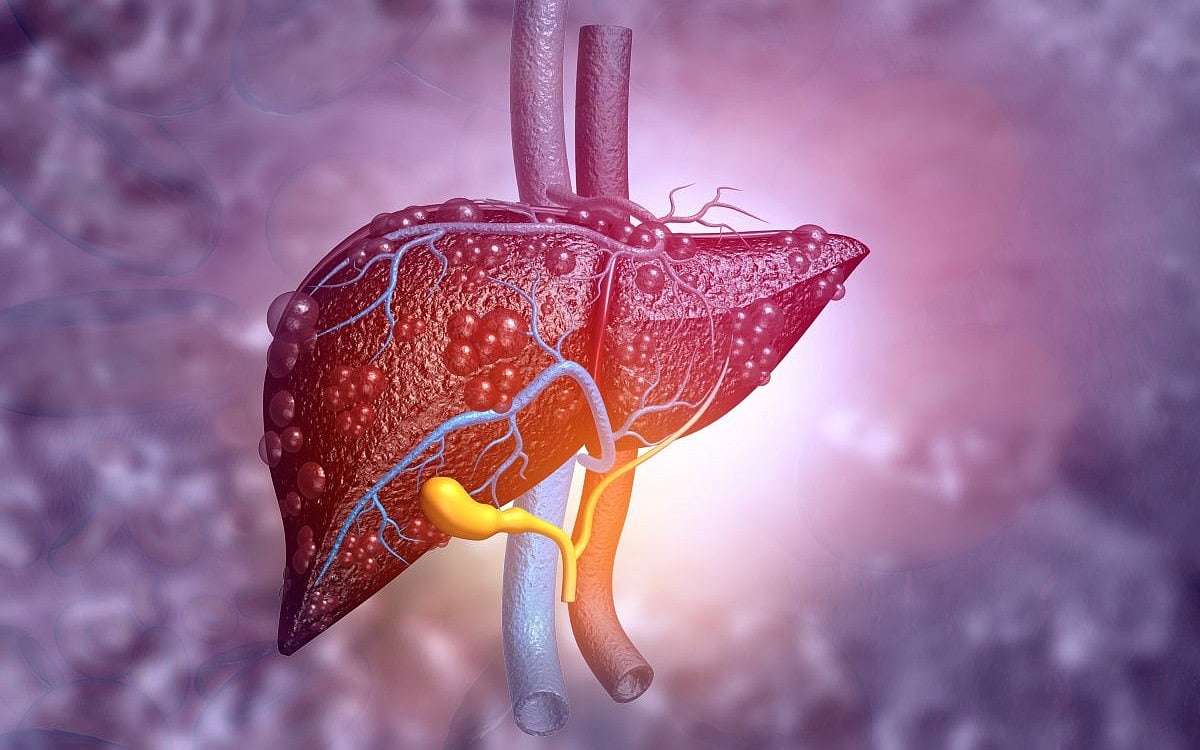
Incident ASCVD risk higher in association with highest fibrosis tier in those with prediabetes
THURSDAY, July 30, 2026 (HealthDay News) — For patients with metabolic dysfunction-associated steatotic liver disease (MASLD), the association between liver fibrosis and atherosclerotic cardiovascular disease (ASCVD) varies with glycemic status, according to a study published in the August issue of Hepatology Communications.
Jaehong Jeong, M.D., from Yonsei University College of Medicine in Seoul, South Korea, and colleagues conducted a retrospective cohort study including individuals with MASLD to examine whether fibrosis severity assessed using guideline-recommended noninvasive liver fibrosis pathways is associated with incident ASCVD across glycemic states.
Data were included for 6,519 individuals with MASLD who had both fibrosis-4 and vibration-controlled transient elastography data; 3,243 had normoglycemia, 2,369 had prediabetes, and 907 had diabetes. The survival analysis cohort included 3,221 participants. The researchers observed an increase in baseline 10-year ASCVD risk with worsening glycemic status. The association between fibrosis severity and incident ASCVD differed by glycemic status in the longitudinal analysis. For patients with prediabetes, incident ASCVD risk was higher in association with the highest fibrosis tier (adjusted subdistribution hazard ratio, 2.62). In younger individuals, this association was more apparent. Five-year cumulative ASCVD incidence was higher across fibrosis tiers in individuals with diabetes (15.2 to 18.5 percent), with no significant increase by fibrosis severity.
“These findings support a tailored approach to ASCVD risk assessment in MASLD,” the authors write. “Fibrosis severity assessed during MASLD evaluation may provide additional clinical information, particularly in patients with prediabetes or younger individuals.”
 Low Hydroxychloroquine Intake, Blood Levels Linked to ASCVD Risk in Lupus
  Steatotic Liver Disease Risk Scores Compared for Predicting Cirrhosis
  Cirrhosis Can Recur After Liver Transplant
  Increase Seen in Rates of Xenobiotic-Induced Liver Injury From 2020 to 2024
  Impact of Alcohol Intake on Fibrosis Risk Varies by Sex, Liver Disease
  Higher Coffee Consumption Linked to Favorable Indicators of Liver Health
  Stepped Alcohol Treatment Via Telehealth Reduces Alcohol Use
  New Model Performs Well for Detecting Alcohol-Associated Liver Disease


.jpg)

