


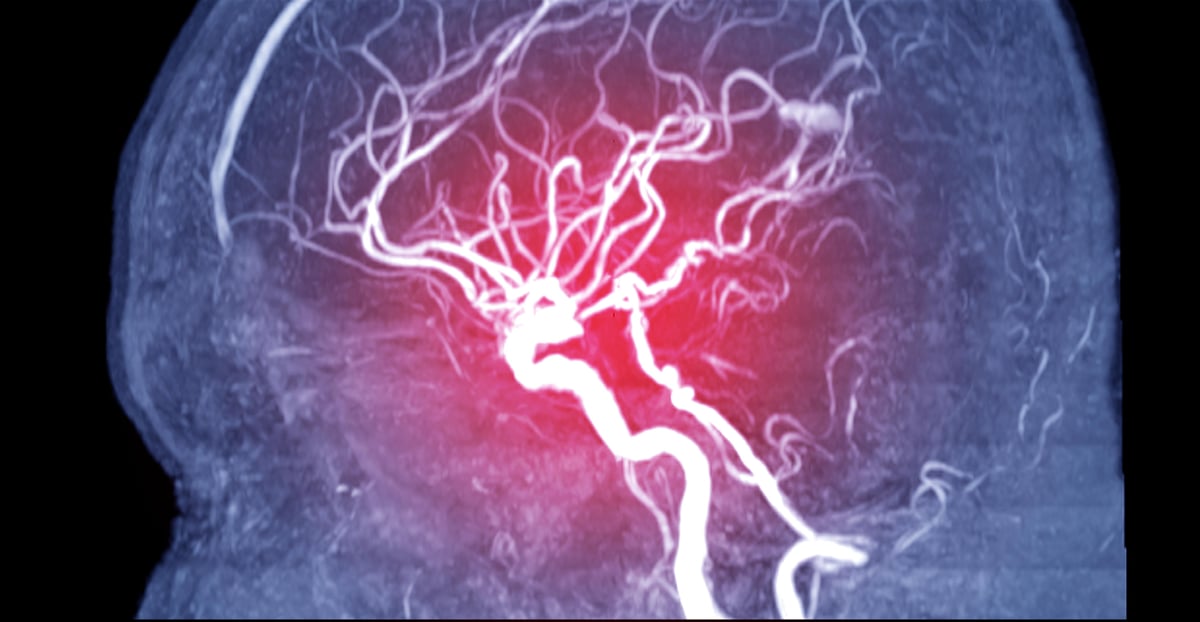
Clinicians should not recommend percutaneous transluminal angioplasty and stenting for stroke prevention
TUESDAY, March 22, 2022 (HealthDay News) — For patients with symptomatic intracranial atherosclerotic arterial stenosis (sICAS), initial treatment should comprise medications and exercise, and not percutaneous transluminal angioplasty and stenting, according to a practice advisory published online March 21 in Neurology.
Tanya N. Turan, M.D., from the Medical University of South Carolina in Charleston, and colleagues reviewed treatments for reducing the risk of recurrent stroke or death in patients with sICAS and developed recommendations for management. The resulting practice advisory has been endorsed by the American Heart Association/American Stroke Association, Neurocritical Care Society, and Society of Vascular and Interventional Neurology.
The authors note that clinicians should recommend 325 mg/d aspirin for long-term prevention of stroke and death; to further reduce stroke risk in patients with severe (70 to 99 percent) sICAS who have low risk of hemorrhagic transformation, addition of 75 mg/day clopidogrel to aspirin for up to 90 days is recommended. For patients with sICAS, clinicians should recommend high-intensity statin therapy to achieve a goal low-density lipoprotein cholesterol level <70 mg/dL, a long-term blood pressure target of <140/90 mm Hg, at least moderate physical activity, and treatment of other modifiable risk factors. In patients with moderate (50 to 69 percent) sICAS, clinicians should not recommend percutaneous transluminal angioplasty and stenting for stroke prevention; this also should not be recommended as the initial treatment in patients with severe sICAS. Outside clinical trials, clinicians should not routinely recommend angioplasty alone or indirect bypass for stroke prevention; direct bypass also should not be recommended for stroke prevention.
“Reviewing all of the evidence that has accumulated over the last two decades, we found that the research shows that medical management is more beneficial for people as an initial treatment,” Turan said in a statement.
Several authors disclosed financial ties to the pharmaceutical and medical device industries.
 Lower Cognitive Functioning During 60s Linked to Subsequent Stroke Risk
  Insomnia Linked to Increased Risk for Stroke, Odds of Admission
  Increased Dementia Risk Seen After Transient Ischemic Attack
  UACR, UPCR Provide Indistinguishable Prognostic Information in CKD
  GLP-1 Receptor Agonists, SGLT-2is Slow Renal Function Decline in T2D With Albuminuria
  Exercise-Based Cardiac Rehab Beneficial for Coronary Heart Disease
  Elevated C-Reactive Protein Linked to Increased Risk for Incident Heart Failure, All-Cause Mortality
  Early Complications Common in Older Kidney Transplant Recipients
 .jpg)




