


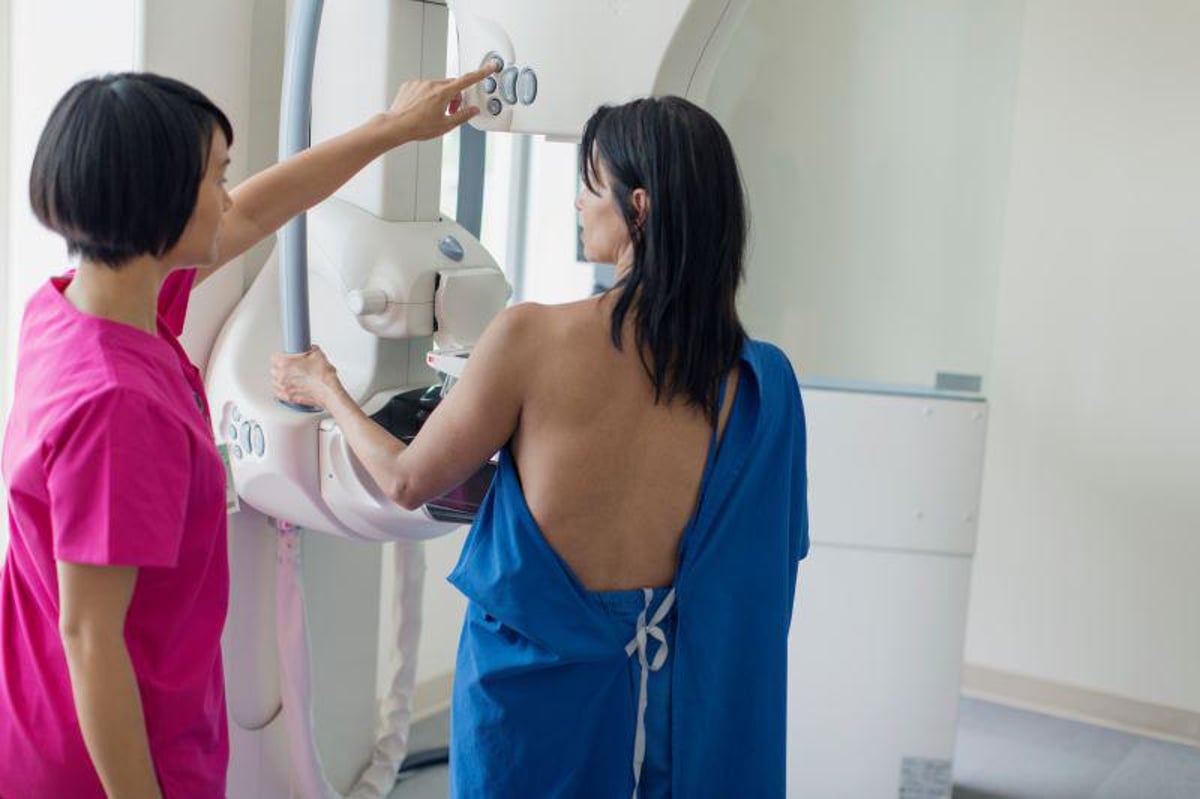
Variation seen in accessibility to mammography by states; in 10 states, more than 26 percent of women aged 45 to 84 years had limited access in 2022
TUESDAY, Dec. 20, 2022 (HealthDay News) — The proportion of U.S. women with limited access to mammography did not change from 2006 to 2022, according to a report published online Dec. 14 in the Journal of the National Cancer Institute.
Daniel Wiese, Ph.D., from the American Cancer Society in Kennesaw, Georgia, and colleagues estimated the number and proportion of women aged 45 to 84 years with limited travel-time-based geographic accessibility to mammography in 2006 and 2022.
The researchers found that from 2006 to 2022, there was no substantial change in the proportion of women aged 45 to 84 years with limited access to mammography (12.7 to 12.2 percent; 7.5 to 8.2 million women). There was variation observed in accessibility to mammography by state, but in 10 states, more than 26 percent of women aged 45 to 84 years had limited accessibility in 2022. In rural areas, this proportion was substantially higher (50.6 percent overall; ≥50 percent in 28 states in 2022) than in urban areas (3.0 percent overall).
“The simple answer would be to open more breast cancer screening facilities in sparsely populated areas, but this can be economically and logistically challenging,” Wiese said in a statement. “Providing transportation or promoting the use of mobile screening units may be alternative actions, although further research is needed to improve the effectiveness of mobile screening units in increasing participation in breast cancer screening in rural areas.”
Abstract/Full Text (subscription or payment may be required)
 Low Diagnostic Yield Seen for Postmastectomy Imaging in Patients With DCIS
 Dense Breast Notification Linked to Increase in Use of Supplemental Ultrasound
 Mammography Trials Yield Excess-Incidence Patterns Consistent With Low Overdiagnosis
 AI-Supported Mammography Screening Noninferior to Double Reading for Interval Cancer Rate
 Chemo May Accelerate Biological Aging in Breast Cancer Survivors
 Morphea Linked to Higher Risk for Cancer
 PFOA and PFOS Linked to Increased Risk for ER-Negative Breast Cancer
 Gap Found Between Awareness of Breast Cancer Risk and Risk-Reducing Behavior
.jpeg)




