


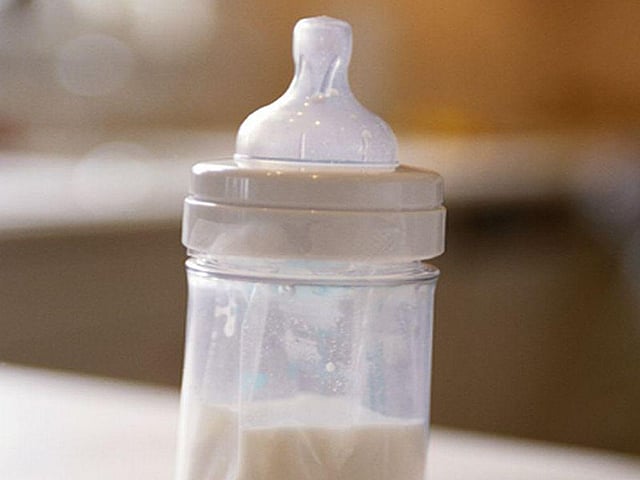
63 percent of caregivers of infants provided only breastmilk and/or commercially prepared infant formula
FRIDAY, Aug. 6, 2021 (HealthDay News) — Most caregivers of infants and young children provide recommended milk types, but many also provide nonrecommended milk types, according to a study published in the Aug. 1 issue of the Journal of Nutrition Education and Behavior.
Maria J. Romo-Palafox, Ph.D., R.D., from the Doisy College of Health Sciences at Saint Louis University, and Jennifer L. Harris, Ph.D., from the Rudd Center for Food Policy & Obesity at the University of Connecticut in Hartford, recruited 1,645 caregivers of children aged 6 to 36 months to assess milk type provision and estimate associations of sociodemographics and agreement with marketing claims with milk type provision.
The researchers found that 63 percent of the caregivers of infants aged 6 to 11 months provided only breastmilk and/or commercially prepared infant formula. Among caregivers of 12-month-old infants, 65 and 47 percent provided commercially prepared infant formula and cow’s milk, respectively. Sixty-four percent of caregivers of toddlers (aged 13 to 36 months) provided cow’s milk, while 51 percent also provided other nonrecommended milk types. There were significant correlations observed for milk type provision with a child’s age, household income, and race. The significance of associations between milk type provision and some sociodemographic characteristics was reduced by including agreement with marketing claims.
“The results of this study indicate an opportunity for public health education campaigns, community outreach, and additional guidance from health care providers, especially regarding potential nutrient deficiencies, dehydration, and undernutrition when providing cow’s milk or plant milk to infants and replacing breastmilk (or commercially prepared infant formula),” the authors write.
 Recommendations Issued for Use of Incretin-Based Meds in Pregnancy
  Eating More Ultraprocessed Foods Heightens Risk for Chronic Diseases
  Nutritional Deficiencies Seen in Youth Taking GLP-1 Receptor Agonists
  2009 to 2023 Saw Surge in Probiotic Supplement Use
  1 in 3 With Lupus Take Supplements, Medications With Potential for Interactions
  High-Dose Omega-3 Linked to A-Fib Risk in Patients With High CVD Risk
  Docosahexaenoic Acid Supplement Does Not Improve Cognitive Performance
  Sugar-Sweetened Beverage, Fruit Juice Intake Linked to Hypertension Risk



.jpg)
