



Higher risk seen among women and among individuals aged 30 to 69 years
FRIDAY, June 10, 2022 (HealthDay News) — Women and individuals aged 30 to 69 years may be at higher risk for delayed large local reaction (DLLR) following the mRNA-1273 vaccine against COVID-19 (Moderna), according to a report published online June 1 in JAMA Dermatology.
Toshihide Higashino, M.D., Ph.D., from National Defense Medical College in Tokyo, and colleagues examined associations between sex and age and susceptibility of DLLRs after mRNA-1273 vaccination. Analysis included 5,893 individuals receiving the mRNA-1273 vaccine (May 24 to November 30, 2021).
The researchers found that 12.7 percent of participants experienced DLLR symptoms after the first dose of the mRNA-1273 vaccine. Symptoms were classified as mild and not considered as contraindications to the vaccine. Women had higher incidence rates of DLLR than men (22.4 versus 5.1 percent; odds ratio [OR], 5.30). Additionally, compared to participants aged 18 to 29 years (9.0 percent), the incidence rate was significantly higher among participants aged 30 to 39 years (14.3 percent; odds ratio, 1.68), 40 to 49 years (15.8 percent; odds ratio, 1.89), 50 to 59 years (14.9 percent; odds ratio, 1.76), and 60 to 69 years (12.6 percent; odds ratio, 1.45).
“The association between demographic characteristics and susceptibility of DLLR suggests that the condition is a type IV allergic skin reaction,” the authors write.
 Nearly 3 in 4 Older Adults Express Interest in Vaccine to Prevent Dementia
 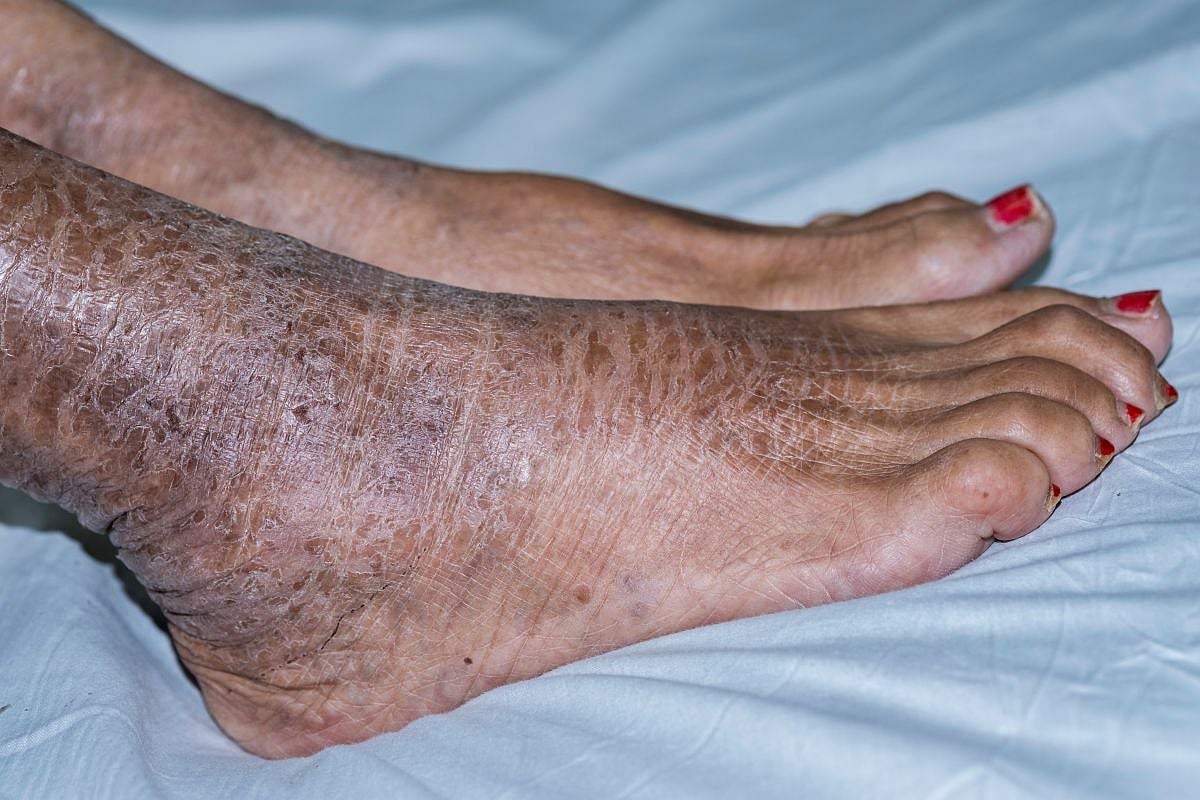 Congenital Ichthyosis Linked to Allergic Disorders
  Study IDs Risk Factors for Ketoacidosis in Adults With T2D Receiving SGLT2 Inhibitors
  Distinct Skin Microbiome Features Emerge Before Atopic Disease Onset in Infants
  Lower Dietary Diversity in First Year Linked to Atopic Dermatitis
  Gene Mutation Identified That Increases Lung Cancer Risk
  H. Pylori Exposure May Contribute to Global Burden of Colorectal Cancer
  Freshwater Swimming Tied to Stomach Bugs, Skin Conditions
 .jpg)




