


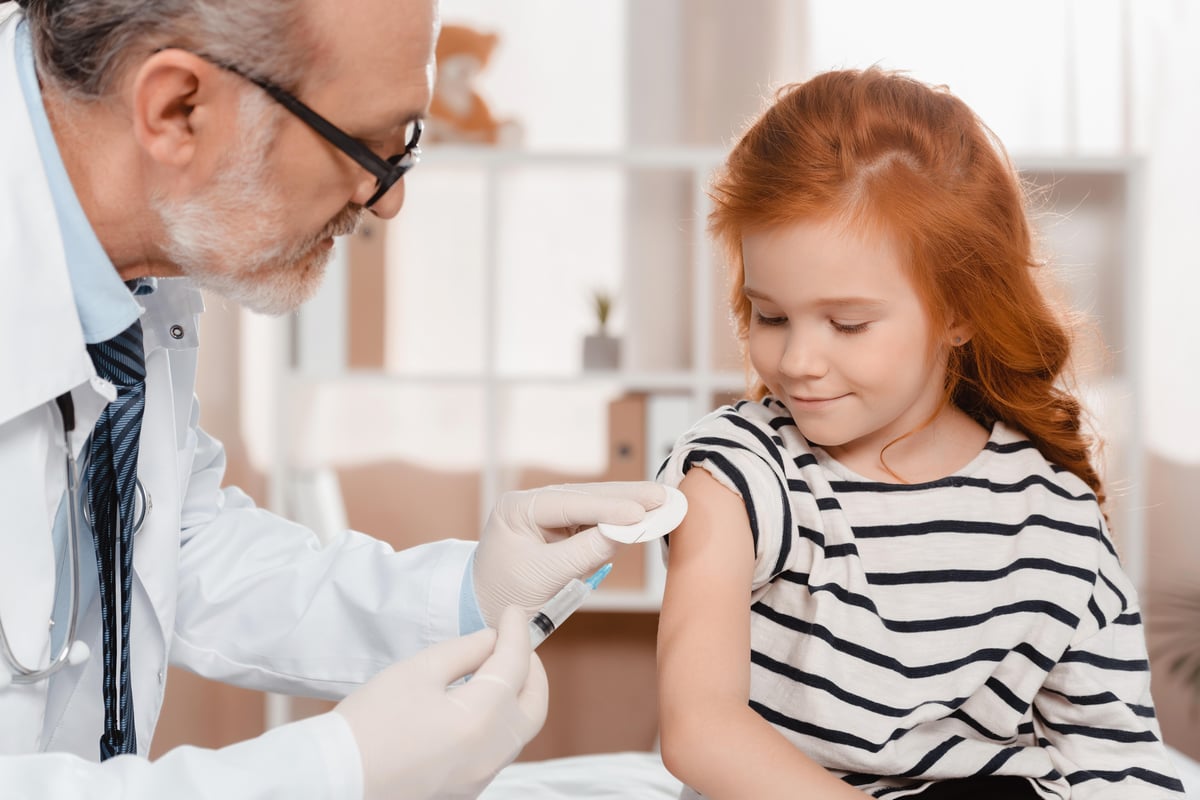
3.9 percent of kindergarteners who did not have vaccine exemptions were not up to date for MMR in 2020 to 2021
MONDAY, April 25, 2022 (HealthDay News) — Compared with the 2019 to 2020 school year, vaccination coverage among children in kindergarten decreased by about 1 percent for all vaccines in the 2020 to 2021 school year, according to research published in the April 22 issue of the U.S. Centers for Disease Control and Prevention Morbidity and Mortality Weekly Report.
Ranee Seither, M.P.H., from the CDC in Atlanta, and colleagues summarized data collected for the 2020 to 2021 school year by state and local immunization programs on vaccination coverage among children in kindergartens in 47 states and the District of Columbia (DC), as well as exemptions for kindergarteners in 48 states and DC.
The researchers found that nationally, vaccination coverage was 93.9, 93.6, and 93.6 percent for two doses of measles, mumps, and rubella vaccine (MMR); the state-required number of doses of diphtheria, tetanus, and acellular pertussis vaccine; and the state-required doses of varicella vaccine, respectively. Vaccination coverage decreased by about 1 percentage point for all vaccines compared with the 2019 to 2020 school year. Overall, 2.2 percent of kindergarteners had an exemption from one or more vaccines, and an additional 3.9 percent without a vaccine exemption were not up to date for MMR.
“As schools return to in-person learning, high vaccination coverage is necessary to continue protecting students from vaccine-preventable diseases,” the authors write.
 Nearly 3 in 4 Older Adults Express Interest in Vaccine to Prevent Dementia
  Updated COVID-19 Shot Beneficial for Those With Autoimmune Rheumatic Disease
  AAP Issues Recommendations for Pediatric RSV Vaccination in 2026-2027 Season
  Trends Reported in Vaccination Coverage for Adolescents for 2025
 .jpg) Considerable Gaps Reported in Care for Youth With Opioid Use Disorder
Considerable Gaps Reported in Care for Youth With Opioid Use Disorder  Nutritional Deficiencies Seen in Youth Taking GLP-1 Receptor Agonists
  Youth Suicide Risk Linked to Community Firearm Violence
  Social Media Warnings Could Discourage Use Among Teens, Young Adults


.jpg)

