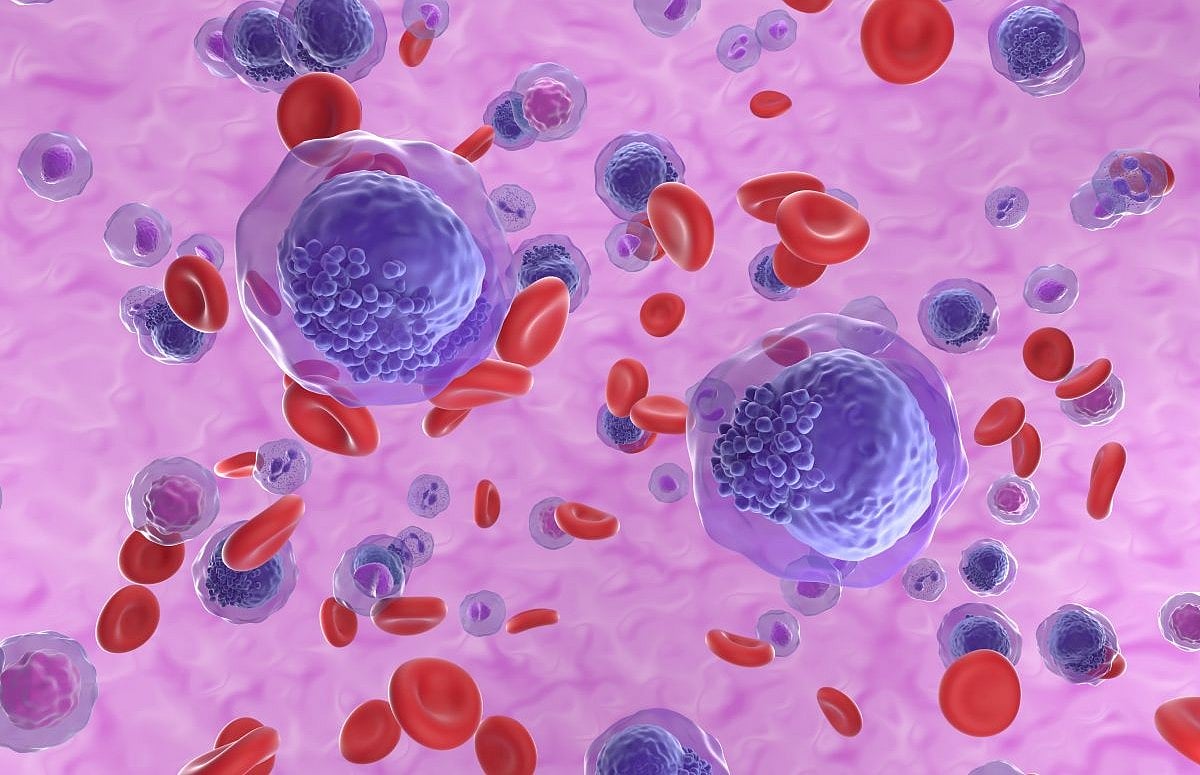
Signature resulting from combining cell-free-miRNAs, exosomal-miRNAs distinguished patients with PDAC from healthy donors
MONDAY, April 8, 2024 (HealthDay News) — An exosome-based liquid biopsy assay can distinguish patients with pancreatic ductal adenocarcinoma (PDAC) from healthy donors (HDs), according to a study presented at the annual meeting of the American Association for Cancer Research, held from April 5 to 10 in San Diego.
Caiming Xu, M.D., Ph.D., from the Beckman Research Institute of The City of Hope in Monrovia, California, and colleagues performed a real-time quantitative polymerase chain reaction-based assay using the plasma biospecimen from four prospective cohorts. The performance of the microRNA (miRNA) signature was also examined in conjunction with plasma CA19-9 for detecting early-stage PDAC.
The researchers found that two distinct panels of cell-free-miRNAs and exosomal-miRNAs robustly distinguished patients with PDAC from HDs in the training cohort from Japan. The signature resulting from combining these panels exhibited a notable ability to distinguish PDAC from HD with substantial accuracy in the training cohort (area under the curve [AUC], 0.98). This signature was successfully validated and evaluated in three independent cohorts from the United States, Korea, and China (AUCs, 0.93, 0.91, and 0.88, respectively). When the signature was combined with CA19-9 in the U.S. cohort, the overall diagnostic performance of this liquid biopsy assay significantly improved early detection of PDAC (AUC, 0.97; sensitivity and specificity, 0.95 and 0.96, respectively).
“We have established an exosome-based signature that combines exosomal microRNAs and cell-free DNA to robustly identify patients with early-stage pancreatic cancer,” Xu said in a statement.
 Recommendations Updated for Radiation Therapy in Pancreatic Cancer
  2005 to 2023 Saw More U.S. Women Never Screened for Cervical Cancer
  Machine Learning Model IDs Heart Failure With Reduced Ejection Fraction Using Routine Lab Indicators
  Addition of CAC to PREVENT-ASCVD Equations May Improve Predictive Utility in Certain Patients
 .jpg) Warning Symptoms, Clinical History Can Predict Sudden Cardiac Arrest
Warning Symptoms, Clinical History Can Predict Sudden Cardiac Arrest .jpg) Micro-, Nanoplastics Detected More Often in Patients With STEMI
Micro-, Nanoplastics Detected More Often in Patients With STEMI  AI Can Accurately Detect Left Ventricular Dysfunction From Electrocardiograms
  Differences in Cardiovascular Risk Factor Prevalence ID"d for South Asian Adults