


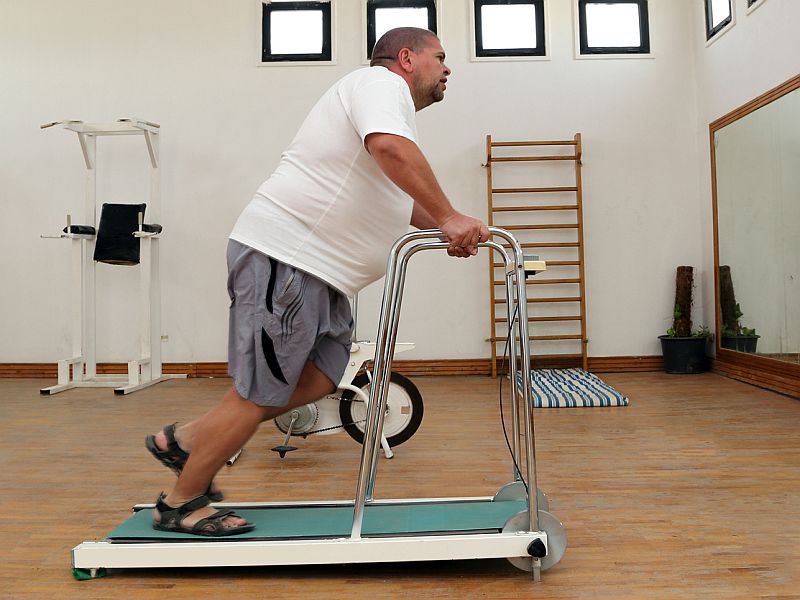
 But no improvement seen with branulocyte-macrophage colony stimulating factor
THURSDAY, Nov. 16, 2017 (HealthDay News) — Supervised treadmill exercise, but not granulocyte-macrophage colony-stimulating factor (GM-CSF), improves six-minute walking distance among patients with peripheral artery disease (PAD), according to a study published online Nov. 15 in the Journal of the American Medical Association to coincide with the American Heart Association’s Scientific Sessions, held Nov. 11 to 15 in Anaheim, California.
Mary M. McDermott, M.D., from the Northwestern University Feinberg School of Medicine in Chicago, and colleagues randomized patients with PAD to receive supervised exercise + GM-CSF (exercise + GM-CSF; 53 participants), supervised exercise + placebo (exercise alone; 53 participants), attention control + GM-CSF (GM-CSF alone; 53 participants), and attention control + placebo (51 participants).
The researchers found that there was no significant improvement in the six-minute walk distance for exercise + GM-CSF versus exercise alone (mean difference, −6.3 m [95 percent confidence interval, −30.2 to +17.6]; P = 0.61) or versus GM-CSF alone (mean difference, +28.7 m [95 percent confidence interval, +5.1 to +52.3]; Hochberg-adjusted P = 0.052) at 12-week follow-up. Compared with attention control + placebo, GM-CSF alone did not improve six-minute walk (mean difference, −1.4 m [95 percent confidence interval, −25.2 to +22.4]; P = 0.91), while exercise alone did improve six-minute walk significantly (mean difference, + 33.6 m [95 percent confidence interval, +9,4 to + 57.7]; Hochberg-adjusted P = 0.02).
“These results confirm the benefits of exercise but do not support using GM-CSF to treat walking impairment in patients with PAD,” the authors write.
Several authors disclosed ties to the biopharmaceutical industry.
 Air Pollution Does Not Impair Benefits of Walking in Reducing COPD Exacerbation Rate
  Combo of Step Count and Step Pace Tied to Lower Risk for Early Death
  Adverse Pregnancy Outcomes Linked to Increased Risk for Peripheral Artery Disease
  GLP-1 Receptor Agonists Linked to Lower Mortality, Amputation Rate in PAD and Type 2 Diabetes
  GLP-1 Receptor Agonists, SGLT-2is Slow Renal Function Decline in T2D With Albuminuria
  Study IDs Risk Factors for Ketoacidosis in Adults With T2D Receiving SGLT2 Inhibitors
  Long-Term Medication Adherence Tied to Lower Cardiovascular Event Rate in Type 2 Diabetes
  Add-On Tirzepatide May Reduce MACE Risk in People With T2D, ASCVD


.jpg)

