


Novel lung cancer screening test developed and validated for cell-free DNA fragmentation patterns
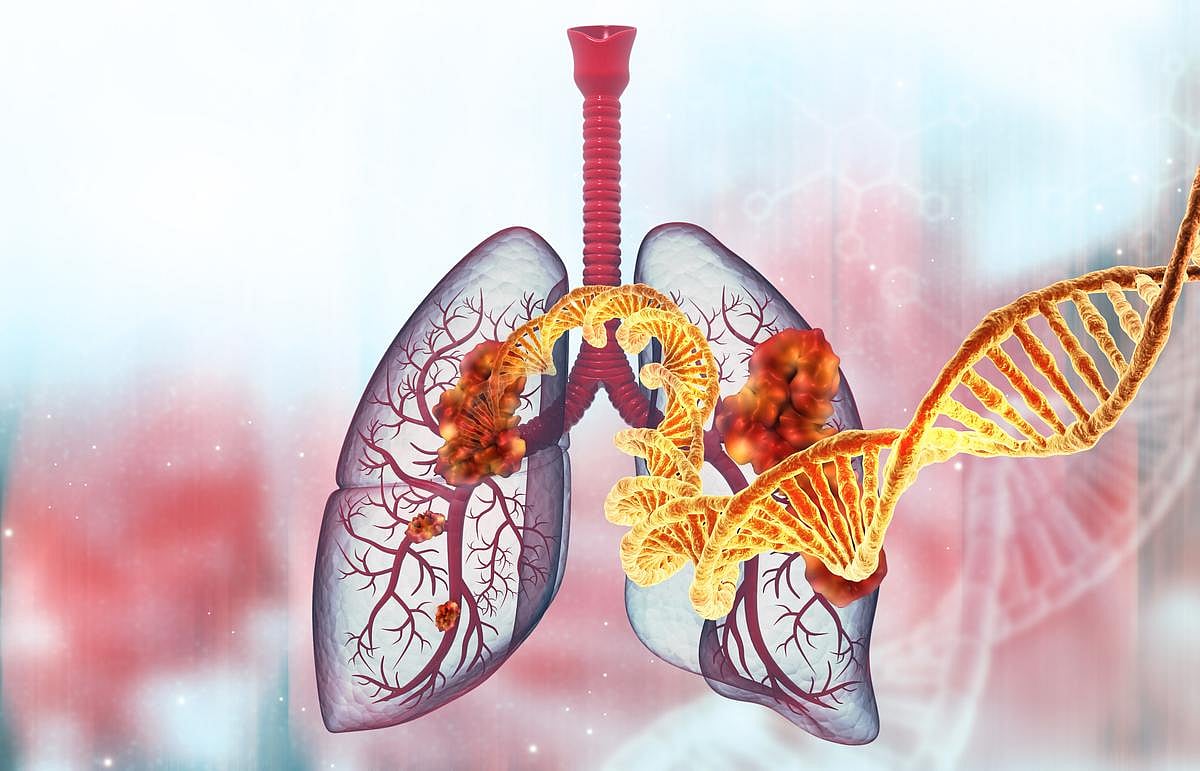
MONDAY, June 10, 2024 (HealthDay News) — A novel blood-based lung cancer screening test has been developed and validated using genome-wide sequencing to analyze cell-free DNA (cfDNA) fragmentation profiles, according to a study published online June 3 in Cancer Discovery.
Noting that changes in genome-wide cfDNA fragmentation profiles (fragmentomes) in peripheral blood reflect genomic and chromatin characteristics of lung cancer, Peter J. Mazzone, M.D., M.P.H., from the Cleveland Clinic, and colleagues conducted a prospective case-control study among 958 individuals eligible for lung cancer screening to develop a blood-based lung cancer detection test, which is followed by low-dose computed tomography when positive. To identify individuals who were more or less likely to have lung cancer, machine learning was applied to fragmentome features. The classifier was trained using 576 cases and controls from study samples and validated in a held-out group of 382 cases and controls.
The researchers found that high sensitivity for lung cancer was demonstrated in the validation, which was consistent across demographic groups and comorbid conditions. There was potential to prevent thousands of lung cancer deaths by applying test performance to the screening-eligible population in a five-year model with modest utilization assumptions.
“While we await further validation in ongoing prospective cohort studies, modeling suggests substantial public health benefits if a test like this can improve lung cancer screening participation among those who are not currently receiving it,” the authors write.
The study was supported in part by DELFI Diagnostics; two authors are inventors of patent applications related to cfDNA for cancer detection.
Abstract/Full Text (subscription or payment may be required)
 Urine Cell-Free RNA Shows Promise as Biomarker for Bladder Cancer
  Age-, Joint-Specific Ultrasound Reference Values Set for Healthy Joints
  Gene Mutation Identified That Increases Lung Cancer Risk
  Retinal Imaging Can ID Atrial Fibrillation Years Before Diagnosis
  U.S. Adults May Not Understand Their Risk for Vascular Disease
  NOACs Linked to Slower Cognitive Decline in Patients With A-Fib, Alzheimer Disease
  Machine Learning Model IDs Heart Failure With Reduced Ejection Fraction Using Routine Lab Indicators
  Addition of CAC to PREVENT-ASCVD Equations May Improve Predictive Utility in Certain Patients



.jpg)