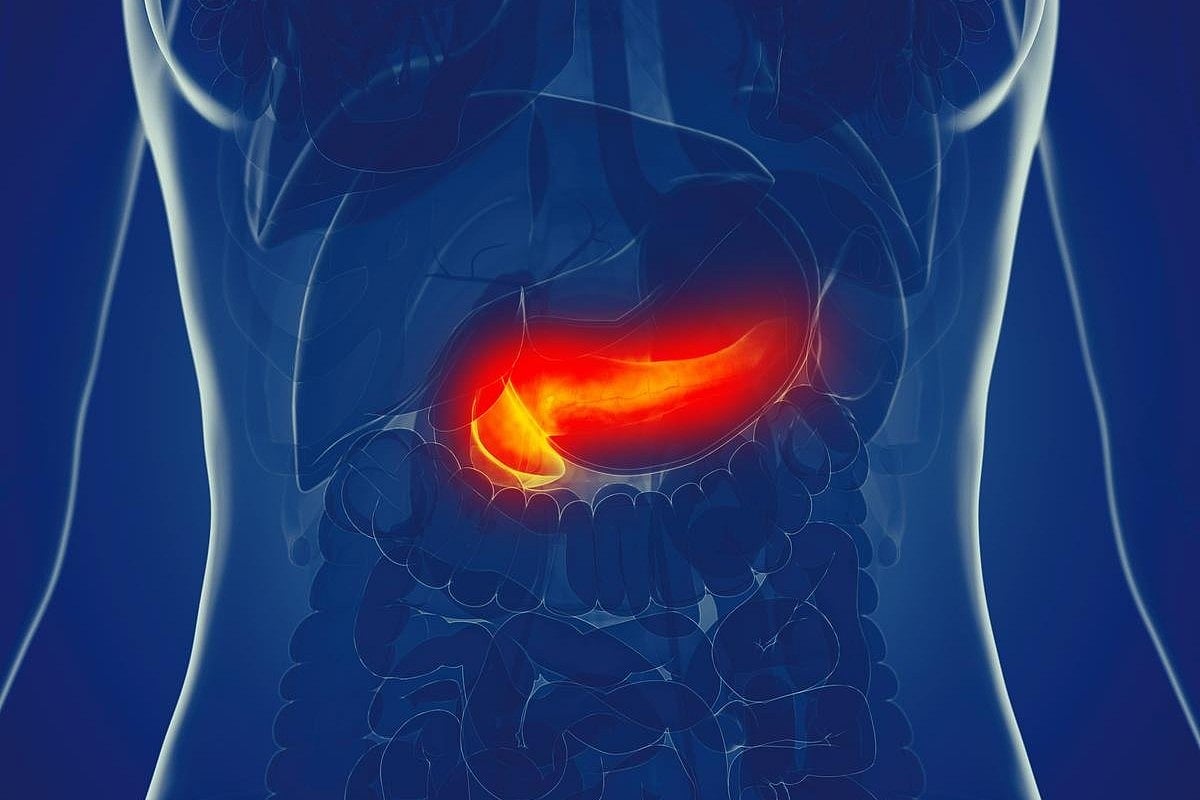
ESWL combined with endoscopic retrograde pancreatography alleviates pain at 12-week follow-up
TUESDAY, May 28, 2024 (HealthDay News) — For patients with chronic pancreatitis and intraductal stones, combined extracorporeal shock-wave lithotripsy (ESWL) and endoscopic retrograde pancreatography (ERP) provides pain relief at 12 weeks, according to a study published online May 28 in the Annals of Internal Medicine.
Rupjyoti Talukdar, M.D., from the Asian Institute of Gastroenterology in Hyderabad, India, and colleagues examined the pain-relieving effect of pancreatic duct decompression in 106 patients with chronic pancreatitis and intraductal stones. Combined ESWL and ERP were compared to sham procedures (52 and 54 patients, respectively); the primary end point was pain relief at 12 weeks.
The researchers found that the ESWL/ERP group showed better pain relief than the sham group at 12 weeks (mean difference in change, −0.7 on the visual analog scale). At the 24-week follow-up, the difference between the groups was not sustained; no differences were seen between the groups in 30 percent pain relief at 12- or 24-week follow-up. Compared with the sham group, in the ESWL/ERP group, there was an increase in the number of pain-free days (median difference, 16.2 days) and a reduction in the number of days using opioids (median difference, −5.4 days) at 12-week follow-up. The groups had similar safety outcomes.
“Compared with a sham procedure, pancreatic ductal clearance using combined ESWL/ERP provided modest short-term pain relief in patients with chronic pancreatitis and intraductal stones,” the authors write.
Abstract/Full Text (subscription or payment may be required)
 CDC: Buprenorphine Treatment Differs in Urban, Rural Areas
  First Metatarsophalangeal Joint Arthrodesis Eases Painful Hallux Rigidus
  Botox Helpful in Alleviating Chronic Migraine in Pediatric Patients
  Platelet-Rich Plasma, Shockwave Therapy Show Therapeutic Efficacy in Interstitial Cystitis
 .jpg) Tadalafil Linked to Glaucoma in Men With Lower Urinary Tract Symptoms
Tadalafil Linked to Glaucoma in Men With Lower Urinary Tract Symptoms  Review Reveals Limited Effects of Exercise on Hip Osteoarthritis
  Data Reveal No Hypersensitivity Due to Axillary Brachial Plexus Block Alone
  Adding Cognitive Behavioral Therapy, Self-Management Does Not Improve Opioid Taper Success
 .jpg)