40 percent of children achieved complete skin clearance at week 16 with Tremfya versus placebo
THURSDAY, Oct. 2, 2025 (HealthDay News) — The U.S. Food and Drug Administration has approved Tremfya (guselkumab) for the treatment of plaque psoriasis and active psoriatic arthritis in children 6 years of age and older.
The approval is for pediatric patients living with either moderate-to-severe plaque psoriasis, who are candidates for systemic therapy or phototherapy, or active psoriatic arthritis. This approval expands indications of use beyond the initial adult population and is the first and only pediatric approval for an interleukin-23 inhibitor.
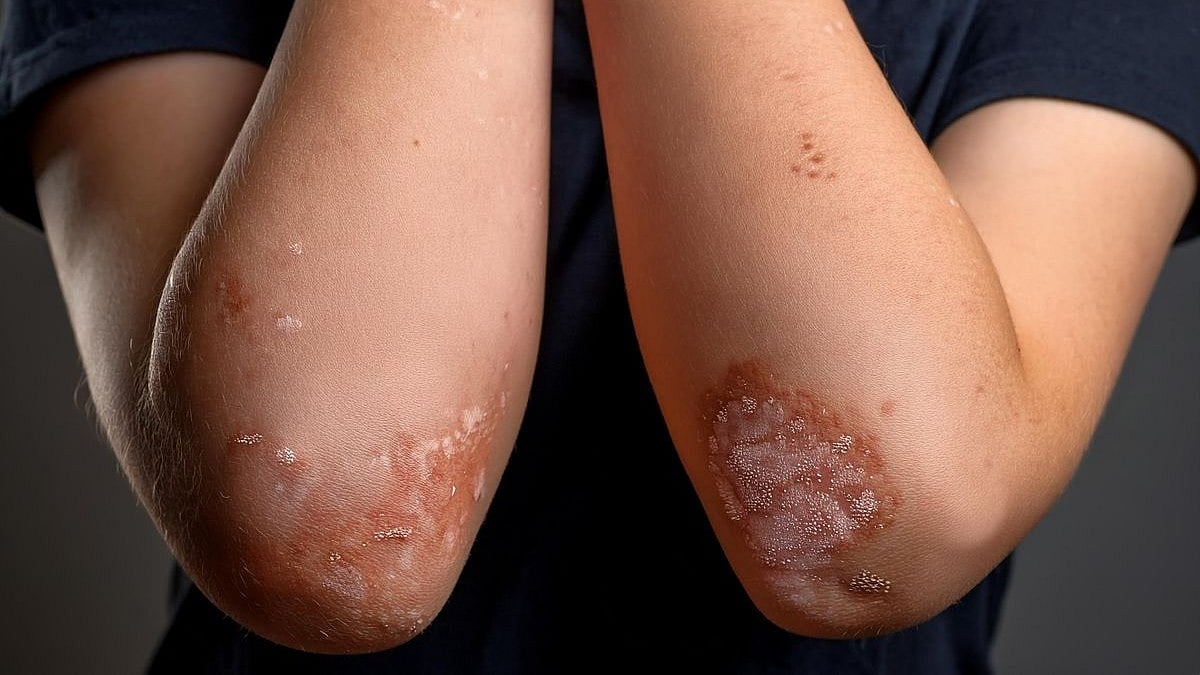
The approval is based on results from the phase 3 PROTOSTAR study in which the coprimary end points of Psoriasis Area Severity Index (PASI) 90 and Investigator”s Global Assessment (IGA) score of 0/1 were achieved at week 16. More than half of patients (56 percent) receiving Tremfya achieved PASI 90 versus 16 percent of patients receiving placebo. For IGA score, at week 16, two-thirds (66 percent) of patients receiving Tremfya achieved high levels of skin clearance (score 0/1) versus 16 percent of patients receiving placebo. Complete clearance (IGA 0) at week 16 was achieved by nearly 40 percent of pediatric patients receiving Tremfya versus 4 percent on placebo.
“Despite advancements in the treatment of pediatric plaque psoriasis and active psoriatic arthritis, there continues to be a significant gap in available therapies for these debilitating immune-mediated diseases that impact a child”s physical and emotional well-being during critical years,” study investigator Vimal Hasmukh Prajapati, M.D., from the University of Calgary in Alberta, Canada, said in a statement. “The approval of Tremfya offers physicians, as well as parents and care partners, an established treatment option with proven safety and demonstrated efficacy that can significantly improve the signs and symptoms in children living with these diseases.”
Approval of Tremfya was granted to Johnson & Johnson.
 Paternal Exposure to Valproate Not Linked to Offspring Neurodevelopmental Disorders
  Drug Retention in Spondyloarthritis Varies With Socioeconomic Status
  Chemo-Free Combo of Four Targeted Therapies Shows Promise in Metastatic Breast Cancer
  December 2024 to 2025 Saw Significant Increase in Leucovorin Dispensing
  Real-World ARIA Incidence With Lecanemab Aligns With Clinical Trial Findings
  Dexrazoxane Offers Lasting Doxorubicin Cardioprotective Effect in Childhood Cancer Survivors
  Many With Atypical Alzheimer Disease Do Not Qualify for Anti-Amyloid Therapy
  Study IDs Neurobiological Roots of Sensory Over-Responsivity