


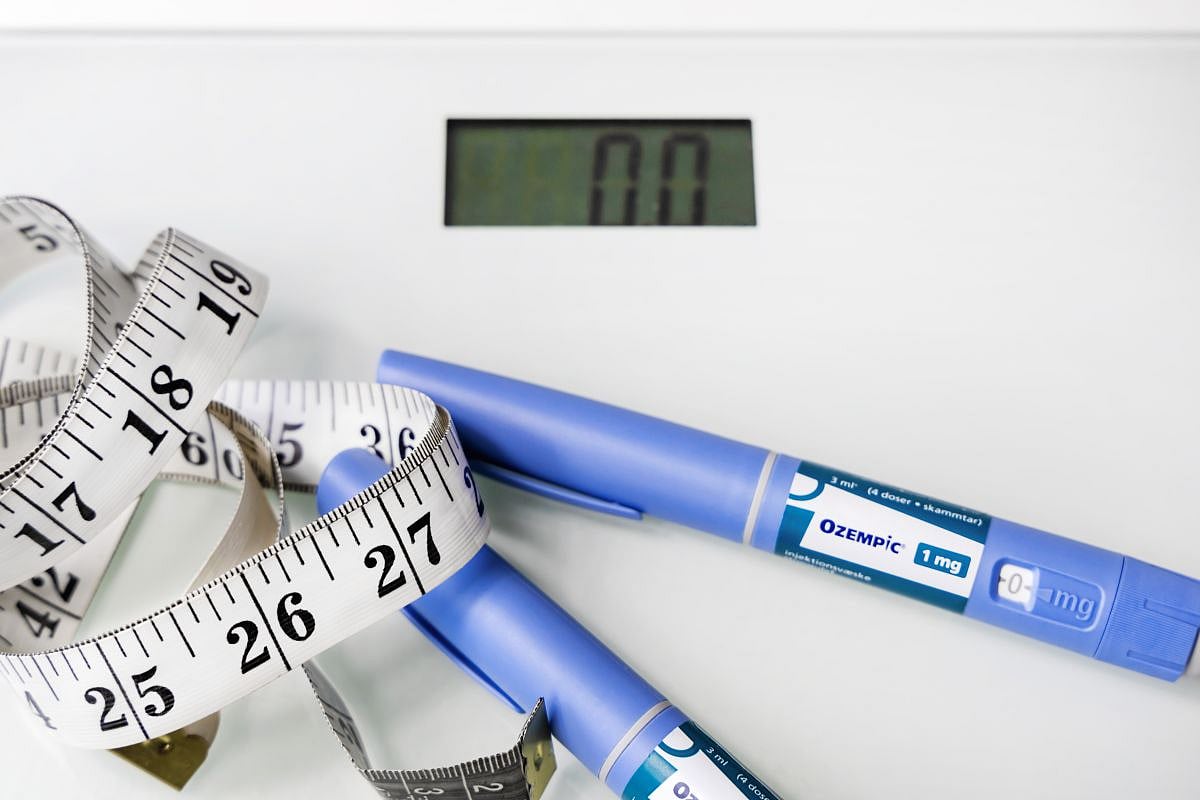
Higher rates of reinitiation seen for Black or African American patients, those with ≥5 percent weight gain
WEDNESDAY, June 17, 2026 (HealthDay News) — More than half of adults with type 2 diabetes mellitus (T2DM) who discontinue glucagon-like peptide-1 receptor agonists (GLP-1 RAs) reinitiate within one year, according to a study presented at ENDO 2026, the annual meeting of the Endocrine Society, held from June 13 to 16 in Chicago.
Sainikhil Sontha, from the Boston University Chobanian and Avedisian School of Medicine, and colleagues conducted a retrospective cohort study using claims data from January 2019 to June 2025 for adults aged 18 to 64 years with body mass index ≥25 kg/m2 and T2DM who initiated liraglutide, semaglutide, or tirzepatide to examine patterns of discontinuation and reinitiation.
The researchers found that among 60,222 patients with T2DM in the discontinuation cohort, the rates of discontinuation at one and two years were 41.5 and 58.0 percent, respectively. Compared with liraglutide, tirzepatide and semaglutide were associated with substantially lower risks of discontinuation (hazard ratios [HRs], 0.59 and 0.72, respectively). An increased risk for discontinuation was seen for Medicaid and Medicare coverage (HRs, 1.18 and 1.17, respectively) and for Black or African American race/ethnicity (HR, 1.17); risk was lower for endocrinologist-initiated prescription and ≥5 percent weight loss (HRs, 0.90 and 0.91, respectively). Of the 14,196 patients with T2DM who discontinued, 53.6 and 65.9 percent reinitiated within one and two years, respectively. Higher hazards of reinitiation were seen in Black or African American patients, those with ≥5 percent weight gain, users of tirzepatide, and users of semaglutide (HRs, 1.25, 1.10, 1.12, and 1.13, respectively). Lower reinitiation was predicted by Medicaid and Medicare coverage (HRs, 0.86 and 0.93, respectively). The most common reason for discontinuation was gastrointestinal adverse events.
“For many patients, these medications aren”t being abandoned permanently; use is more start-and-stop than most people assumed,” Sontha said in a statement.
.jpg) Pregnancy Complications Linked to Subsequent Risk for Cardiometabolic-Renal Conditions
Pregnancy Complications Linked to Subsequent Risk for Cardiometabolic-Renal Conditions  GLP-1 Receptor Agonists, SGLT-2is Slow Renal Function Decline in T2D With Albuminuria
  Genetics, Diabetes Tied to MASLD-Associated Cirrhosis Before Age 50
  Study IDs Risk Factors for Ketoacidosis in Adults With T2D Receiving SGLT2 Inhibitors
 .jpg) Most Specialty Oral Anticancer Meds for Blood Cancers Are Initially Rejected by Insurers
Most Specialty Oral Anticancer Meds for Blood Cancers Are Initially Rejected by Insurers  Drug Interactions Reducing Contraceptive Effectiveness Common in Epilepsy
  Holding DMARDs at Time of COVID-19 Vaccine Not Warranted in Those With Inflammatory Arthritis
  1 in 3 With Lupus Take Supplements, Medications With Potential for Interactions


