Baseline performance in isometric leg strength maintained with HRT, but decreases seen with moderate-intensity training, nonexercising control
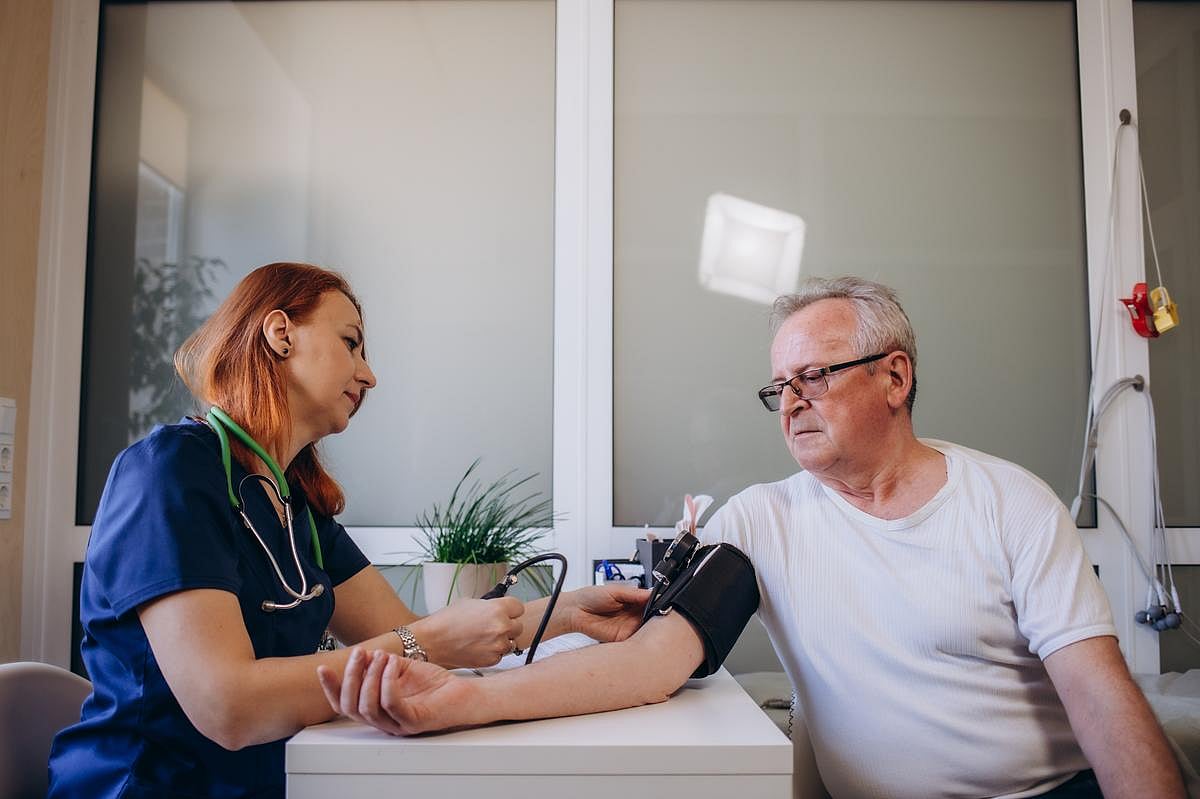
WEDNESDAY, June 19, 2024 (HealthDay News) — One year of heavy resistance training (HRT) yields long-lasting benefits for older adults at retirement age, according to a study published online June 18 in BMJ Open Sports & Exercise Medicine.
Mads Bloch-Ibenfeldt, from Bispebjerg Hospital in Copenhagen, Denmark, and colleagues conducted a parallel-group randomized controlled trial involving 451 older adults at retirement age. Participants were randomly allocated to receive one year of HRT or moderate-intensity training (MIT) or to a nonexercising control group (CON). Leg extensor power was measured as the primary outcome. Test procedures were completed at baseline, after the one-year intervention, and at two and four years after study start.
A total of 369 participants attended the four-year assessment. The researchers found that across all four time points, a significant group-by-time interaction was seen in isometric leg strength. Baseline performance in isometric leg strength was maintained for individuals in the HRT group, while decreases were seen in the MIT and CON groups.
“Resistance training with heavy loads induced long-lasting beneficial effects on muscle strength in a sample of older adults,” the authors write. “We observed a difference between groups in leg strength, whereas handgrip strength, a measure of overall muscle strength, was not influenced by any of the training regimens.”
 Onset of Mortality, Morbidity Delayed for Offspring of Centenarians
  Acute Myeloid Leukemia Increasingly Impacting Older Adults Globally
  Habitual Fasting May Be Harmful for Older Adults
  Heart Stress Based on NT-proBNP Changes May Improve CVD Risk Stratification
  Obesity Has Increased Significantly in U.S. Adults and Youths Since 1999
  Male Sex, Older Age Predict Poor Outcomes in Seniors With HFmrEF/HFpEF
  Variation in Regular Physical Activities Best for Lower All-Cause Mortality
  Smartwatch-Based Screening Improves Detection of New-Onset A-Fib