


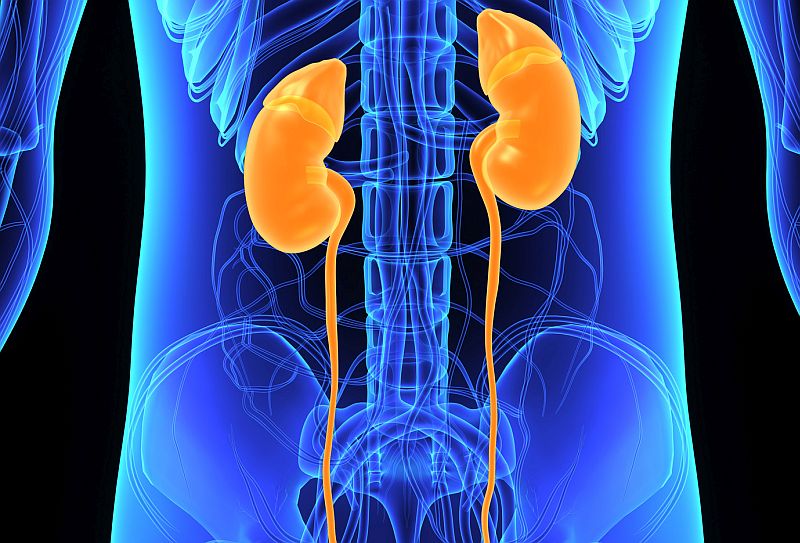
 Risk increased for papillary RCC but not clear-cell RCC; risk for upper tract urothelial carcinoma increased
WEDNESDAY, Jan. 2, 2019 (HealthDay News) — Kidney stones are associated with an increased risk for renal cell carcinoma (RCC), specifically papillary RCC, and upper tract urothelial carcinoma (UTUC), according to a study published online Dec. 19 in the British Journal of Cancer.
Jeroen A.A. van de Pol, from Maastricht University in the Netherlands, and colleagues examined the correlation between kidney stones and RCC and UTUC among 120,852 participants aged 55 to 69 years. A case-cohort analysis was conducted among 4,352 subcohort members, 544 RCC cases, and 140 UTUC cases after 20.3 years of follow-up.
The researchers found that compared with no kidney stones, kidney stones correlated with increased RCC risk (hazard ratio [HR], 1.39; 95 percent confidence interval [CI], 1.05 to 1.84). The risk for papillary RCC was increased with kidney stones (HR, 3.08; 95 percent CI, 1.55 to 6.11), but the risk for clear-cell RCC was not (HR, 1.14; 95 percent CI, 0.79 to 1.65). Participants with kidney stones had an increased risk for UTUC (HR, 1.66; 95 percent CI, 1.03 to 2.86). There was no heterogeneity of correlations for UTUC in the ureter and renal pelvis. Compared with later diagnosis, early kidney stone diagnosis (≤40 years) correlated with increased RCC and UTUC risk.
“In light of the findings of this study, more research is needed to unravel the mechanisms behind the relation of kidney stones and RCC and UTUC,” the authors write.
Abstract/Full Text (subscription or payment may be required)
 Urine Cell-Free RNA Shows Promise as Biomarker for Bladder Cancer
  Pembrolizumab-Belzutifan Tied to Improved Disease-Free Survival in Renal Cell Carcinoma
  Comparable Progression Risk Seen With Ablation Versus Surgery for T1a Renal Cell Carcinoma
  Incidence Rates Increased From 2003 to 2017 for Six Cancer Types in 42 Countries
 .jpg) Most Specialty Oral Anticancer Meds for Blood Cancers Are Initially Rejected by Insurers
Most Specialty Oral Anticancer Meds for Blood Cancers Are Initially Rejected by Insurers  Gap Found Between Awareness of Breast Cancer Risk and Risk-Reducing Behavior
  Personalized Support Boosts Families" Genetic Testing for Hereditary Cancers
  Exercise Intervention Linked to Improved Attention, Memory in Breast Cancer



