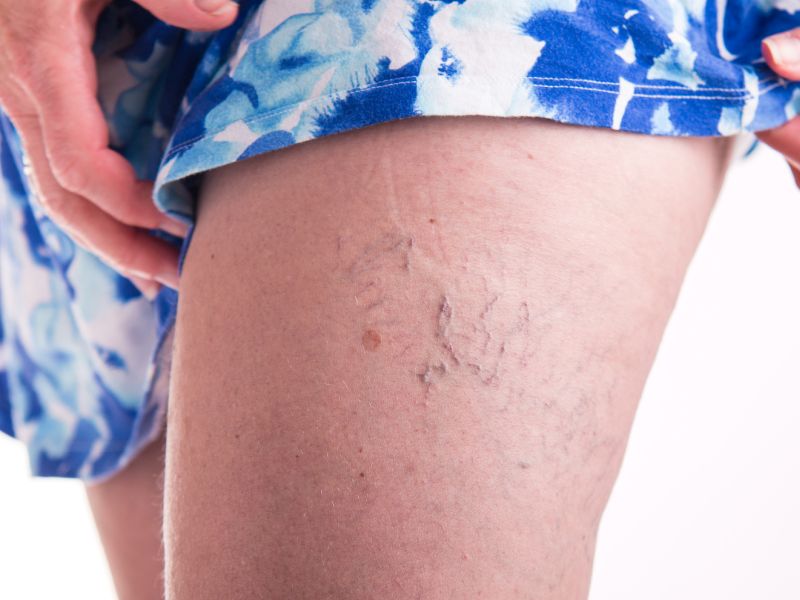
 Mendelian randomization analysis provides evidence that increased height causally tied to varicose veins
MONDAY, Sept. 24, 2018 (HealthDay News) — New risk factors have been identified for varicose vein disease, including height, according to a study published online Sept. 24 in Circulation.
Eri Fukaya, M.D., Ph.D., from the Stanford University School of Medicine in California, and colleagues applied machine learning to agnostically search for varicose vein risk factors in a cohort of 493,519 individuals in the U.K. Biobank. Predictors were further studied for 2,441 incident events. A genome-wide association study of varicose veins was also performed among 337,536 unrelated individuals (9,577 cases) of white British descent.
The researchers found that several known risk factors were confirmed with machine learning (age, sex, obesity, pregnancy, history of deep vein thrombosis), and several new risk factors were identified, including height. Greater height remained independently associated with varicose veins after adjustment for traditional risk factors (hazard ratio for upper versus lower quartile, 1.74). Thirty new genome-wide significant loci were identified in a genome-wide association study, identifying pathways involved in vascular development and skeletal/limb biology. There was evidence that increased height was causally related to varicose veins in Mendelian randomization analysis (inverse-variance weighted: odds ratio, 1.26).
“We identified novel clinical and genetic risk factors that provide pathophysiological insights and could help future improvements of treatment of varicose vein disease,” the authors write.
Two authors disclosed financial ties to the biopharmaceutical industry.
Abstract/Full Text (subscription or payment may be required)
Editorial (subscription or payment may be required)
 Gene Mutation Identified That Increases Lung Cancer Risk
  Family History of CRC Increases CRC Risk Similarly in IBD, General Population
  Genetics, Diabetes Tied to MASLD-Associated Cirrhosis Before Age 50
  Relapse Rare After Appendiceal Adenocarcinoma Resection
  Implant, Patient Survival Do Not Differ for Robotic and Conventional Total Joint Replacement
  Personalized Support Boosts Families" Genetic Testing for Hereditary Cancers
  Physical Therapist-Supervised Exercise Improves Outcomes After ACL Reconstruction
 .jpg) Cancer Survivors Have Lower Levels of Physical Activity
Cancer Survivors Have Lower Levels of Physical Activity