


 Family members perceive hospice care received at nursing homes to be of lower quality
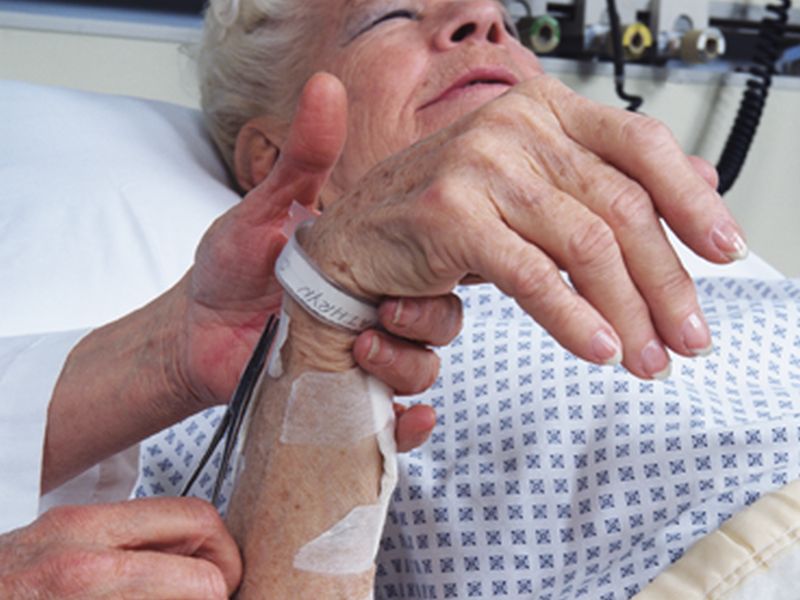
THURSDAY, Feb. 22, 2018 (HealthDay News) — Family members of those who have received hospice care in a nursing home report lower perceived quality of care, compared to hospice care received in other settings, according to a study published online Feb. 10 in the Journal of the American Geriatrics Society.
Kathleen T. Unroe, M.D., from Indiana University in Indianapolis, and colleagues conducted after-death surveys of 7,510 family members to assess perceived quality of hospice care for individuals living at home, in a nursing home, or assisted living facility.
The researchers found that most respondents (84.3 percent) reported that hospice referral had occurred at the right time. Furthermore, nearly two-thirds of respondents (63.4 percent) rated service quality as excellent. Hospice care received in the nursing home was less likely to be perceived as excellent. However, the authors caution that there were significant differences in characteristics of individuals whose family members responded to the surveys.
“Lower perceived quality of hospice care in nursing homes may be related to general dissatisfaction with receiving care in this setting,” the authors write. “Survey results have the potential to set priorities for quality improvement, choice of provider, and potentially reimbursement. Underlying causes of differences of perceived quality in different settings of care should be examined.”
 Multicomponent Interventions Offer Little Impact on Fall Risk
  Emergency Presentation of Cancer Common in Older Adults
  Physicians Have Modestly Higher Likelihood of Dying at Home or Hospice
  2011 to 2023 Saw Rise in Discharges to Hospice After ICU Admission
  Lower Cognitive Functioning During 60s Linked to Subsequent Stroke Risk
  Polypharmacy of Prescription Medications Increased for U.S. Older Adults
  Nearly 1 in 10 Older Adults Used Cannabis in the Past Year
  Pharmacist-Led Med Review Improves Medication Quality in Older Patients With Cancer


.jpg)

