


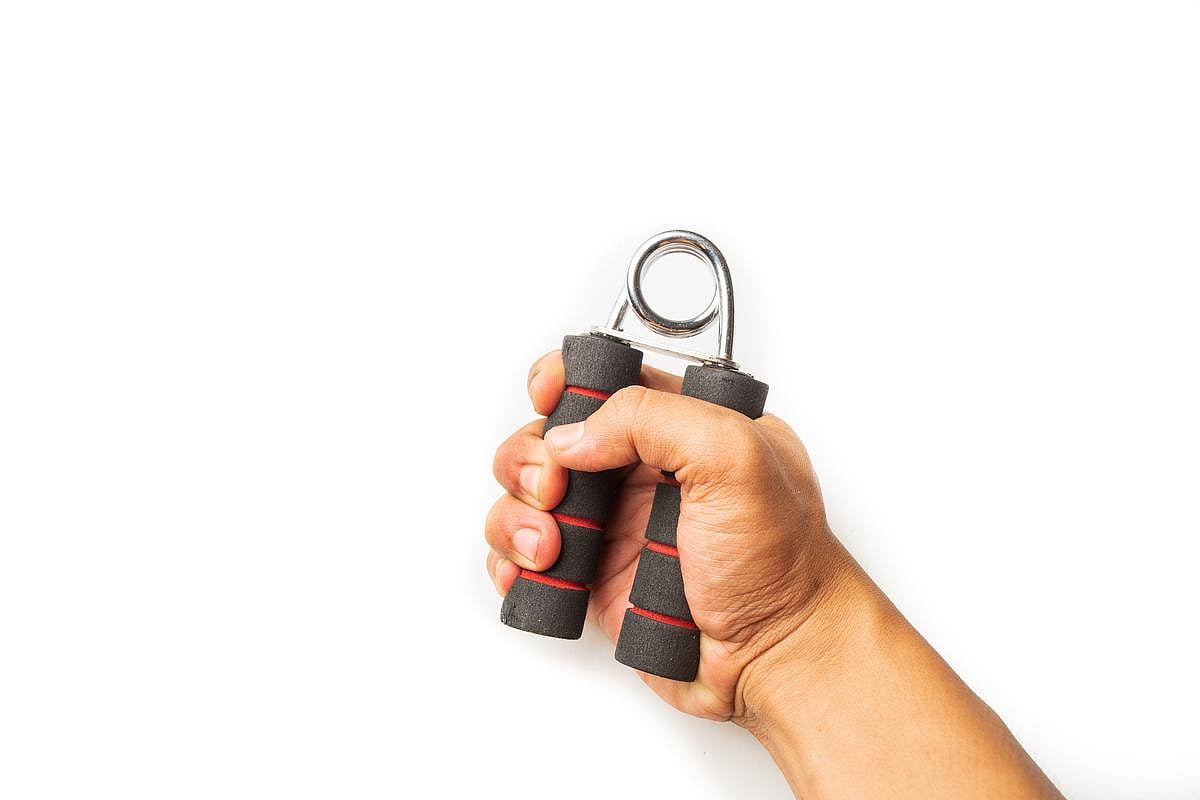
Authors say findings underscore the importance of improving muscle mass and strength in at-risk people
WEDNESDAY, Oct. 15, 2025 (HealthDay News) — Strong grip strength may protect against obesity-related complications, according to a study published online Oct. 15 in the Journal of Clinical Endocrinology & Metabolism.
Manrong Xu, from Shanghai Sixth People’s Hospital Affiliated to Shanghai Jiao Tong University in China, and colleagues investigated the association of grip strength and the trajectories of preclinical obesity progression. The analysis included data from 93,275 participants from the U.K. Biobank.
The researchers found that during a mean follow-up of 13.4 years, each standard deviation increase in grip strength was associated with a significantly reduced risk for preclinical obesity progression at each stage. The strongest inverse association was seen for baseline to first dysfunction (fully adjusted hazard ratio [HR], 0.86). The highest grip strength significantly showed protective effects across all trajectory models, with double dysfunctions to all-cause death yielding the most pronounced associations (fully adjusted HR, 0.77) compared with the lowest tertile. Similar results were seen in subgroup and sensitivity analyses.
“Because grip strength is easy to measure and strength can be improved with weight training, this research points to a practical, low‑cost way to identify at‑risk individuals and to act early,” coauthor Yun Shen, M.D., from Pennington Biomedical Research Center in Baton Rouge, Louisiana, said in a statement.
 Very Low-Carb Diet Shows Greater Cardiometabolic Benefits Than Other Diets
 .jpg) Time-Restricted Eating May Help Patients With Type 1 Diabetes
Time-Restricted Eating May Help Patients With Type 1 Diabetes  Calorie Restriction and Mediterranean-Style Diet Yield Similar Weight Loss
  Strength Training May Cut GDM Risk in Pregnant Women With Overweight, Obesity
  Air Pollution Does Not Impair Benefits of Walking in Reducing COPD Exacerbation Rate
  Physical Activity Linked to Slower Cognitive, Motor Progression in Parkinson Disease
  Exercise Intervention Linked to Improved Attention, Memory in Breast Cancer
  Isometric Exercise Training Three Times a Week Preserves Cardiovascular Benefits



.jpg)