


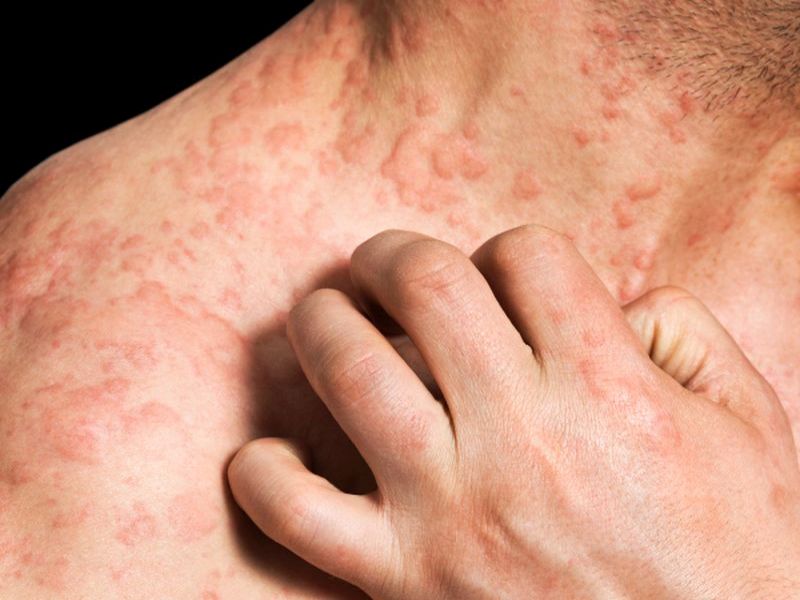
 In small study, 85 percent of refractory CSU patients had complete response; rest had well-controlled dx
TUESDAY, Feb. 13, 2018 (HealthDay News) — Omalizumab, alone or in combination with a short-term course of corticosteroids, is highly effective for the treatment of refractory chronic spontaneous urticaria (CSU), according to a study published online Feb. 5 in the International Journal of Dermatology.
Nikolaos Syrigos, M.D., from Sotiria General Hospital in Athens, Greece, and colleagues retrospectively evaluated medical records from 20 patients (mean age 54.5 years; 75 percent women) with refractory CSU in order to assess correlations between demographic, clinical, and laboratory characteristics and omalizumab treatment outcomes.
The researchers found that mean disease duration before omalizumab administration was 21.8 months. All patients responded favorably to omalizumab after one to five doses, with 85 percent of patients having a complete response. The remaining three patients had well-controlled disease after omalizumab treatment. In 30 percent of patients, the best response to omalizumab was achieved after interval administration of a nine-day course of methylprednisolone (total dose of 188 mg). A shorter disease duration before initiation of omalizumab was significantly correlated with late response to omalizumab (after three-month treatment).
“In the present series, omalizumab, either alone or in combination with a short-term course of corticosteroids, was highly effective in resolution of refractory CSU,” the authors write.
 Study Compares Benefits, Harms of Treatments for Chronic Hives
  Acupuncture Offers Some Benefit in Chronic Spontaneous Urticaria
  Review: Lower Cognitive Scores for HIV+, HIV-Exposed Children
  Better Youth Fitness May Lower Risk for Depression in Adulthood
  Autism Spectrum Disorder Diagnoses Increased for Females Since 2020
  Virtual Reality-Based Digital Defocus Vision Training May Aid Myopia in Children
  Paternal Exposure to Valproate Not Linked to Offspring Neurodevelopmental Disorders


.jpg)

