


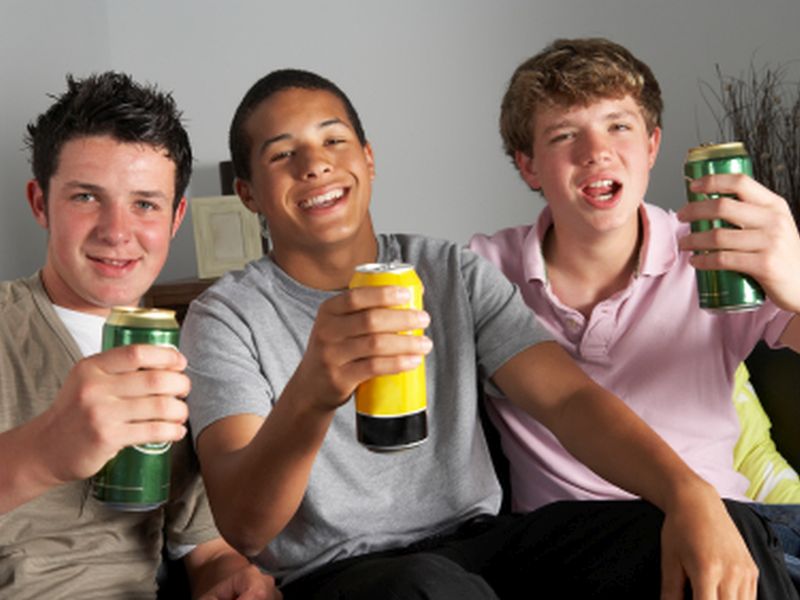
 Other risky behaviors include drug/tobacco use, risky sexual and driving behaviors, fights, suicide
MONDAY, April 16, 2018 (HealthDay News) — The number of drinks consumed in high school students’ binge drinking episodes predicts other health risk behaviors, according to a study published online April 10 in Alcoholism: Clinical & Experimental Research.
Ralph Hingson, Sc.D., M.P.H., and Wenxing Zha, Ph.D., both from the National Institute on Alcohol Abuse and Alcoholism in Bethesda, Md., used data from the 2015 Youth Risk Behavior Survey (15,624 high school students grades 9 to 12) to assess associations of drinking with health-risk behaviors. The authors compared adolescent binge drinking at least twice versus less than twice the age/gender-specific thresholds and non-binge drinking.
The researchers found that 7 percent binged at least twice and 9 percent less than twice the age/gender-specific thresholds, while 14 percent drank less than the binge thresholds. Illegal drug and tobacco use, risky sexual and traffic behaviors, physical fights, suicide, less school-night sleep, and poorer school grades were reported at significantly higher percentages by binge drinkers of at least twice versus less than twice the thresholds versus other drinkers.
“Adolescent alcohol misuse screening should query the maximum number of drinks consumed per occasion and frequency of such consumption,” the authors write.
Abstract/Full Text (subscription or payment may be required)
.jpg) Considerable Gaps Reported in Care for Youth With Opioid Use Disorder
Considerable Gaps Reported in Care for Youth With Opioid Use Disorder  Nutritional Deficiencies Seen in Youth Taking GLP-1 Receptor Agonists
  Youth Suicide Risk Linked to Community Firearm Violence
  Trends Reported in Vaccination Coverage for Adolescents for 2025
  Nearly 3 in 4 Older Adults Express Interest in Vaccine to Prevent Dementia
  Updated COVID-19 Shot Beneficial for Those With Autoimmune Rheumatic Disease
  AAP Issues Recommendations for Pediatric RSV Vaccination in 2026-2027 Season
  Social Media Warnings Could Discourage Use Among Teens, Young Adults




.jpg)