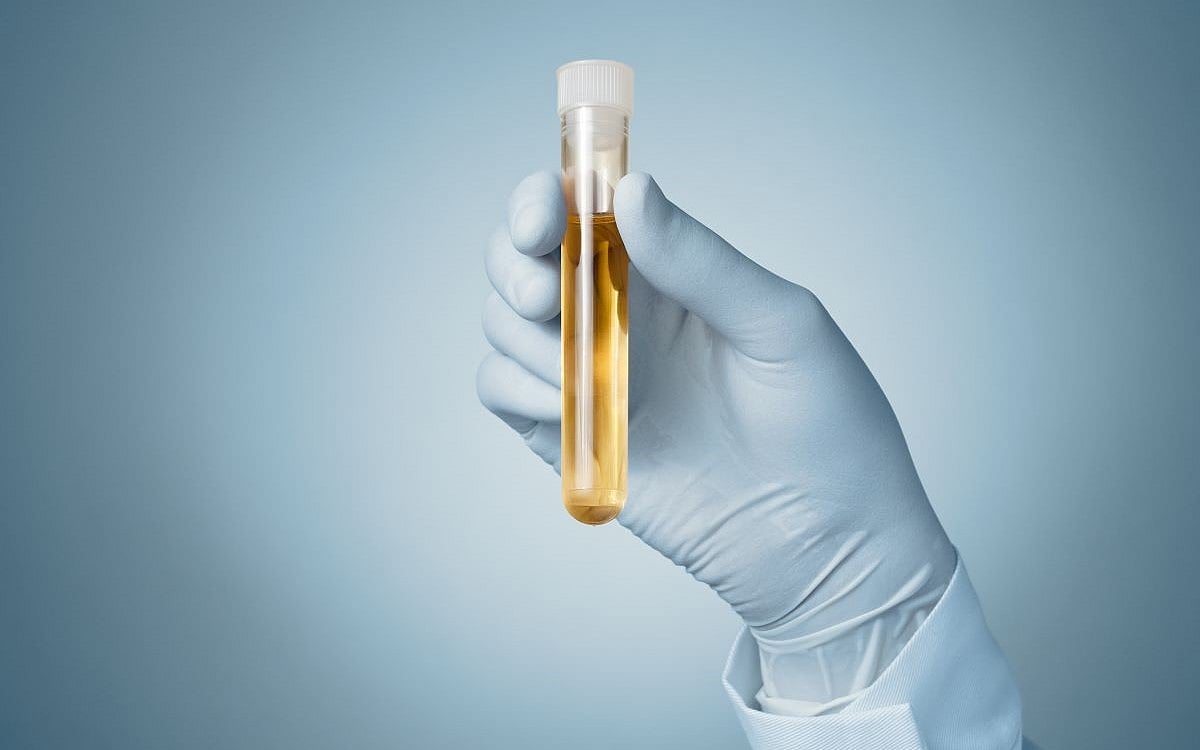
Method evaluating cells collected from urine shows 94 percent diagnostic accuracy
TUESDAY, Dec. 4, 2018 (HealthDay News) — Noninvasive diagnostic imaging using machine-learning analysis of nanoresolution images of cell surfaces can detect bladder cancer with high diagnostic accuracy, according to research published online Dec. 3 in the Proceedings of the National Academy of Sciences.
Igor Sokolov, Ph.D., from Tufts University in Medford, Massachusetts, and colleagues report on a diagnostic imaging approach based on nanoscale-resolution scanning of surfaces of cells collected from body fluids using a modality of atomic force microscopy (AFM), subresonance tapping, and machine-learning analysis. The surface parameters were used to classify cells. The method was applied to bladder cancer detection.
The researchers found that when examining five cells per patient urine sample, the method showed 94 percent diagnostic accuracy, which was a statistically significant improvement compared with the currently used clinical standard, cystoscopy (P < 0.05). The results were verified in 43 control and 25 bladder cancer patients.
“Our approach is based on the premises of field carcinogenesis, which has been established as a common event in many malignancies; in particular, in bladder cancer, in which both genetic and exogenous milieu risk factors lead not only to a localized tumor but may affect the entire organ area,” the authors write. “Our results provide evidence that the described method is sufficiently sensitive to detect this cancer signature.”
Tufts University has applied for a patent protection for the AFM machine-learning method described in the paper, which was invented by two of the authors.
 2005 to 2023 Saw More U.S. Women Never Screened for Cervical Cancer
  Machine Learning Model IDs Heart Failure With Reduced Ejection Fraction Using Routine Lab Indicators
  Addition of CAC to PREVENT-ASCVD Equations May Improve Predictive Utility in Certain Patients
  Patient Education Increases Skin Cancer Screening in Stem Cell Transplant Survivors
  Biomarkers Plus Kidney Donor Profile Index Improve Prediction of Concordant Allograft Outcomes
  Genomic Newborn Screening Could ID Cancer Predisposition Syndrome
  Female Emergency Medicine Physicians Order More Tests, Admit More Patients
  1 in 3 Women and 1 in 4 Men Engage in Intentional Outdoor Tanning