 Klebsiella pneumonia carbapenemase more common in sinks near toilets
WEDNESDAY, Feb. 13, 2019 (HealthDay News) — Sinks next to toilets in hospital patient rooms may be reservoirs for Klebsiella pneumonia carbapenemase (KPC), according to a brief report published in the January issue of the American Journal of Infection Control.
Blake W. Buchan, Ph.D., from the Medical College of Wisconsin in Milwaukee, and colleagues collected specimens with two swab types (a wound Dacron swab and an ESwab) from each sink drain in patient rooms (one next to the toilet and one next to the door) in a medical intensive care unit with no known recent history of KPC-producing organisms. Swabs were inserted into the sink drain and rotated against the inner walls for a minimum of three insertions or until the swabs were visibly soiled. Laboratory testing (a direct polymerase chain reaction [PCR] assay) was performed within four hours of collection.
The researchers found that the blaKPC gene was identified in 25 of 46 (54.3 percent) sink drain specimens tested directly by PCR, including 20 of 23 (87 percent) sinks located near the toilet versus five of 23 (21.7 percent) sinks located near the room entry door. In four of the five rooms with an entry-door sink positive for blaKPC, the sink near the toilet was also positive. Bacterial culture recovered blaKPC-positive isolates from three of 20 (15 percent) sinks near the toilet and one of five (20 percent) entry-door sinks.
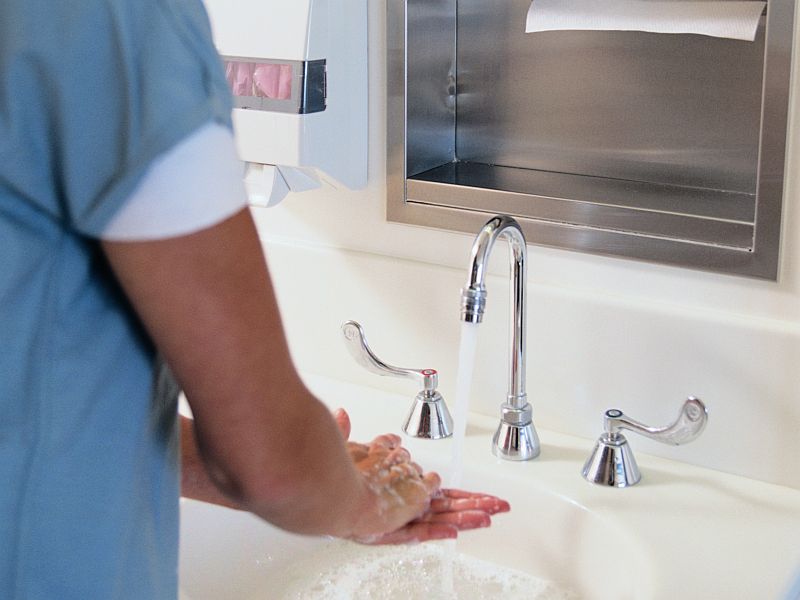
“This study, if validated, could have major implications for infection control,” Buchan said in a statement. “If sinks next to toilets are indeed a reservoir for KPC, additional interventions — such as modified hand hygiene practices and sink disinfection protocols — may be needed to stem the risk of transmission among health care providers and patients alike.”
 Distinct Skin Microbiome Features Emerge Before Atopic Disease Onset in Infants
  H. Pylori Exposure May Contribute to Global Burden of Colorectal Cancer
  About 1 in 20 Hospitalized U.S. Adults With Firearm Injuries Develop Bacterial Infections
  Freshwater Swimming Tied to Stomach Bugs, Skin Conditions
  Considerable Global Disparities Found in Access to Dermatological Care
  Extreme Heat Linked to 33 Clinically Reportable Diagnoses
  Early-Life PFAS Exposure Tied to Intestinal Inflammation in Childhood
  High Levels of Light Exposure Linked to Lower Dementia Risk