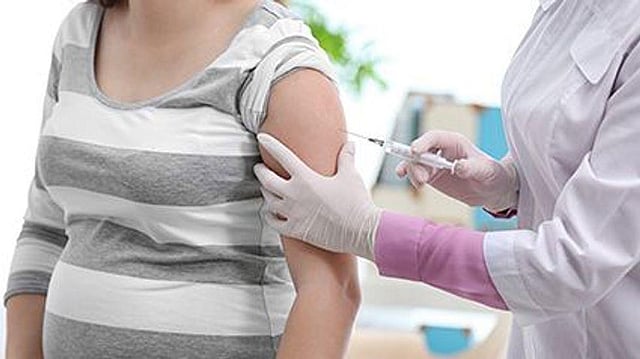
Among women with miscarriage, adjusted odds ratios for COVID-19 vaccination in previous three and five weeks were 0.91 and 0.81
THURSDAY, Oct. 28, 2021 (HealthDay News) — COVID-19 vaccination is not associated with an increased risk for first-trimester miscarriage, according to a research letter published online Oct. 20 in the New England Journal of Medicine.
Maria C. Magnus, Ph.D., from the Norwegian Institute of Public Health in Oslo, and colleagues performed a case-control study using data from Norwegian registries on first-trimester pregnancies, COVID-19 vaccination, background characteristics, and underlying health conditions. All women who were registered as having had a miscarriage before 14 weeks of gestation (case patients) and those with a primary care-based confirmation of ongoing pregnancy (controls) were identified between Feb. 15 and Aug. 15, 2021. Data were included for 13,956 women with ongoing pregnancies (5.5 percent vaccinated) and 4,521 women with miscarriages (5.1 percent vaccinated).
There was a median of 19 days between vaccination and miscarriage or confirmation of ongoing pregnancy. The researchers found that among women with miscarriages, the adjusted odds ratios for COVID-19 vaccination were 0.91 (95 percent confidence interval, 0.75 to 1.10) and 0.81 (95 percent confidence interval, 0.69 to 0.95) for vaccination in the previous three and five weeks, respectively. In an analysis that included all available vaccine types, in another analysis stratified according to the number of doses received, and among women with at least eight weeks of follow-up after confirmed pregnancy, the results were similar.
“Our study found no evidence of an increased risk for early pregnancy loss after COVID-19 vaccination and adds to the findings from other reports supporting COVID-19 vaccination during pregnancy,” the authors write.
 Higher Parental Vitamin B12 Tied to Lower Prevalence of Birth Defects
  2005 to 2023 Saw More U.S. Women Never Screened for Cervical Cancer
  Antenatal Complications Increased With Maternal Multiple Long-Term Conditions
  Paternal Exposure to Valproate Not Linked to Offspring Neurodevelopmental Disorders
  Probable Postictal Psychosis Linked to Risk for Subsequent Primary Psychotic Disorders
  December 2024 to 2025 Saw Significant Increase in Leucovorin Dispensing
  Childhood-Onset Epilepsy Tied to Lower Rate of Educational Attainment
  Real-World ARIA Incidence With Lecanemab Aligns With Clinical Trial Findings