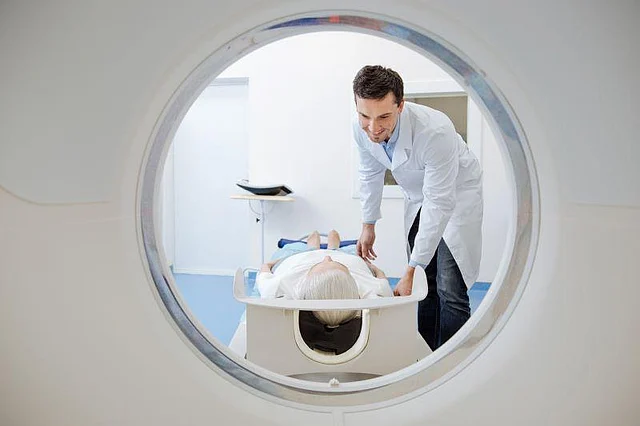
In post-COVID-19 peak period in 2020, CT volume still down for cancer screening and initial workup with inconsistent recovery for active cancer
WEDNESDAY, Nov. 24, 2021 (HealthDay News) — The COVID-19 pandemic had a severe impact on cancer imaging in 2020, and computed tomography (CT) for cancer screening and initial workup did not recover to pre-COVID-19 levels through mid-November 2020, according to a study presented at the annual meeting of the Radiological Society of North America, held from Nov. 28 to Dec. 2 in Chicago.
Marc Succi, M.D., from Massachusetts General Hospital, and colleagues analyzed cancer-related CT exams during three periods of 2020: pre-COVID-19 (Jan. 5 to March 14), COVID-19 peak (March 15 to May 2), and post-COVID-19 peak (May 3 to Nov. 14).
The researchers found that during the COVID-19 peak in 2020, there was a significant decrease in CT volumes (−42.2 percent), with decreases of 81.7, 54.8, 30.7, and 44.7 percent for cancer screening, initial workup, active cancer, and cancer surveillance, respectively. The only setting with stable cancer-related CT volumes was the emergency department. CT volumes for cancer screening and initial workup did not recover in the post-COVID-19 peak period (−11.7 and −20.0 percent, respectively); the outpatient setting was particularly affected. For active cancer, CT volumes recovered post-peak, but the recovery was inconsistent across hospital types. Post-peak, there was an increase in inpatient and emergency department-based cancer-related CTs (+20.0 and +33.2 percent, respectively).
“The decline during the COVID peak was expected because of stay-at-home orders and the number of imaging departments that shut down as a precaution,” Succi said in a statement. “Once normal operations resumed, you’d expect that these patients were being imaged in an equitable way, but, in fact, it turns out that they weren’t.”
 2005 to 2023 Saw More U.S. Women Never Screened for Cervical Cancer
  Machine Learning Model IDs Heart Failure With Reduced Ejection Fraction Using Routine Lab Indicators
  Addition of CAC to PREVENT-ASCVD Equations May Improve Predictive Utility in Certain Patients
  Aircrew Face Higher Odds of Radiation-Related Cancer Deaths
  Thymic Radiation Linked to Worse Outcomes in Patients With NSCLC
  Preoperative Chemo + Immunotherapy Combo Shrinks Head, Neck Cancer Tumors
  Sleep Disturbances, Duration Linked to Working Life Expectancy
  Couples" Coping Skills Help Reduce Depression in GI Cancer Survivors