Exploratory analysis shows link between optical defocus treatment and slower progression of myopia in school-aged children
FRIDAY, Jan. 21, 2022 (HealthDay News) — Myopia progressed more rapidly in schoolchildren exposed to more COVID-19-related lockdown measures, according to a study published online Jan. 14 in JAMA Network Open.
Kai Yip Choi, Ph.D., from the Hong Kong Polytechnic University, and colleagues examined the associations of COVID-19-related lockdown measures and optical defocus treatment with myopia progression in schoolchildren. The analysis included 115 children who wore either a defocus incorporated multiple segments (DIMS; 58 children) lens for 18 months or a single vision lens (SVL; 56 children) for 24 months.
The researchers found that DIMS treatment was significantly associated with 34 percent less axial elongation and 46 percent less myopic progression after 12 months versus SVL treatment. Across both groups, more lockdown time was associated with significantly more spherical equivalent refraction and axial length versus less lockdown time.
“These findings suggest that an optical defocus treatment may be associated with slower myopia progression, which has been exaggerated during the COVID-19 pandemic, among schoolchildren,” the authors write.
One author received a patent for a DIMS lens with royalties paid from Hoya Corporation.
 Highly Aspherical Lenslets Effective for Reducing Myopia Progression in Children
 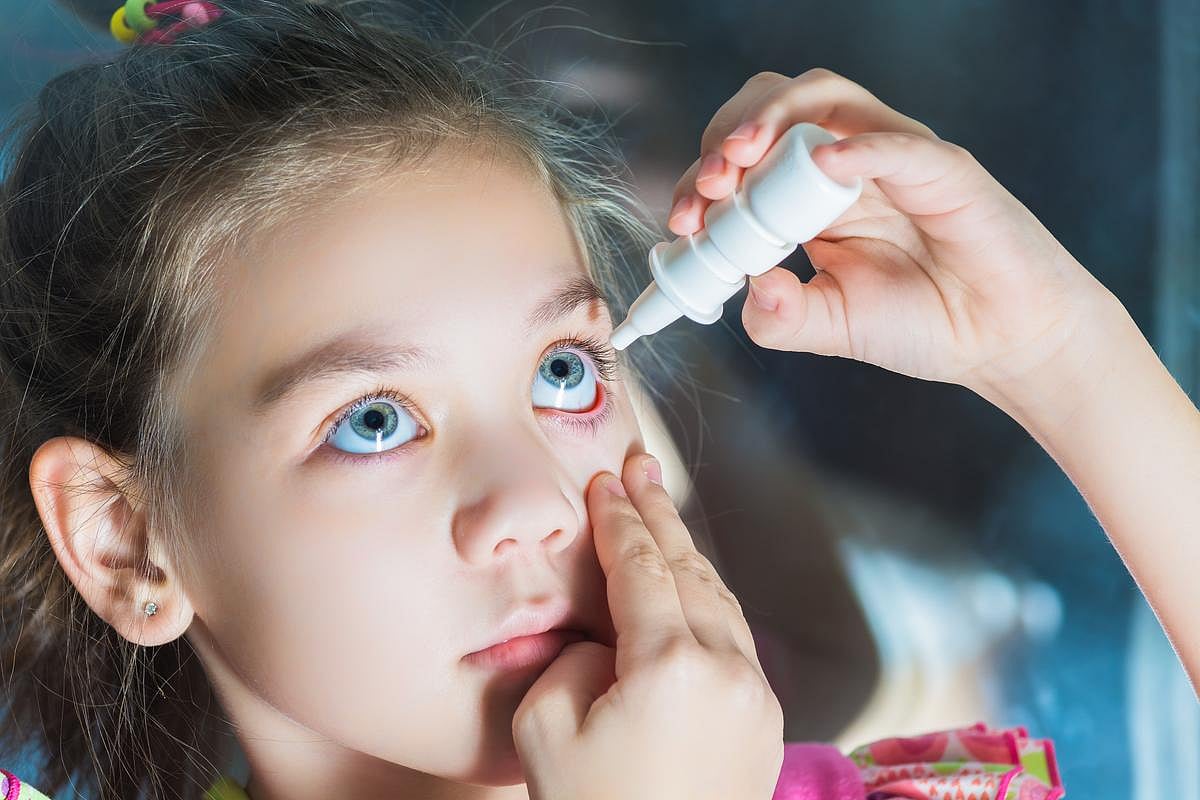 Atropine Eye Drops Reduce Myopia Progression in Children
  Omega-3 PUFA Intake May Be Protective Against Myopia
  Diversified Segmental Defocus Optimization Spectacles Delay Myopia in Children
  Internet-Based Cognitive-Behavioral Therapy Aids Children"s Anxiety Symptoms
  Randomized Trial of Early Vitrectomy Feasible for Postoperative Endophthalmitis
  Family-Based Behavioral Treatment Improves Child Weight Outcomes
  Plasmapheresis Linked to Improved Outcomes for MOGAD Attacks