
Functional brain organization differs between females and males with autism spectrum disorder
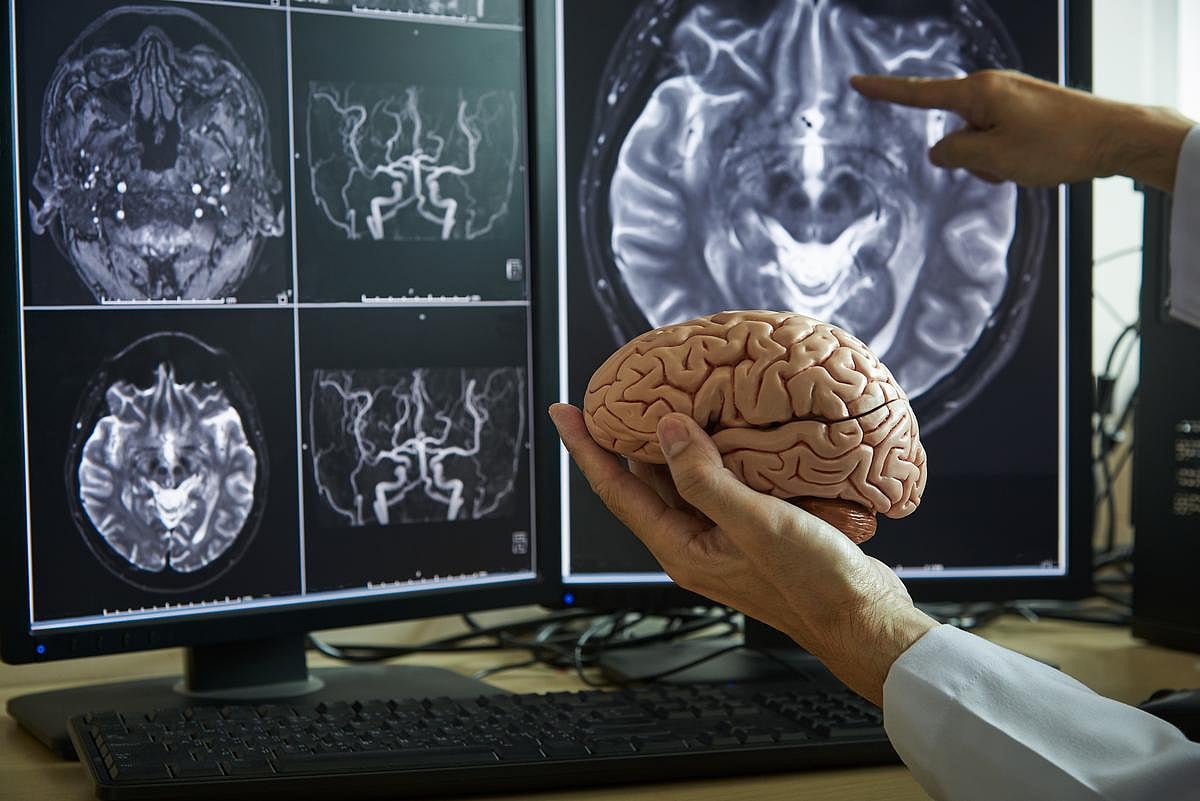
WEDNESDAY, March 2, 2022 (HealthDay News) — A novel spatiotemporal deep neural network (stDNN) based on functional magnetic resonance imaging data can use brain features to differentiate between females and males with autism spectrum disorder (ASD), according to a study published online Feb. 15 in The British Journal of Psychiatry.
Kaustubh Supekar, Ph.D., from Stanford University in California, and colleagues leveraged multiple neuroimaging cohorts involving 773 persons with ASD and developed a novel stDNN, which uses spatiotemporal convolution on functional magnetic resonance imaging data to distinguish between functional brain organization patterns in females and males.
The researchers found that for differentiating between males and females with ASD, the stDNN achieved consistently high classification accuracy. The stDNN that was trained to distinguish between males and females with ASD was not able to differentiate between neurotypical males and females. Brain features associated with motor, language, and visuospatial attentional systems reliably differentiated between males and females with ASD. These results were seen in a large multisite cohort, with replication in a fully independent cohort. The severity of restricted/repetitive behaviors was predicted by brain features associated with the motor network’s primary motor cortex node in females, but not males, with ASD.
“We may need to have different tests for females compared with males. The artificial intelligence algorithms we developed may help to improve diagnosis of autism in girls,” Supekar said in a statement. “At the treatment level, interventions for girls could be initiated earlier.”
One author disclosed financial ties to the information technology industry.
 Estrogen Hormone Treatment May Be Beneficial for Brain Fog Symptoms in Menopausal Women
  Brain Abnormalities Identified in Children at Risk for Schizophrenia
  Cortical Atrophy in Early-Onset Alzheimer Disease Signature Can Predict Progression to Dementia
  December 2024 to 2025 Saw Significant Increase in Leucovorin Dispensing
  Paternal Exposure to Valproate Not Linked to Offspring Neurodevelopmental Disorders
  Real-World ARIA Incidence With Lecanemab Aligns With Clinical Trial Findings
  Dexrazoxane Offers Lasting Doxorubicin Cardioprotective Effect in Childhood Cancer Survivors
  Many With Atypical Alzheimer Disease Do Not Qualify for Anti-Amyloid Therapy