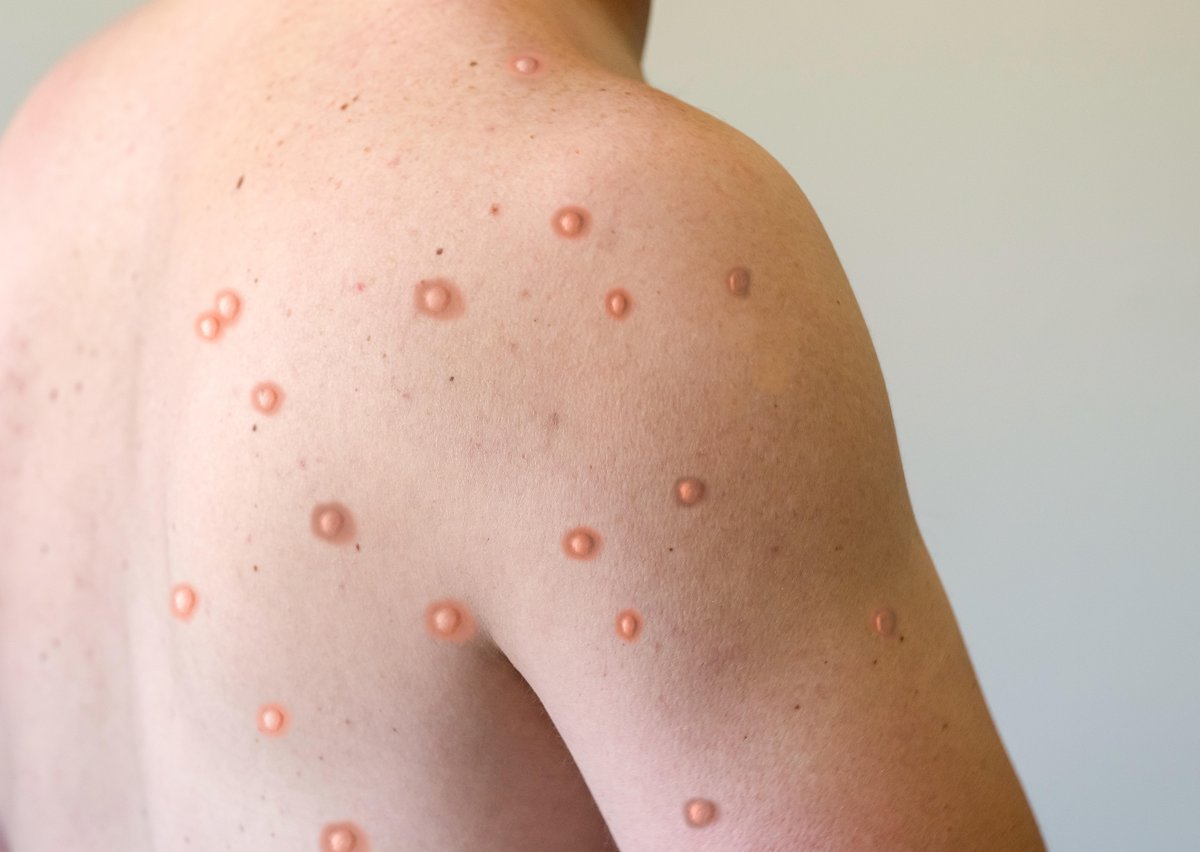
All participants presented with mucocutaneous lesions, most commonly on genitals or perianal area
MONDAY, Aug. 1, 2022 (HealthDay News) — Clinical manifestations of monkeypox include mucocutaneous lesions in all patients and systemic features in most patients, which can develop before or after mucocutaneous manifestations, according to a study published online July 28 in The BMJ.
Aatish Patel, M.D., from Guys and St. Thomas’ NHS Foundation Trust in London, and colleagues documented a descriptive case series involving 197 patients (median age, 38 years) with polymerase chain reaction-confirmed monkeypox infection.
The researchers found that all of the patients were men, and 196 identified as gay, bisexual, or other men who have sex with men. All presented with mucocutaneous lesions, most commonly on the genitals or perianal area (56.3 and 41.6 percent, respectively). A systemic illness was reported by 86.3 percent of patients, with the most common systemic symptoms being fever, lymphadenopathy, and myalgia (61.9, 57.9, and 31.5 percent, respectively). Overall, 61.5 and 38.5 percent of 166 participants developed systemic features before and after onset of mucocutaneous manifestations, respectively. Twenty-seven patients presented with mucocutaneous manifestations exclusively, without systemic features. Rectal pain, sore throat, and penile edema were reported by 36.0, 16.8, and 15.7 percent, respectively. A total of 35.9 percent of participants had concomitant HIV infection; 31.5 percent of those who were screened for sexually transmitted infections had a concomitant sexually transmitted infection. Twenty patients (10.2 percent) were admitted to the hospital for management of symptoms.
“Urgent research is needed to further understand the modes of transmission of monkeypox virus, particularly around sexual contact, and also the possibility of asymptomatic spread,” the authors write.
 Significant Association ID"d Between Hepatitis C, Overactive Bladder
 .jpg) Study Looks at Barriers to Initiation of Rotavirus Vaccine
Study Looks at Barriers to Initiation of Rotavirus Vaccine  Obstructive Sleep Apnea Tied to Nearly Doubled Risk for Flu, COVID-19 in Childhood
  Noninvasive Prenatal Screening Can Identify Cytomegalovirus Risk
  2005 to 2023 Saw More U.S. Women Never Screened for Cervical Cancer
  Higher Parental Vitamin B12 Tied to Lower Prevalence of Birth Defects
  Machine Learning Model IDs Heart Failure With Reduced Ejection Fraction Using Routine Lab Indicators
  Addition of CAC to PREVENT-ASCVD Equations May Improve Predictive Utility in Certain Patients