


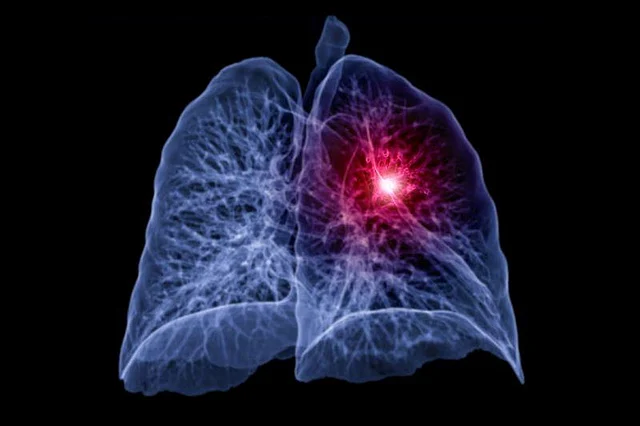
Sybil achieved areas under receiver operating characteristic curve of 0.92, 0.86, and 0.94 on three external validation sets
WEDNESDAY, Jan. 18, 2023 (HealthDay News) — A deep learning model can accurately predict future lung cancer risk from a single low-dose computed tomography (LDCT) scan, according to a study published online Jan. 12 in the Journal of Clinical Oncology.
Peter G. Mikhael, from the Massachusetts Institute of Technology in Cambridge, and colleagues developed a model called Sybil using LDCT from the National Lung Screening Trial (NLST), which requires only one LDCT and does not require clinical data or radiologist annotations. Sybil was validated in three independent datasets: 6,282 LDCTs from NLST participants; 8,821 LDCTs from Massachusetts General Hospital (MGH); and 12,280 LDCTs from Chang Gung Memorial Hospital (CGMH).
The researchers found that for lung cancer prediction at one year, Sybil achieved areas under the receiver operating characteristic curve of 0.92, 0.86, and 0.94 on the NLST, MGH, and CGMH external validation sets, respectively. Over six years, the concordance indices were 0.75, 0.81, and 0.80 for NLST, MGH, and CGMH, respectively.
“In our study, Sybil was able to detect patterns of risk from the LDCT that were not visible to the human eye,” a coauthor said in a statement. “We’re excited to further test this program to see if it can add information that helps radiologists with diagnostics and sets us on a path to personalize screening for patients.”
Several authors disclosed financial ties to the pharmaceutical, software, and publishing industries; one author holds a patent related to body composition analysis on computed tomography scans.
 Gene Mutation Identified That Increases Lung Cancer Risk
  Thymic Radiation Linked to Worse Outcomes in Patients With NSCLC
  Lung Transplant Can Prolong Survival in Stage IV NSCLC
  Risk-Based Strategies Superior to USPSTF Criteria for Lung Cancer Screening
  Urine Cell-Free RNA Shows Promise as Biomarker for Bladder Cancer
  Pre-Prostate Biopsy MRI Use Increased From 2017 to 2026
  U.S. Adults May Not Understand Their Risk for Vascular Disease
  Autism Spectrum Disorder Diagnoses Increased for Females Since 2020


.jpg)

