


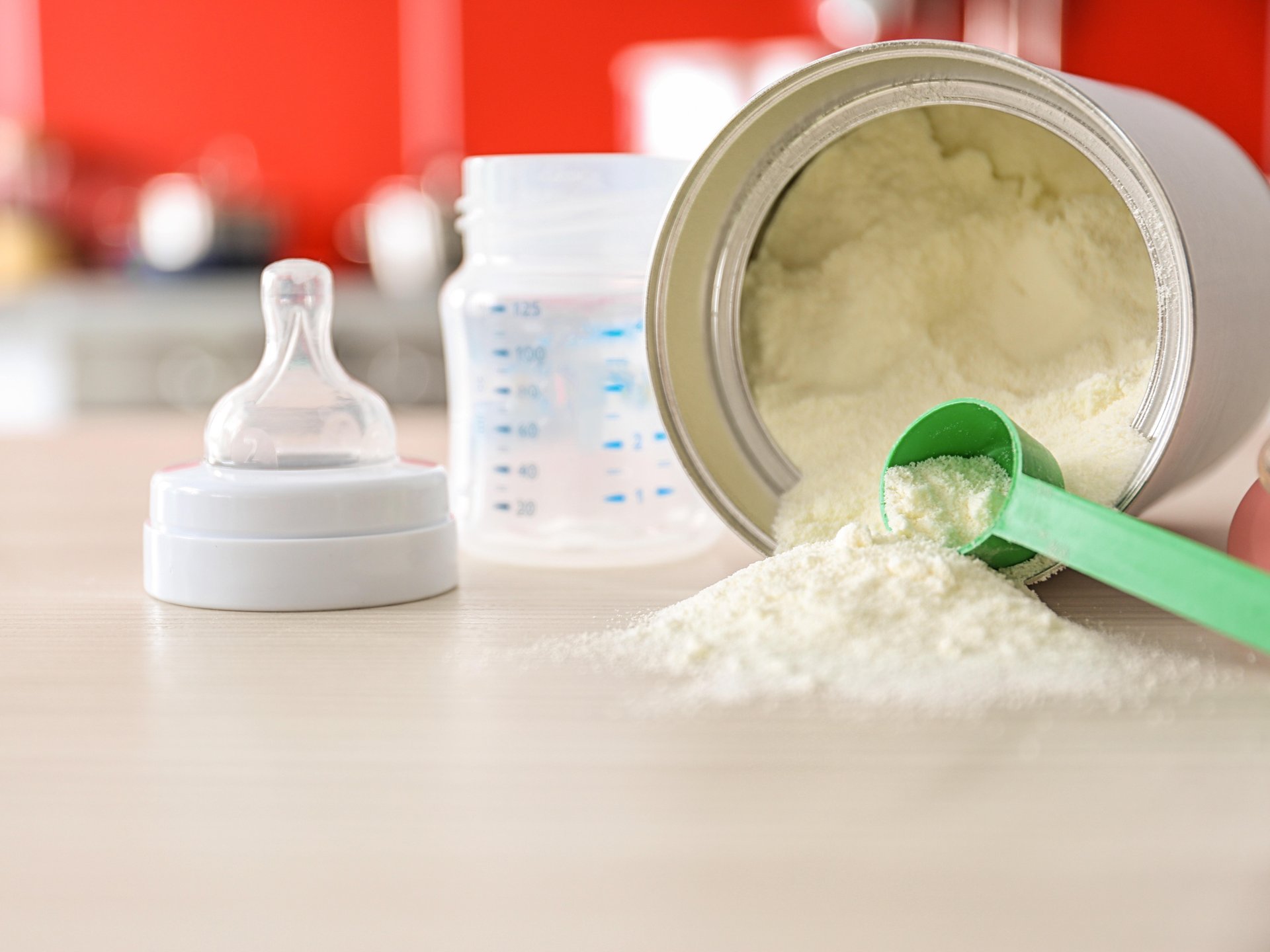
Production of EleCare specialty formulas for infants with severe food allergies and digestive problems will be given top priority
MONDAY, June 6, 2022 (HealthDay News) — Production has resumed at the Michigan infant formula plant forced to close in February over product contamination and safety lapses, but it will take about three weeks before new formula from the plant makes its way to American consumers, Abbott Nutrition said Saturday.
The plant is the largest formula factory in the United States and its closure triggered a nationwide shortage that is expected to last into the summer. Production of EleCare specialty formulas for infants with severe food allergies and digestive problems will be given top priority, the company noted.
The plant was closed by Abbott in February after the U.S. Food and Drug Administration launched an investigation into bacterial infections among four infants who ate powdered formula from the plant. Two of the babies died, the Associated Press reported.
Abbott says its products have not been directly linked to the infections. But FDA inspectors uncovered a host of violations at the plant, including bacterial contamination, a leaky roof, and lax safety rules. Agency leaders recently told Congress they had to enter a legally binding agreement with Abbott to assure all the problems were fixed, the AP reported.
Abbott is one of only four companies that produce nearly 90 percent of U.S. formula, so any recalls or shutdowns trigger a cascade of effects. In this case, retailers have limited customer purchasing and parents have been told to switch brands to whatever formula is on the shelves. But the Abbott factory is the sole source of many infant formula products designed for children with allergies, digestive problems, and metabolic disorders, the AP reported.
In an effort to boost infant formula supplies in the United States, the Biden administration has taken several steps to increase U.S. production, eased import rules for foreign manufacturers and airlifted formula from other countries.
 Recommendations Issued for Use of Incretin-Based Meds in Pregnancy
  Eating More Ultraprocessed Foods Heightens Risk for Chronic Diseases
  Nutritional Deficiencies Seen in Youth Taking GLP-1 Receptor Agonists
  2009 to 2023 Saw Surge in Probiotic Supplement Use
  1 in 3 With Lupus Take Supplements, Medications With Potential for Interactions
  High-Dose Omega-3 Linked to A-Fib Risk in Patients With High CVD Risk
  Docosahexaenoic Acid Supplement Does Not Improve Cognitive Performance
  Sugar-Sweetened Beverage, Fruit Juice Intake Linked to Hypertension Risk



.jpg)
