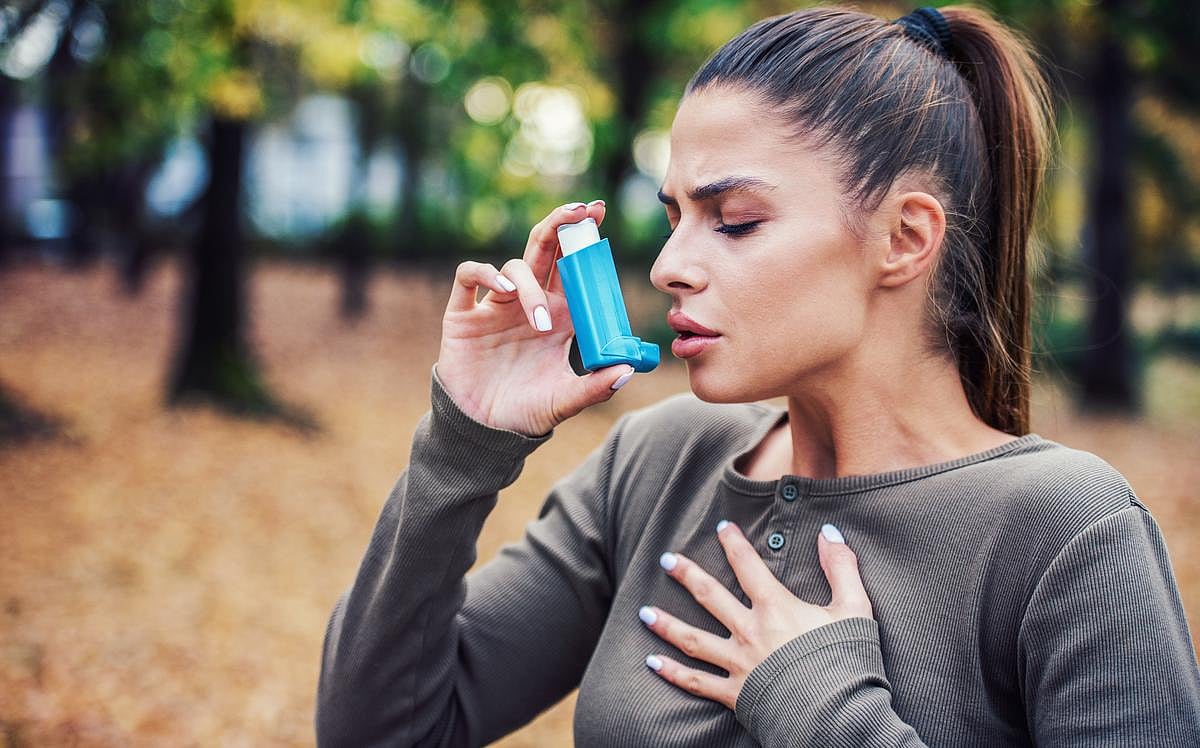
Findings seen among physically inactive adults with moderate-to-severe uncontrolled asthma
WEDNESDAY, Sept. 9, 2026 (HealthDay News) — Both aerobic training (AT) and behavioral interventions (BI) improve clinical control of asthma, according to a study published online June 4 in Pulmonology.
David Halen Araújo Pinheiro, from the University of São Paulo in Brazil, and colleagues compared the effects of AT versus BI (based on social cognitive theory) on clinical control in people with moderate-to-severe asthma in the short and medium term. The analysis included physically inactive adults with moderate-to-severe uncontrolled asthma assigned to either AT (27 participants) or a BI (25 participants).
The researchers found that AT and BI both improved clinical control, reaching the minimal clinically important difference postintervention. Improvements were maintained at four-month follow-up (Δ score for AT versus BI, −1.01 versus −1.46 at postintervention and −0.57 versus −0.94 at follow-up). Both groups achieved minimal clinically important differences for quality of life at both short- and medium-term follow-up (Δ scores for AT versus BI, 1.33 versus 1.40 and 0.97 versus 0.88, respectively).
“Both interventions are beneficial for patients and provide better clinical control of the disease. And, based on our results, neither strategy outperformed the other,” Pinheiro said in a statement. “However, aerobic training requires more equipment and must be supervised. With simple walking, on the other hand, by increasing the daily number of steps, patients tend to manage their condition and gain other benefits, such as an improved quality of life and reduced symptoms of anxiety and depression.”
 Air Pollution Does Not Impair Benefits of Walking in Reducing COPD Exacerbation Rate
  Physical Activity Linked to Slower Cognitive, Motor Progression in Parkinson Disease
  Gap Found Between Awareness of Breast Cancer Risk and Risk-Reducing Behavior
  Financial Incentives Boost Tobacco Abstinence in Underserved Adults
  2016 to 2024 Saw Increase in Patients Using Medical Cannabis
  ED Visits for Gambling Disorder Spike After Canada Liberalizes Online Gambling
  Social Media Warnings Could Discourage Use Among Teens, Young Adults
 .jpeg) Breathing Interventions May Curb Cravings With Substance Use
Breathing Interventions May Curb Cravings With Substance Use 


.jpg)